ToolMage
Sign in

Best 1 Letter Writing AI tools for Personalized Content

Popular Letter Writing AI tools in Personalized Content include Lovelines.xyz, helping you work more efficiently.

Lovelines.xyz
Paid

Lovelines.xyz

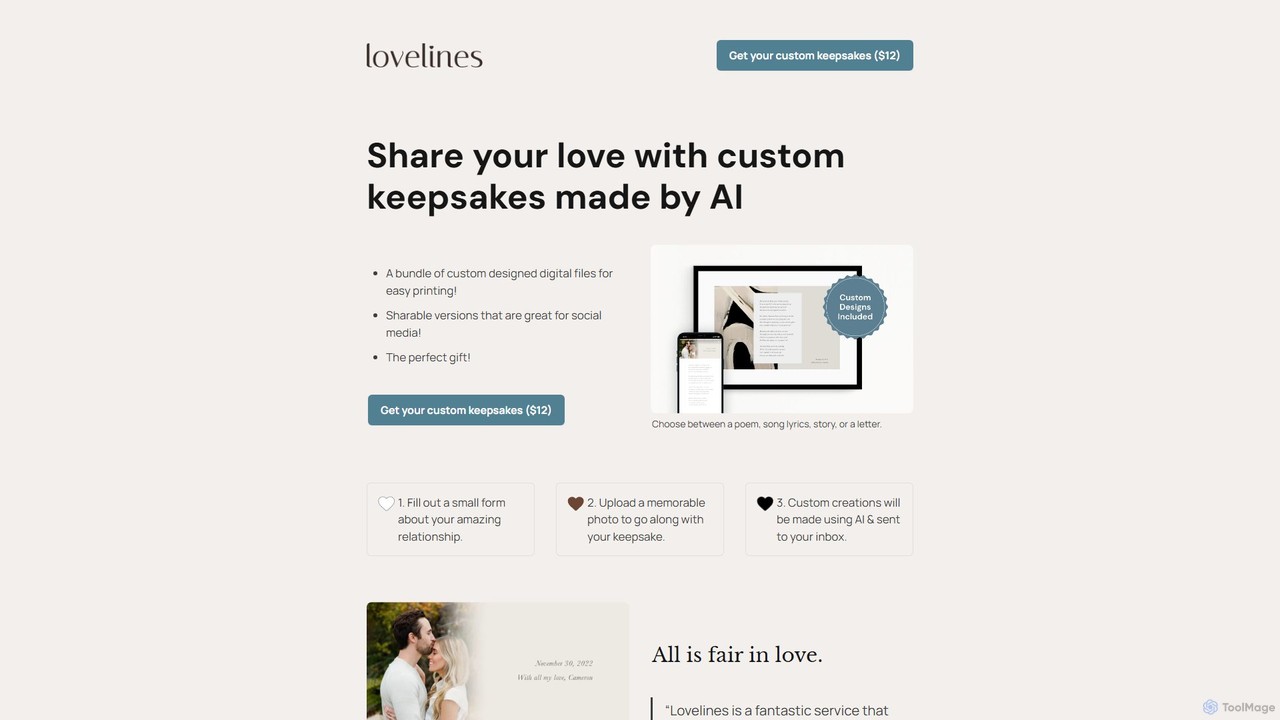
Lovelines.xyz is an AI-powered service that creates unique, personalized keepsakes. By providing details about your relationship and a special photo, the AI generates a custom poem, song lyrics, story, or letter. It's the perfect way to create a heartfelt, one-of-a-kind gift for anniversaries, birthdays, or any special occasion, delivered digitally to your inbox.

Poetry Generation
Visits 5.6KFavorites 131Likes 137

About Letter Writing

Letter Writing AI tools are specialized applications designed to assist users in drafting, refining, and personalizing various forms of written correspondence. Leveraging advanced natural language processing (NLP) and generative AI, these tools understand context, suggest content, and adjust tone to ensure clarity, conciseness, and impact. They streamline the creation of professional emails, personal notes, marketing outreach, and formal documents, making the writing process more efficient and effective. These tools are a key component within the broader category of Personalized Content, focusing specifically on direct, tailored communication.

Core Features

  • Contextual Content Generation: Automatically drafts letters, emails, or messages based on user prompts, keywords, and desired outcomes.
  • Tone and Style Adjustment: Modifies the writing style to be formal, informal, persuasive, empathetic, or concise, matching the communication's purpose and recipient.
  • Recipient Personalization: Integrates recipient-specific details and preferences to create highly individualized and relevant correspondence.
  • Grammar and Clarity Enhancement: Identifies and corrects grammatical errors, improves sentence structure, and suggests clearer phrasing for better readability.
  • Multi-language Support: Enables drafting and translation of letters in various languages, facilitating global communication.

Use Cases

Letter Writing AI tools are invaluable for professionals, marketers, and individuals needing to craft effective written communications. They are used by sales teams to generate personalized outreach emails, by HR departments for drafting sensitive employee communications, and by individuals for composing impactful cover letters or heartfelt personal messages.

How to Choose

When selecting an AI letter writing tool, prioritize its ability to deeply personalize content and accurately adjust tone for diverse audiences. Evaluate the range of templates, language support, and integration capabilities with existing CRM or email platforms. Consider the ease of use, the quality of AI-generated suggestions, and the tool's commitment to data privacy and security, especially for sensitive correspondence.

Letter Writing use cases

1

Drafting Professional Job Application Letters

A job seeker needs to apply for multiple positions, each requiring a tailored cover letter. Using an AI letter writing tool, they input their resume highlights and the job description. The AI generates a personalized cover letter that emphasizes relevant skills and experiences for each specific role, saving hours of manual customization and increasing the chances of securing an interview.

2

Crafting Personalized Marketing Outreach Emails

A marketing manager needs to send a personalized email campaign to a segmented customer list. Instead of writing each email from scratch, they use an AI letter writing tool. By providing customer data (e.g., past purchases, interests) and campaign goals, the AI generates unique email drafts for each segment, adjusting the tone and call-to-action to maximize engagement and conversion rates.

3

Generating Empathetic Customer Service Responses

A customer service representative needs to respond to a sensitive customer complaint with empathy and professionalism. Instead of struggling with wording, they use an AI letter writing tool. By inputting the customer's issue and desired outcome, the AI generates a draft response that conveys understanding, offers solutions, and maintains a positive brand image, ensuring consistent and high-quality customer interactions.

4

Composing Formal Business Proposals and Reports

A business development manager needs to write a detailed proposal for a new client. Leveraging an AI letter writing tool, they provide key project details, client requirements, and desired outcomes. The AI structures the proposal, drafts compelling sections, ensures a formal and professional tone, and helps maintain consistency across the document, significantly reducing drafting time and improving the proposal's quality.

5

Writing Personal Thank-You Notes and Apology Letters

An individual wants to send a heartfelt thank-you note or an apology letter but struggles to find the right words. Using an AI letter writing tool, they input the core message and the desired emotional tone (e.g., sincere gratitude, genuine remorse). The AI generates a draft that captures the intended sentiment, ensuring the message is personal, impactful, and appropriately worded, strengthening personal relationships.

6

Automating Fundraising Appeal Letters

A non-profit organization needs to send out a large volume of personalized fundraising appeal letters to potential donors. By integrating an AI letter writing tool with their donor database, they can automatically generate unique letters for each donor, referencing their past contributions or areas of interest. This automation saves significant time and resources, while increasing the effectiveness of their fundraising efforts through highly relevant appeals.

Letter Writing FAQ

What are AI Letter Writing tools?

AI Letter Writing tools are software applications that use artificial intelligence to help users compose, refine, and personalize various types of written correspondence. They leverage natural language processing and generative AI to understand user intent, suggest content, and adjust the tone and style of the writing. These tools are designed to make the process of writing emails, letters, and messages more efficient, effective, and tailored to specific recipients and purposes.

How do AI Letter Writing tools personalize content?

AI Letter Writing tools personalize content by analyzing user inputs such as recipient information, desired tone, key messages, and specific context. They then use generative AI models to craft unique text that incorporates these details, ensuring the output is highly relevant and tailored. Some advanced tools can even integrate with CRM systems to pull in historical data, allowing for deeper personalization that reflects past interactions or preferences of the recipient.

What types of letters can AI tools help write?

AI letter writing tools are versatile and can assist with a wide range of correspondence. This includes professional communications like job application cover letters, business proposals, client outreach emails, and internal memos. They are also effective for personal letters such as thank-you notes, apology letters, invitations, and even creative writing prompts. The key is their ability to adapt to different tones, styles, and specific requirements for various communication needs.

How do AI Letter Writing tools differ from general content generators?

While general content generators can produce various forms of text, AI Letter Writing tools are specifically optimized for direct, often one-to-one or one-to-many, communication with a clear recipient and purpose. They offer more granular control over tone, formality, and personalization, focusing on the nuances required for effective correspondence. General generators might create blog posts or marketing copy, whereas letter writing tools excel at crafting emails, formal letters, or personal notes that require a specific communicative intent and recipient focus.

What should I consider when choosing an AI Letter Writing tool?

When choosing an AI Letter Writing tool, consider its customization capabilities, especially for tone, style, and recipient-specific details. Evaluate the range of templates and language support offered, which is crucial for diverse communication needs. Look for integration options with your existing workflow tools like CRM or email platforms. Additionally, assess the tool's ease of use, the quality and relevance of its AI-generated suggestions, and its commitment to data privacy and security, particularly for sensitive or confidential correspondence.