ToolMage
Sign in

Best 1 Travel AI tools for Personalized Recommendations

Popular Travel AI tools in Personalized Recommendations include freeplantour, helping you work more efficiently.

freeplantour
Freemium

freeplantour

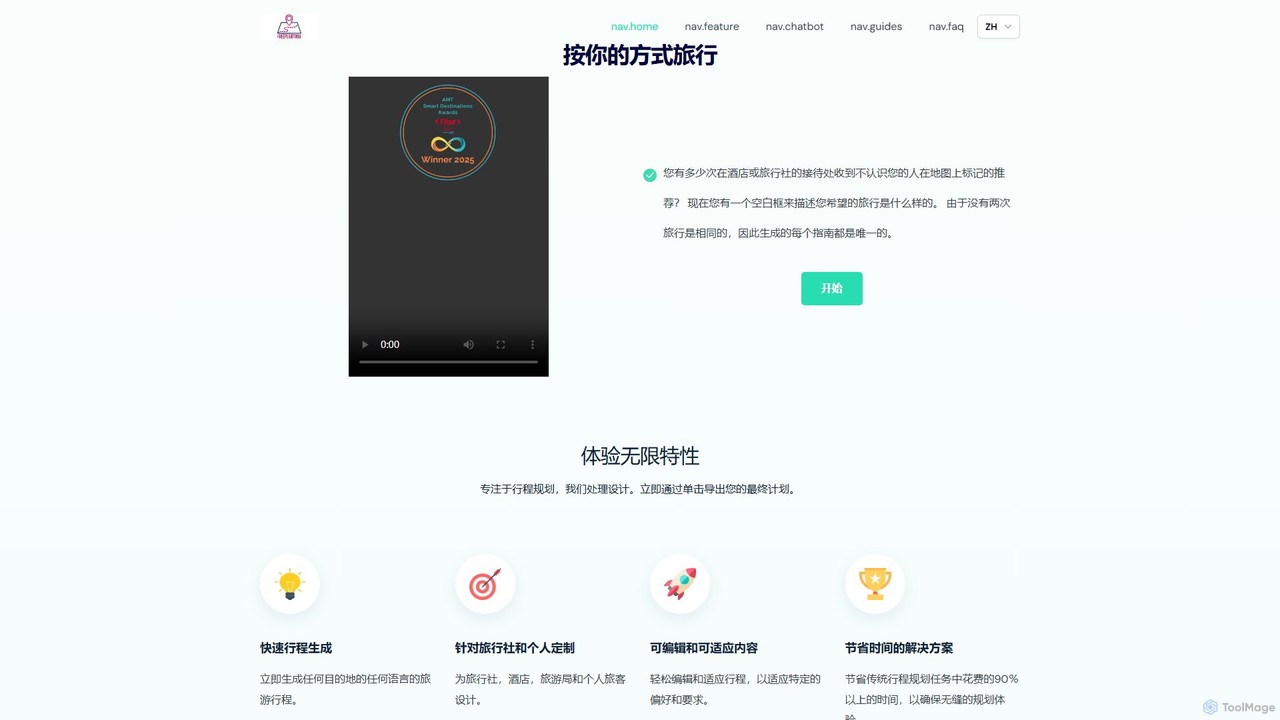
freeplantour is an AI-powered travel itinerary generator that creates unique, personalized, and editable travel plans in over 16 languages. Designed for individual travelers, travel agencies, and hotels, it saves over 90% of planning time by instantly generating detailed guides for any destination worldwide.

Travel
Visits 6.3KFavorites 148Likes 144

About Travel

Travel AI tools, a specialized subset of personalized recommendations, are AI-powered applications designed to enhance every aspect of trip planning and execution. These tools leverage machine learning and natural language processing to understand user preferences, analyze vast amounts of travel data, and generate highly customized itineraries, suggestions, and real-time assistance. They aim to simplify complex travel logistics, discover unique experiences, and provide tailored advice, making travel more efficient, enjoyable, and personalized for individuals and groups.

Core Features

  • Personalized Itinerary Generation: Creates custom travel plans based on user interests, budget, and duration.
  • Destination & Activity Recommendations: Suggests places to visit, restaurants, and local experiences tailored to individual tastes.
  • Flight & Accommodation Optimization: Analyzes prices, routes, and availability to recommend the best booking options.
  • Real-time Travel Assistance: Provides instant updates on flights, weather, local tips, and language translation during a trip.
  • Budget & Expense Tracking: Helps manage travel costs and provides insights into spending patterns.

Applicable Scenarios

Travel AI tools are invaluable for solo adventurers seeking unique off-the-beaten-path experiences, families planning complex multi-destination vacations, and business travelers needing efficient itinerary management. They assist in discovering hidden gems, optimizing travel budgets, and navigating unfamiliar environments with confidence, catering to both spontaneous trips and meticulously planned journeys.

How to Choose

When selecting a Travel AI tool, consider its personalization depth, ensuring it truly understands your preferences beyond basic filters. Evaluate its data sources for accuracy and real-time updates, especially for dynamic information like flight changes. Look for comprehensive features covering planning, booking, and in-trip assistance, and assess its user interface for ease of use. Finally, check for integration capabilities with other travel services or calendars to streamline your overall experience.

Travel use cases

1

Personalized Itinerary Creation for Solo Travelers

A solo traveler wants to explore Southeast Asia for three weeks on a moderate budget, focusing on cultural immersion and local cuisine. An AI travel tool analyzes their past travel history, preferred activities, and dietary restrictions, then generates a day-by-day itinerary. This includes optimized routes, recommended local eateries, cultural workshops, and budget-friendly accommodation options, saving the traveler hours of research and ensuring a highly personalized experience.

2

Optimizing Family Vacations with Diverse Interests

A family of five, with children of different ages and varying interests (e.g., history, theme parks, nature), struggles to find activities that please everyone. An AI travel planner takes input on each family member's preferences, age, and energy levels. It then suggests a balanced itinerary that includes historical sites, a day at an amusement park, and a nature hike, ensuring each member has engaging activities and minimizing conflicts, leading to a harmonious family trip.

3

Real-time Assistance for Business Travelers

A business traveler frequently faces last-minute schedule changes, flight delays, or needs to find suitable dining options near their meeting location. An AI travel assistant integrates with their calendar and flight information, providing real-time alerts for delays, suggesting alternative routes, and recommending restaurants with quick service and appropriate ambiance for business meals. This ensures the traveler stays on schedule and can adapt quickly to unforeseen circumstances, maintaining productivity on the go.

4

Discovering Unique Local Experiences

A traveler visiting a popular city wants to avoid tourist traps and discover authentic local experiences. An AI travel tool, leveraging geotagged data, local reviews, and hidden gem algorithms, suggests unique neighborhood cafes, lesser-known historical sites, and upcoming local festivals or markets. It provides personalized recommendations that align with the traveler's interests in art, history, or food, allowing them to experience the city like a local and create memorable, distinctive memories.

5

Budget-Friendly Trip Planning and Expense Tracking

A student planning a backpacking trip across Europe needs to stick to a strict budget. An AI travel tool helps by suggesting the most economical flight and train routes, recommending hostels or budget accommodations, and identifying free or low-cost activities. During the trip, its integrated expense tracker categorizes spending, provides real-time budget alerts, and offers tips to save money, ensuring the student can enjoy their adventure without financial stress and stay within their allocated funds.

6

Navigating Language Barriers with AI Translation

A traveler visits a country where they don't speak the local language, making communication challenging. An AI travel tool with integrated real-time translation capabilities allows them to understand menus, ask for directions, and engage in basic conversations with locals. This feature breaks down language barriers, enhances cultural exchange, and empowers the traveler to navigate unfamiliar environments more confidently and independently, enriching their overall travel experience significantly.

Travel FAQ

What are Travel AI tools?

Travel AI tools are intelligent applications that use artificial intelligence to personalize and optimize various aspects of travel. They typically feature personalized itinerary generation, real-time recommendations for destinations and activities, and smart booking assistance. These tools aim to simplify trip planning, enhance in-trip experiences, and provide tailored advice based on individual preferences and real-time data, making travel more efficient and enjoyable for users.

How do Travel AI tools provide personalized recommendations?

Travel AI tools provide personalized recommendations by analyzing a wide range of data points. This includes your past travel history, stated preferences (e.g., adventure, relaxation, culture), budget, travel companions, and even real-time factors like weather and local events. Using machine learning algorithms, they identify patterns and predict what you might enjoy, offering suggestions for destinations, activities, restaurants, and accommodations that align closely with your unique profile and current context.

What's the difference between Travel AI tools and general travel booking sites?

While general travel booking sites primarily focus on facilitating transactions like flights and hotels, Travel AI tools go beyond this by offering deep personalization and intelligent assistance. Booking sites are transactional; AI tools are advisory and generative. AI tools analyze preferences to suggest entire itineraries, optimize routes, provide real-time in-trip support, and discover unique experiences, whereas booking sites typically require you to know what you want to book and then find the best price for it. Travel AI tools aim to enhance the entire journey, not just the booking process.

What are the key benefits of using AI for travel planning?

The key benefits of using AI for travel planning include significant time savings by automating research and itinerary creation, enhanced personalization through tailored recommendations that match individual preferences, and cost optimization by identifying the best deals on flights, accommodations, and activities. Additionally, AI tools offer real-time assistance during the trip, helping with navigation, language barriers, and unexpected changes, leading to a more seamless, stress-free, and enriching travel experience overall.

Can Travel AI tools help with last-minute travel changes?

Yes, Travel AI tools are particularly effective at handling last-minute travel changes. Many integrate with real-time data feeds for flights, weather, and local events. If a flight is delayed or canceled, the AI can instantly suggest alternative routes, rebook connections, or find nearby accommodations. For unexpected weather, it can recommend alternative activities or adjust itineraries. This proactive and adaptive capability significantly reduces stress and disruption for travelers facing unforeseen circumstances.