
freeplantour
freeplantour is an AI-powered travel itinerary generator that creates unique, personalized, and editable travel plans in over 16 …
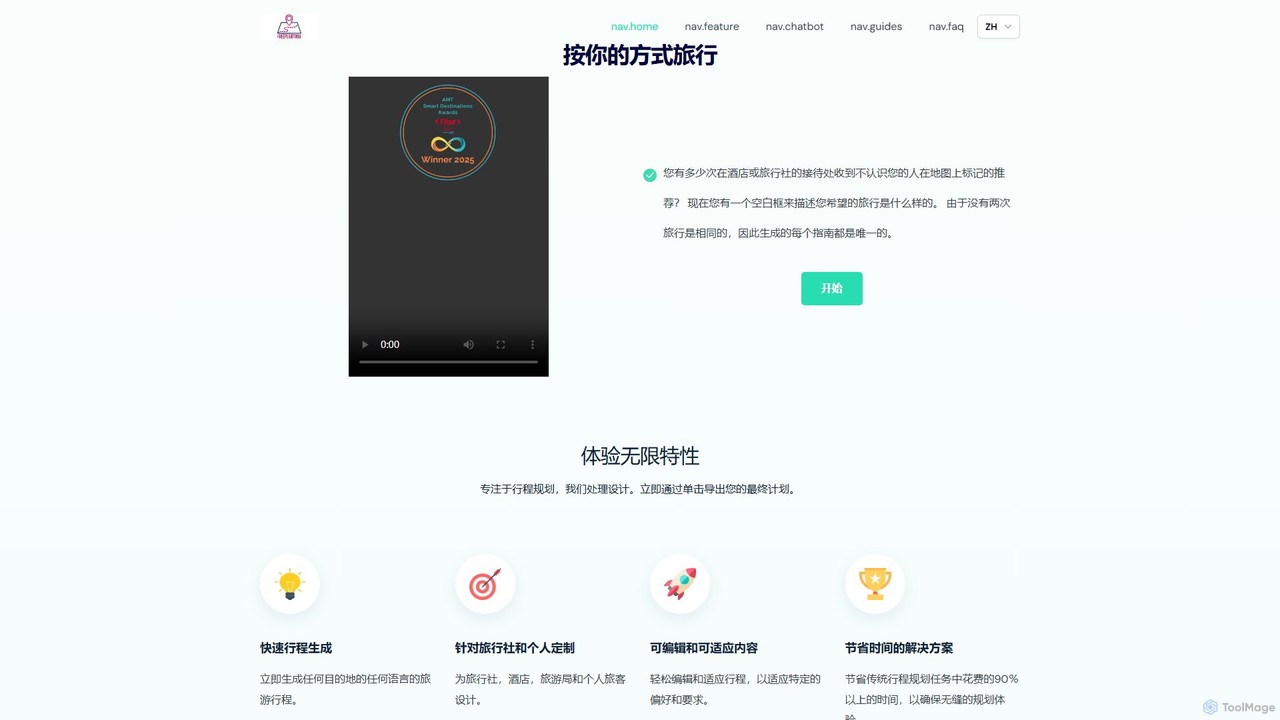
freeplantour is an AI-powered travel itinerary generator that creates unique, personalized, and editable travel plans in over 16 languages. Designed for individual travelers, travel agencies, and hotels, it saves over 90% of planning time by instantly generating detailed guides for any destination worldwide.
About Personalized Recommendations
Personalized Recommendations tools are AI-powered systems that analyze user data to predict and suggest relevant content, products, or services. These tools utilize machine learning algorithms, such as collaborative and content-based filtering, to understand individual preferences and behavioral patterns. They are essential for enhancing user experience, increasing engagement, and driving conversions across e-commerce, media, and content platforms. By delivering tailored suggestions in real-time, they help users discover new items of interest, fostering greater customer loyalty and satisfaction.
Core Features
- Behavioral Data Analysis: Processes user interactions like clicks, purchases, viewing history, and ratings to build user profiles.
- Recommendation Algorithms: Employs various models including collaborative filtering, content-based filtering, and hybrid approaches to generate relevant suggestions.
- Real-time Adaptation: Instantly updates recommendations based on the user's most recent activities and context.
- A/B Testing & Analytics: Provides dashboards to test different recommendation strategies and measure their impact on key metrics like conversion and engagement.
- Scalable API Integration: Offers robust APIs to easily integrate the recommendation engine into websites, mobile apps, and email systems.
Use Cases
These tools are widely used in various digital industries. E-commerce platforms like Amazon use them to suggest products. Streaming services such as Netflix and Spotify recommend movies and music. Digital publishers and news outlets also leverage them to create personalized content feeds for readers, increasing time on site.
How to Choose
When selecting a tool, consider the diversity of its recommendation algorithms and its ability to handle 'cold start' problems for new users. Evaluate its integration capabilities, ensuring it works with your existing tech stack via APIs or SDKs. Assess its scalability to handle your traffic volume with low latency. Finally, review its data privacy policies and compliance with regulations like GDPR.
Personalized RecommendationsUse Cases
Enhancing E-commerce Sales with Product Suggestions
An e-commerce manager uses a recommendation engine to increase average order value. The tool analyzes a user's browsing history, past purchases, and items in their cart. It then dynamically displays sections like 'Customers who bought this also bought' and 'You might also like' on product and checkout pages. This strategy encourages customers to discover and purchase complementary items, directly boosting sales and improving the shopping experience.
Creating Personalized News and Article Feeds
A digital publisher aims to increase reader engagement and time on site. They integrate a recommendation tool that tracks which articles a user reads, topics of interest, and interaction patterns. Based on this data, the system curates a unique 'For You' section on the homepage for each visitor, filled with content tailored to their preferences. This personalization transforms a generic news feed into a highly relevant content discovery experience, fostering reader loyalty.
Improving User Retention on Streaming Platforms
A video streaming service wants to reduce customer churn. It employs a sophisticated recommendation AI that analyzes viewing history, user ratings, and even the time of day a user watches. The AI then populates the user's interface with personalized carousels like 'Top Picks for You,' 'Because You Watched X,' and 'New Releases You Might Like.' By consistently surfacing relevant content, the service keeps users engaged and makes the subscription feel indispensable, significantly improving retention rates.
Automating Targeted Email Marketing Offers
A marketing specialist for an online retailer wants to personalize weekly promotional emails. They use a recommendation tool that integrates with their CRM and email platform. The tool analyzes each customer's purchase history and browsing behavior to automatically populate email templates with a unique set of recommended products. Instead of sending a generic newsletter, each recipient gets a curated list of items they are likely to be interested in, resulting in significantly higher open rates and click-through rates.
Customizing Learning Paths in EdTech Platforms
An online education platform uses a recommendation engine to create adaptive learning experiences. The AI assesses a student's performance on quizzes, course interactions, and stated learning goals. It then recommends supplementary materials, relevant articles, or the next logical course module to tackle. This personalized guidance helps students address knowledge gaps and progress at their own pace, making the learning process more effective and engaging.
Boosting In-App Engagement with Dynamic Suggestions
A mobile app developer for a productivity tool wants to guide users toward valuable features. They implement a recommendation engine that analyzes user actions within the app. If a user frequently creates tasks, the engine might suggest trying the 'project templates' feature via an in-app notification. This contextual, real-time guidance helps users discover the full potential of the app, increasing feature adoption and overall user engagement.