
ToolMage
Sign in

Best 1 Future Studies AI tools for Philosophy

Popular Future Studies AI tools in Philosophy include NovaCiv, helping you work more efficiently.

NovaCiv

NovaCiv

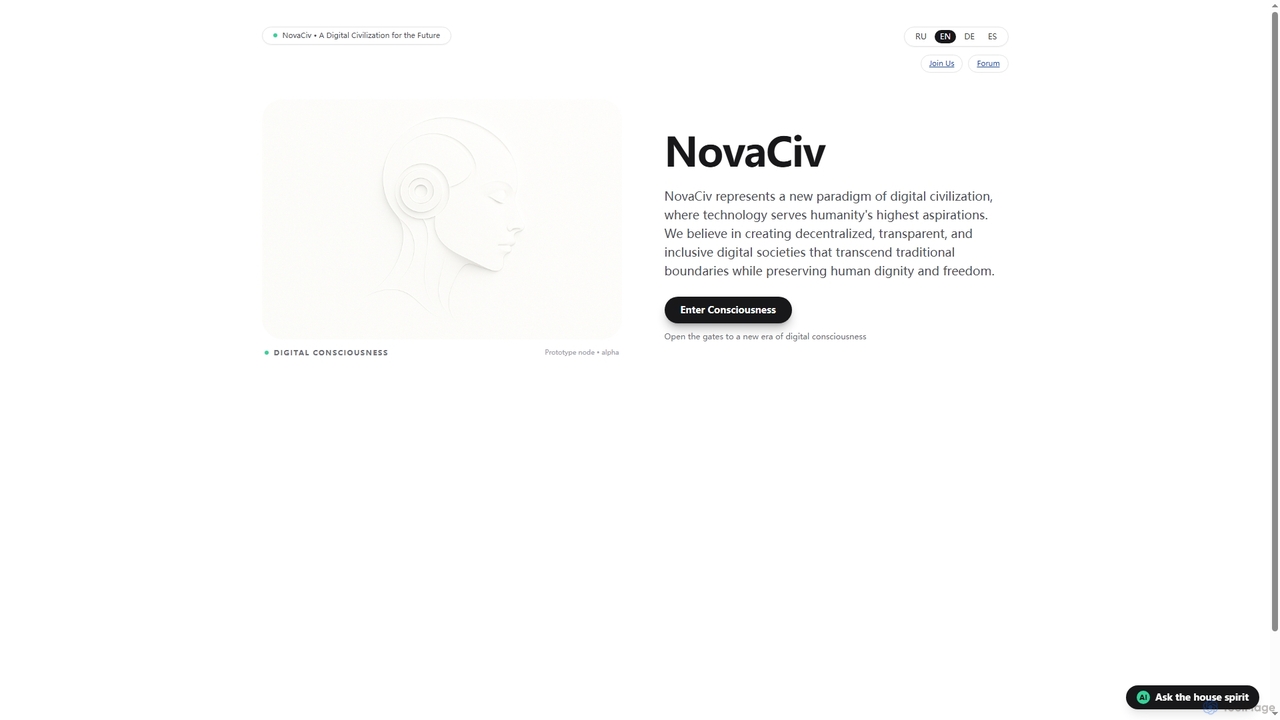
NovaCiv is an experimental, open platform envisioning a new digital civilization. It aims to create decentralized, transparent, and inclusive digital societies that prioritize human dignity and freedom. As a prototype node in its alpha stage, it invites contributors to build the future, featuring a community chat and an 'AI Ask the house spirit' conversational element.

Conversational Assistant
Visits 4.8KFavorites 171Likes 157

About Future Studies

Future Studies tools are AI-powered platforms designed to systematically explore possible, probable, and preferable futures. These tools leverage advanced data analytics, pattern recognition, and simulation techniques to identify emerging trends, detect weak signals, and generate diverse future scenarios. They empower strategists, policymakers, and researchers to make more informed decisions by understanding potential long-term impacts and opportunities.

Core Features

  • Trend Analysis & Forecasting: Identifies and projects long-term trends across social, economic, and technological domains.
  • Scenario Planning Assistance: Aids in creating and evaluating multiple future scenarios based on complex variable interactions.
  • Weak Signal Detection: Scans vast datasets to uncover early, subtle indicators of potentially transformative changes.
  • Risk & Opportunity Assessment: Evaluates potential risks and emerging opportunities within various future development paths.
  • Policy & Strategy Support: Provides data-driven insights to inform long-term planning for governments and corporations.

Applicable Scenarios

These tools are crucial for organizations and individuals engaged in long-term strategic thinking. They are used by corporate strategists to anticipate market shifts, government agencies for public policy foresight, and research institutions to explore societal evolution and technological trajectories.

How to Choose

When selecting a Future Studies AI tool, consider its data processing capabilities for diverse sources, the transparency and interpretability of its AI models, and the flexibility of its scenario generation features. User interface and ease of integration with existing workflows are also key factors for effective adoption.

Future Studies use cases

1

Corporate Long-Term Strategic Planning

Corporate strategists utilize Future Studies AI tools to anticipate industry shifts, technological disruptions, and market evolution over the next 5-10 years. By analyzing vast datasets of economic indicators, patent filings, and consumer behavior, these tools help generate plausible future scenarios, enabling companies to formulate robust long-term development blueprints and maintain a competitive edge.

2

Government Public Policy Foresight

Government agencies employ Future Studies AI tools to analyze demographic shifts, climate change impacts, and evolving social sentiments. This enables them to develop proactive public policies in areas like education, healthcare, and environmental protection. The tools provide data-driven insights into potential future challenges and opportunities, ensuring policies are resilient and forward-looking.

3

Technological Innovation Path Exploration

R&D departments and innovation hubs leverage Future Studies AI tools to identify emerging technology hotspots and potential breakthrough directions. By scanning scientific publications, patent databases, and venture capital investments, these tools help pinpoint promising areas for research and development, guiding resource allocation and fostering innovation incubation for future growth.

4

Venture Capital and Market Prediction

Venture capitalists and financial analysts use Future Studies AI tools to assess the long-term potential of emerging markets and the maturity of nascent technologies. By analyzing trend data, expert opinions, and geopolitical factors, these tools assist in making informed long-term investment decisions, identifying high-growth sectors, and mitigating future market risks.

5

Social and Cultural Transformation Research

Sociologists and cultural researchers employ Future Studies AI tools to monitor weak signals in social media, cultural products, and public discourse. This helps them predict the evolution of societal values, lifestyle changes, and emerging cultural phenomena. The tools provide a systematic way to track subtle shifts that could lead to significant social transformations, informing academic research and public understanding.

6

Education and Talent Development Planning

Educational institutions and HR departments utilize Future Studies AI tools to forecast future job skill demands and changes in educational models. By analyzing labor market trends, technological advancements, and demographic shifts, these tools guide curriculum design, talent development strategies, and lifelong learning initiatives, ensuring alignment with the evolving needs of the future workforce.

Future Studies FAQ

What are Future Studies AI tools?

Future Studies AI tools are advanced platforms that use artificial intelligence to systematically analyze data and generate insights about potential future developments. They go beyond simple predictions, focusing on exploring a range of possible, probable, and preferable futures. Key characteristics include trend identification, scenario generation, and weak signal detection, helping users understand long-term societal, technological, and economic shifts.

How does AI enhance Future Studies?

AI significantly enhances Future Studies by processing vast amounts of complex data far more efficiently than human analysts. It excels at identifying subtle patterns, correlations, and weak signals that might indicate emerging trends. AI tools can also simulate numerous future scenarios based on varying parameters, providing a more comprehensive and nuanced understanding of potential outcomes, thereby improving the robustness of strategic planning and foresight initiatives.

How to choose the right Future Studies AI tool?

Choosing the right Future Studies AI tool involves several key considerations. First, assess its data source compatibility and processing power for diverse, unstructured data. Second, evaluate the transparency and interpretability of its AI models, as understanding how insights are generated is crucial for trust. Third, consider the flexibility and depth of its scenario generation capabilities. Finally, prioritize user-friendliness and integration with your existing strategic planning or research workflows.

What is the difference between Future Studies AI tools and traditional market analysis tools?

Future Studies AI tools differ from traditional market analysis tools primarily in their time horizon and scope. Traditional tools typically focus on short-term predictions and existing market dynamics, often using historical data to project immediate trends. Future Studies AI tools, conversely, emphasize long-term foresight (5-50 years), explore multiple plausible futures, and integrate a broader range of qualitative and quantitative data, including weak signals and expert opinions, to understand systemic change and deep uncertainties.

What are the core functionalities of Future Studies AI tools?

The core functionalities of Future Studies AI tools include advanced trend analysis and forecasting, which identifies long-term patterns across various domains. They offer robust scenario planning assistance, enabling the creation and evaluation of diverse future possibilities. Crucially, these tools excel at weak signal detection, uncovering subtle indicators of change from vast datasets. Additionally, they provide risk and opportunity assessment, and support for informed policy and strategic decision-making.

Who typically uses Future Studies AI tools?

Future Studies AI tools are typically used by professionals and organizations focused on long-term planning and strategic foresight. This includes corporate strategists, government policymakers, urban planners, and military strategists who need to anticipate complex future environments. Additionally, academics in sociology, economics, and technology studies, as well as non-profit organizations focused on societal challenges, leverage these tools for research and advocacy.