
ToolMage
Sign in

Best 1 Assistant for Podcast Production

Popular Assistant in Podcast Production include Podmod, helping you work more efficiently.

Podmod
Paid

Podmod

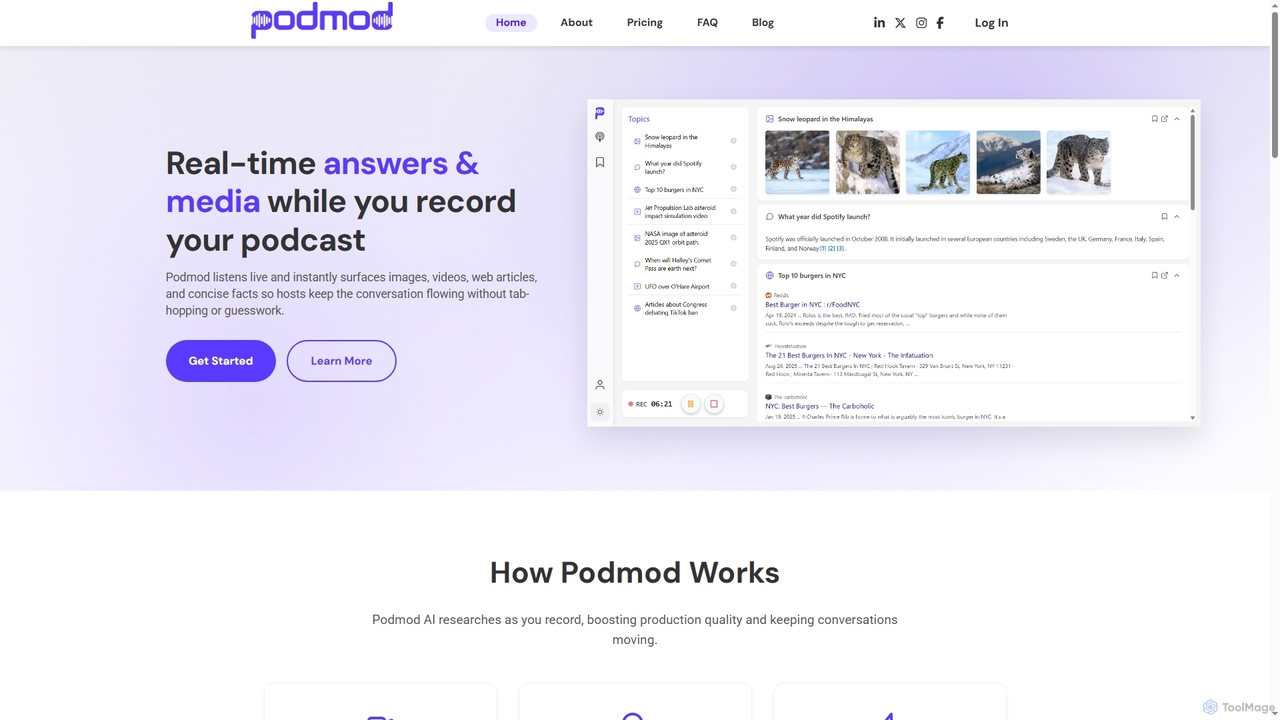
Podmod is an AI-powered podcast assistant that provides real-time research, fact-checking, and content retrieval during live recording sessions. It helps podcasters lead conversations with confidence, surfacing context, sources, media, and on-the-spot answers without breaking the flow. Podmod also automates show notes generation and offers full transcripts, streamlining the entire podcast production workflow.

Transcription
Visits 6.2KFavorites 125Likes 133

About Assistant

AI Podcast Assistants are specialized tools designed to automate and streamline various tasks within the podcast production workflow. They utilize technologies like speech-to-text, natural language processing (NLP), and audio analysis to handle repetitive yet crucial post-production activities. This allows creators to significantly reduce manual effort on tasks such as transcription, show note creation, and content repurposing. As a result, podcasters can focus more on creating high-quality content and engaging with their audience.

Core Features

  • Automated Transcription: Provides accurate, time-stamped transcripts of episodes with speaker identification.
  • Show Notes & Summary Generation: Automatically creates concise summaries, key takeaways, and structured show notes from the audio content.
  • Content Repurposing: Identifies key quotes, highlights, and potential clips suitable for social media posts, blogs, and newsletters.
  • Chapter & Timestamp Creation: Analyzes the episode to suggest logical chapters and timestamps for better listener navigation.
  • Topic & Keyword Analysis: Extracts main themes, keywords, and entities mentioned, aiding in SEO and content strategy.

Use Cases

These assistants are ideal for solo podcasters managing their entire workflow, production teams looking to scale their output, and marketing professionals aiming to maximize content reach. They are used to automate the creation of episode metadata, generate promotional materials, and improve the overall accessibility and discoverability of a podcast.

How to Choose

When selecting an AI Podcast Assistant, consider the accuracy of its transcription and speaker detection. Evaluate the quality and customizability of the generated show notes and summaries. Check for integrations with your podcast host or other marketing tools, and consider the range of languages supported if you have a global audience.

Assistant use cases

1

Automated Show Notes and Chapter Creation

A solo podcaster who handles all production tasks can use an AI Podcast Assistant to save hours on post-production. After uploading an episode's audio file, the tool automatically generates a full transcript. From this transcript, it extracts key topics, summarizes the conversation, and compiles structured show notes with links and resources mentioned. It also identifies shifts in conversation to create accurate timestamps for chapters, making the episode more accessible and easier for listeners to navigate. This process reduces manual work from several hours to just a few minutes of review and editing.

2

Generating Social Media Content from Episodes

A marketing team for a brand's podcast needs to promote each new episode across multiple platforms. Using an AI Podcast Assistant, they can instantly identify the most compelling quotes, key takeaways, and memorable moments from the audio. The tool can suggest short, shareable video clips or audiograms, generate tweet threads summarizing the episode, and draft a LinkedIn post highlighting key insights for a professional audience. This automates a significant part of the content creation process for promotion, ensuring consistent and engaging marketing materials are ready shortly after an episode is published.

3

High-Accuracy Transcription for Accessibility and SEO

A production agency creating podcasts for corporate clients needs to ensure high accessibility standards and maximize search engine visibility. They use an AI Podcast Assistant to generate highly accurate, speaker-labeled transcripts for every episode. These transcripts are then published on the website as blog posts, making the content accessible to hearing-impaired audiences and readable by search engine crawlers. The assistant's ability to identify and correctly spell specific jargon, brand names, and guest names is crucial for maintaining professionalism and improving the podcast's SEO performance by targeting relevant keywords.

4

Identifying Key Topics and Guest Mentions

A podcast producer managing a show with frequent expert guests needs to track topics and mentions efficiently. The AI assistant analyzes each episode's transcript to automatically identify and tag key themes, concepts, and any mentions of specific people, companies, or products. This creates a searchable database of content across all episodes. The producer can quickly find every instance a particular guest was mentioned or when a specific topic was discussed, which is invaluable for creating compilation episodes, referencing past conversations, and providing guests with clips where they were featured.

5

Episode Topic Ideation and Research

A content creator planning a new podcast season uses an AI assistant for brainstorming and research. By inputting a core theme, such as 'sustainable technology,' the assistant can analyze current trends, search for relevant news articles and academic papers, and suggest a list of potential episode topics. It can also identify potential expert guests in the field and generate a set of initial interview questions for each suggested topic. This streamlines the pre-production phase, helping the creator develop a well-researched and engaging content calendar much faster than with manual research methods alone.

6

Streamlining Guest Management and Communication

A podcast host who frequently interviews guests uses an AI assistant to manage scheduling and communication. The assistant can draft personalized invitation emails, find mutually available times on both the host's and guest's calendars, and send automated reminders before the recording session. After the interview, it can automatically generate a thank-you email that includes links to the published episode and pre-written social media snippets for the guest to share. This automates the administrative overhead of guest coordination, allowing the host to focus on preparing for and conducting great interviews.

Assistant FAQ

What is an AI Podcast Assistant?

An AI Podcast Assistant is a software tool that uses artificial intelligence to automate tasks in the podcast production process. Its primary function is to analyze audio content to perform actions like transcribing speech to text, generating show notes and summaries, identifying key topics, and creating content for social media promotion. These assistants help podcasters save significant time in post-production, allowing them to focus on content creation.

How do I choose the right AI Podcast Assistant?

To choose the right tool, consider these factors:

  • Transcription Accuracy: Check the accuracy of the speech-to-text engine, especially for multiple speakers, accents, and technical jargon.
  • Feature Set: Determine if you need basic transcription or more advanced features like show note generation, chapter creation, and social media content repurposing.
  • Integrations: Look for integrations with your podcast hosting platform, cloud storage, or marketing tools to streamline your workflow.
  • Language Support: Ensure it supports the primary language of your podcast and any other languages you may need.
  • Pricing: Compare pricing models (e.g., per-minute, subscription) to find one that fits your budget and production volume.
What's the difference between an AI Podcast Assistant and a simple transcription tool?

A simple transcription tool focuses on one task: converting audio to text. An AI Podcast Assistant is a more comprehensive solution built specifically for the podcasting workflow. While it includes transcription as a core feature, it goes further by using AI to analyze the transcribed text. It can automatically generate summaries, show notes, chapters, titles, and social media content. Essentially, a transcription tool gives you raw text, while a podcast assistant processes that text to create multiple valuable assets for your show.

What key features should I look for in an AI Podcast Assistant?

Look for a combination of features that best suits your workflow. Key features include:

  • High-Accuracy Transcription with Speaker Diarization: The ability to accurately convert audio to text and distinguish between different speakers.
  • Automated Show Notes: Generation of summaries, key takeaways, and resource lists.
  • Chapter/Timestamp Generation: Automatic creation of navigation points for listeners.
  • Content Repurposing Tools: Features that identify and help create social media clips, audiograms, blog posts, or newsletters from episode content.
  • Topic and Keyword Extraction: Analysis of the content to identify main themes for SEO and content strategy.
Who can benefit most from using an AI Podcast Assistant?

While any podcaster can benefit, certain groups find these tools particularly valuable:

  • Solo Podcasters: Individuals who manage every aspect of their show, from recording to marketing, can save immense amounts of time on post-production.
  • Podcast Production Teams: Agencies and teams can scale their output and handle more clients by automating repetitive tasks across multiple shows.
  • Content Marketers: Marketers can efficiently repurpose a single podcast episode into dozens of content pieces (clips, quotes, articles) to maximize reach and engagement.
  • Corporate Podcasters: Businesses that need to ensure accessibility (via transcripts) and want to extract key insights for internal use or marketing will find these tools very effective.