ToolMage
Sign in

Best 1 Rfp Management AI tools for Procurement

Popular Rfp Management AI tools in Procurement include RFP360, helping you work more efficiently.

RFP360
Paid

RFP360

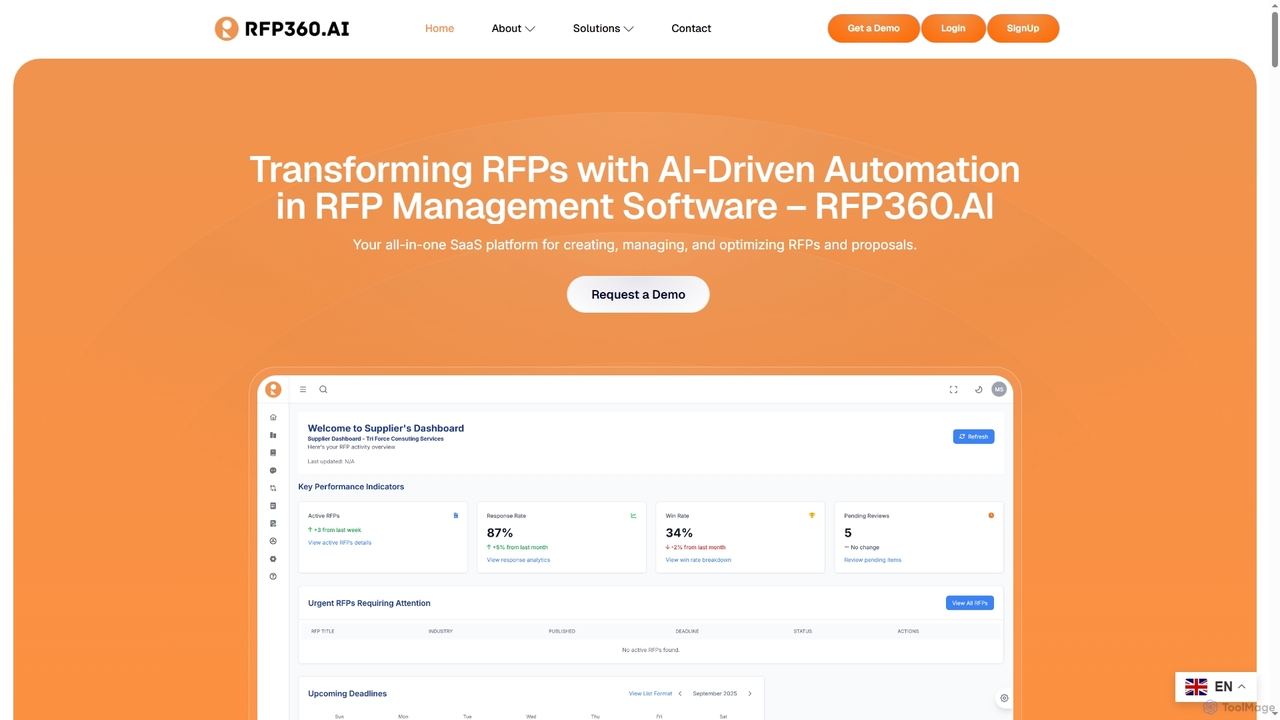
RFP360 is an AI-powered SaaS platform that revolutionizes the entire RFP and proposal lifecycle for both buyers and suppliers. It streamlines creation, management, and optimization of sourcing events and competitive bids, leveraging automation and intelligent insights to accelerate workflows and improve outcomes.

Workflow Automation
Visits 4.2KFavorites 119Likes 114

About Rfp Management

RFP Management tools are specialized AI-powered platforms designed to streamline and automate the entire Request for Proposal (RFP) process within procurement. These tools leverage artificial intelligence to enhance efficiency in creating, distributing, collecting, and evaluating vendor proposals. They significantly reduce manual effort, improve transparency, and ensure a more strategic and compliant vendor selection, ultimately leading to better purchasing decisions and cost savings for organizations.

Core Features

  • Automated Proposal Generation: AI assists in drafting RFP documents, populating standard sections, and ensuring consistency.
  • Vendor Communication Hub: Centralized platform for secure Q&A, document sharing, and real-time communication with potential suppliers.
  • Intelligent Bid Evaluation: AI algorithms analyze vendor responses, score proposals based on predefined criteria, and highlight key differences.
  • Compliance and Audit Trails: Automatically tracks all interactions, changes, and decisions, ensuring regulatory adherence and providing a clear audit history.
  • Collaborative Workflows: Facilitates seamless teamwork among internal stakeholders for proposal review and decision-making.

Applicable Scenarios

Organizations across various sectors, including government, healthcare, IT, and manufacturing, utilize RFP management tools. Procurement teams, project managers, and legal departments leverage these platforms to manage complex purchasing initiatives, from sourcing new software solutions to selecting construction contractors or service providers, ensuring a fair and efficient bidding process.

How to Choose

When selecting an RFP management tool, consider its integration capabilities with existing procurement or ERP systems, the level of AI automation offered for proposal generation and evaluation, and its compliance features. Evaluate user-friendliness, scalability to handle varying RFP volumes, and the vendor's support and training resources to ensure a smooth adoption and long-term value.

Featured tool rankings

Rfp Management use cases

1

Streamlining Software Vendor Selection

An IT procurement manager needs to select a new enterprise software solution. Using an RFP management tool, they can quickly generate a detailed RFP, distribute it to multiple vendors, and use AI-powered evaluation features to compare technical specifications, pricing models, and service level agreements, ensuring the best fit for the organization's needs.

2

Managing Large-Scale Construction Bids

A government agency is tendering for a major infrastructure project. The RFP management platform allows them to handle hundreds of complex bids, manage secure Q&A sessions with contractors, track all amendments, and conduct a transparent, auditable evaluation process to select the most qualified and compliant construction firm.

3

Automating Marketing Agency Sourcing

A marketing director is looking to hire a new advertising agency. The tool helps them define project scope, create a standardized RFP template, invite agencies to submit proposals, and collaboratively review creative portfolios and strategic approaches with internal teams, leading to a more objective and efficient selection.

4

Ensuring Compliance in Healthcare Procurement

A hospital procurement team needs to source new medical equipment while adhering to strict regulatory guidelines. The RFP management system provides robust audit trails, ensures all vendor communications are recorded, and helps evaluate proposals against compliance checklists, minimizing risk and ensuring ethical purchasing.

5

Expediting Professional Services Procurement

A consulting firm requires specialized legal or financial advisory services. The procurement department uses the tool to rapidly issue RFPs, manage confidential document exchanges, and facilitate internal stakeholder reviews of proposals, accelerating the selection of expert service providers while maintaining confidentiality.

6

Optimizing IT Hardware & Software Renewals

A large corporation needs to renew multiple IT hardware and software contracts. The RFP management platform helps them proactively issue RFPs to existing and new vendors, compare renewal terms against market rates, and negotiate better deals based on comprehensive bid analysis, ensuring cost-effective and timely renewals.

Rfp Management FAQ

What are RFP Management tools?

RFP Management tools are software solutions designed to automate and centralize the entire Request for Proposal (RFP) process. They help organizations efficiently create, distribute, collect, and evaluate proposals from potential vendors, streamlining a critical part of the procurement lifecycle. These tools leverage features like automated document generation, vendor communication portals, and intelligent bid analysis to improve decision-making and reduce administrative overhead.

How do RFP Management tools differ from general Procurement software?

While RFP Management is a component of broader Procurement software, it specifically focuses on the Request for Proposal stage. General Procurement software covers the entire procure-to-pay cycle, including requisitioning, purchasing, inventory management, and invoicing. RFP Management tools offer deeper, specialized functionalities for proposal creation, vendor engagement, and detailed bid evaluation, whereas general procurement might have more basic RFP features or integrate with dedicated RFP solutions.

What are the key benefits of using AI in RFP Management?

AI significantly enhances RFP Management by automating repetitive tasks like drafting standard RFP sections and analyzing large volumes of vendor responses. AI-powered tools can quickly identify key information, score proposals against predefined criteria, and highlight discrepancies or compliance issues. This leads to faster evaluation cycles, more objective decision-making, reduced human error, and ultimately, more strategic vendor selections and cost savings.

What features should I look for in an RFP Management tool?

When selecting an RFP Management tool, prioritize features such as automated RFP generation and templating, a centralized vendor portal for communication and submission, and robust bid evaluation capabilities (including AI-driven scoring and comparison). Also consider integration with existing systems (CRM, ERP), compliance tracking, collaborative workflows for internal teams, and comprehensive reporting and analytics to monitor performance.

Who typically uses RFP Management tools?

RFP Management tools are primarily used by procurement departments, sourcing managers, project managers, and legal teams within organizations of all sizes. They are essential for anyone responsible for vendor selection, contract negotiation, and ensuring compliance in purchasing processes. Industries such as government, education, healthcare, IT, and manufacturing frequently rely on these tools for efficient and transparent procurement.