DSALTA
DSALTA is an AI-powered all-in-one platform that automates vendor risk, compliance, and trust management. It helps organizations achieve …
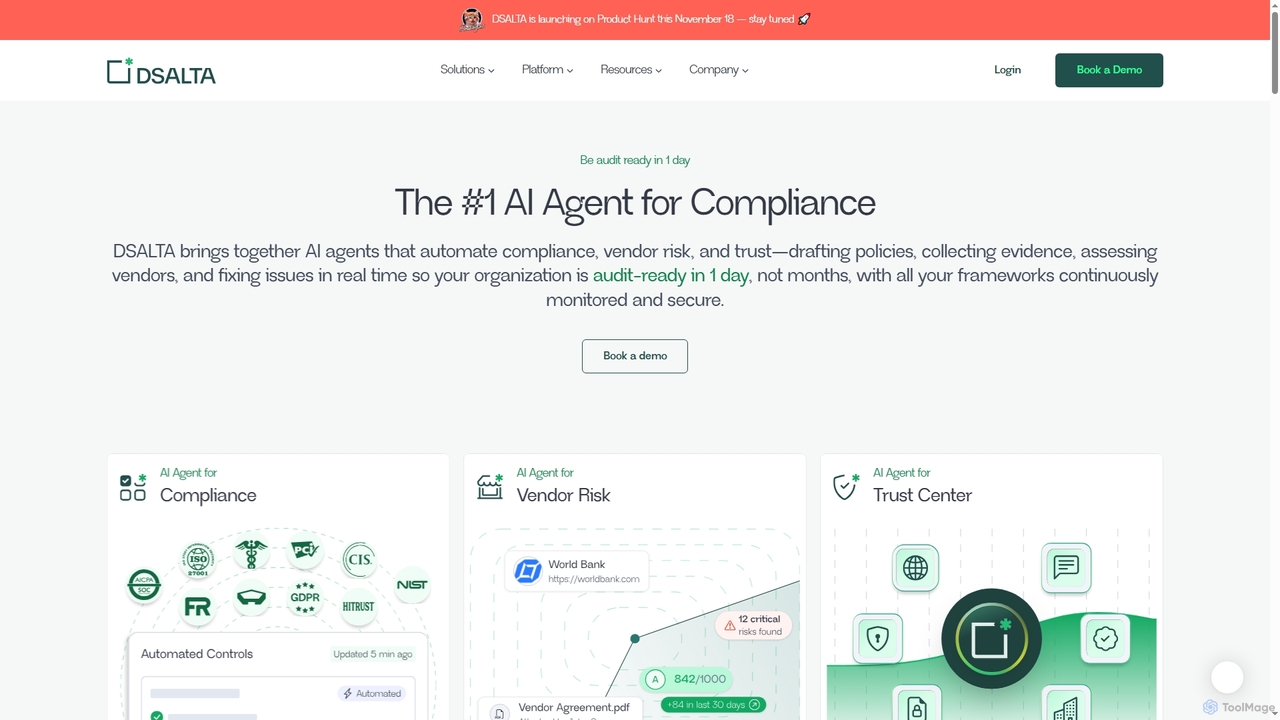
DSALTA is an AI-powered all-in-one platform that automates vendor risk, compliance, and trust management. It helps organizations achieve audit readiness in days, not months, by drafting policies, collecting evidence, assessing vendors, and fixing issues in real-time. With continuous monitoring and AI-driven remediation, DSALTA streamlines GRC workflows, reduces manual effort, and enhances security posture. A 14-day free trial is available.
About Audit Management
Audit Management tools are AI-powered platforms designed to streamline and enhance the entire audit lifecycle, from planning to reporting. These tools leverage artificial intelligence to automate data collection, identify anomalies, assess risks, and ensure compliance with regulatory standards, significantly boosting productivity in audit processes. They provide a centralized system for managing internal and external audits, improving accuracy and reducing manual effort.
Core Features
- Automated Data Collection: Integrates with various systems to automatically gather relevant financial, operational, and compliance data for audit trails.
- Risk Assessment & Anomaly Detection: Utilizes AI algorithms to identify high-risk areas, detect unusual patterns, and flag potential fraud or non-compliance issues.
- Compliance Monitoring: Continuously tracks adherence to industry regulations and internal policies, providing real-time alerts on deviations.
- Audit Workflow Automation: Automates task assignments, evidence requests, and review processes, ensuring a structured and efficient audit execution.
- Report Generation & Analytics: Generates comprehensive audit reports, dashboards, and insights, facilitating informed decision-making and stakeholder communication.
Applicable Scenarios
Organizations across various sectors, including finance, healthcare, manufacturing, and government, utilize AI audit management tools. Internal audit teams leverage them for continuous monitoring and risk assessment, while external auditors use them to enhance the efficiency and depth of their engagements. Compliance officers also benefit from automated tracking of regulatory adherence.
How to Choose
When selecting an AI audit management tool, consider its integration capabilities with existing enterprise systems, the breadth of its AI-driven analytics (e.g., predictive auditing, NLP for document review), its compliance framework support, and scalability. Evaluate the user interface for ease of use and the vendor's commitment to data security and regulatory updates.

Audit ManagementUse Cases
Automating Financial Transaction Audits
For financial institutions, AI audit management tools can automatically analyze millions of financial transactions daily. The AI identifies suspicious patterns, unusual transaction volumes, or deviations from policy, flagging them for human review. This significantly reduces the time spent on manual sampling and enhances the detection of potential fraud or errors, ensuring regulatory compliance and financial integrity.
Streamlining Regulatory Compliance Checks
Compliance officers in highly regulated industries like healthcare or pharmaceuticals use these tools to continuously monitor adherence to specific regulations (e.g., HIPAA, GDPR). The AI can scan documents, contracts, and operational data for compliance gaps, providing real-time alerts and generating audit trails to demonstrate due diligence during external inspections, minimizing legal risks.
Enhancing Internal Audit Efficiency
Internal audit departments within large corporations deploy AI audit management systems to manage their annual audit plans. The tools automate the scheduling of audits, assign tasks to auditors, track evidence collection, and facilitate review processes. AI-driven risk scoring helps prioritize audit areas, allowing teams to focus resources on the most critical risks and improve overall audit coverage.
Predictive Risk Assessment for Operations
Manufacturing companies can use AI audit tools to predict potential operational risks before they escalate. By analyzing production data, quality control logs, and maintenance records, the AI can forecast equipment failures, quality deviations, or supply chain disruptions that might impact compliance or safety. This enables proactive interventions, preventing costly issues and ensuring continuous operational integrity.
Vendor and Third-Party Audit Management
Enterprises with extensive supply chains or numerous third-party vendors utilize these tools to manage vendor compliance audits. The AI can process vendor contracts, performance data, and security certifications, automatically assessing adherence to service level agreements (SLAs) and security protocols. This ensures that third-party risks are effectively managed and mitigated, protecting the organization's reputation and data.
Continuous Monitoring of IT Security Controls
IT security teams and auditors use AI audit management platforms to continuously monitor the effectiveness of security controls and identify vulnerabilities. The AI analyzes log data, network traffic, and system configurations to detect unauthorized access attempts, policy violations, or misconfigurations. This provides real-time insights into the security posture, enabling rapid response to threats and maintaining robust cybersecurity compliance.