Productivity Best in category 1 results Infrastructure As Code AI Tool

Popular AI tools in the Infrastructure As Code field of Productivity include CloudSoul, etc., helping you quickly improve efficiency.

CloudSoul

CloudSoul

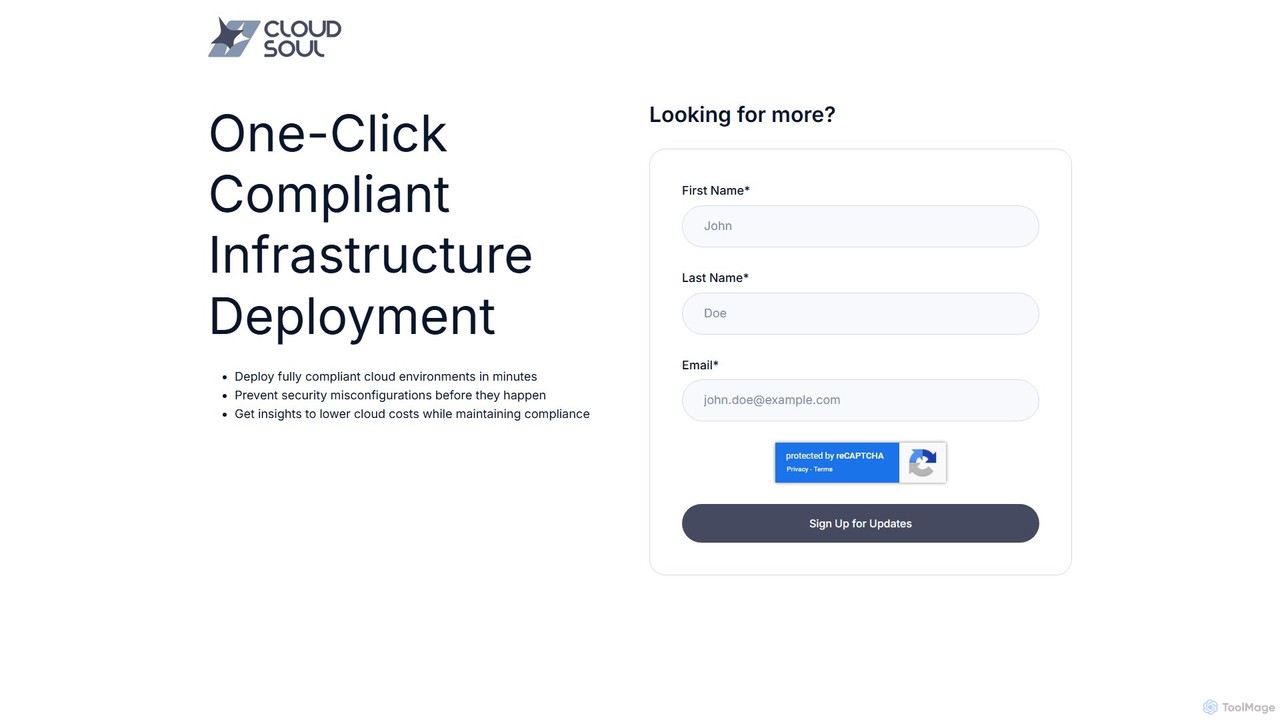
CloudSoul is an AI-powered platform for one-click compliant cloud infrastructure deployment. It automates the creation of secure, cost-optimized, …

2.7K

About Infrastructure As Code

Infrastructure as Code (IaC) tools are a class of software that manage and provision technology infrastructure through machine-readable definition files. Instead of manual configuration, these tools use code—such as YAML, JSON, or a domain-specific language—to define servers, networks, and databases. This approach allows development and operations teams to build, change, and version their infrastructure safely and efficiently. By treating infrastructure like software, IaC tools significantly enhance developer productivity and ensure consistent, repeatable environments.

Core Features

  • Declarative Syntax: Define the desired end state of your infrastructure, and the tool handles the steps to get there.
  • Version Control Integration: Store infrastructure configurations in Git or other version control systems to track changes and collaborate.
  • Automated Provisioning: Automatically create, update, and delete infrastructure resources across cloud providers.
  • Idempotency: Applying the same configuration multiple times produces the same result, preventing configuration drift.
  • Modularity and Reusability: Create reusable components to build complex infrastructure from standardized blocks.

Use Cases

Infrastructure as Code is essential for DevOps teams, platform engineers, and system administrators. It is widely used for setting up cloud environments on platforms like AWS, Azure, and GCP, integrating infrastructure changes into CI/CD pipelines for automated deployments, and implementing disaster recovery plans by enabling rapid replication of entire systems.

How to Choose

When selecting an Infrastructure as Code tool, consider the following: Does it use a declarative or imperative approach? Is it cloud-agnostic or specific to one provider? Evaluate its state management capabilities, as this is crucial for tracking resource status. Also, consider the language used (a specific DSL vs. a general-purpose language like Python or Go) and the strength of its community and ecosystem.

Infrastructure As CodeUse Cases

1

Automated Cloud Environment Provisioning

A DevOps engineer needs to create identical development, staging, and production environments on AWS. Using an IaC tool like Terraform, they write a configuration file defining the entire infrastructure, including VPCs, subnets, EC2 instances, and security groups. By running a single command, the tool provisions all resources automatically. This process eliminates manual errors, ensures consistency across all environments, and reduces setup time from days to minutes.

2

Integrating Infrastructure Changes into CI/CD Pipelines

A software team wants to manage infrastructure changes alongside application code changes. They store their IaC files (e.g., Ansible playbooks) in the same Git repository as their application. When a developer pushes a change to the IaC files, it triggers a CI/CD pipeline. The pipeline automatically lints, validates, and plans the infrastructure changes, showing a preview. Upon approval, the pipeline applies the changes, ensuring that infrastructure updates are tested and deployed systematically, just like application code.

3

Automated Disaster Recovery

A Site Reliability Engineer (SRE) is tasked with creating a disaster recovery plan. They use an IaC tool to script the entire production infrastructure. This script is version-controlled and regularly tested. In the event of a regional outage, the SRE can execute the script to replicate the entire stack—networking, servers, databases, and applications—in a different region within minutes. This IaC-driven approach dramatically reduces Recovery Time Objective (RTO) and provides a reliable, repeatable method for failover.

4

Managing Multi-Cloud Deployments

A company utilizes services from both AWS and Azure to avoid vendor lock-in. A platform engineering team uses a cloud-agnostic IaC tool like Pulumi, which allows them to use a general-purpose language like Python. They write code that defines resources on both cloud platforms. This enables them to manage their entire multi-cloud infrastructure from a single codebase, enforce consistent security policies across clouds, and easily shift workloads between providers if needed.

5

Creating Ephemeral Development Environments

A developer needs to test a new feature that requires a complex setup, including a specific database version and several microservices. Instead of manually configuring their local machine, they run a single command using an IaC script (e.g., with Vagrant or Docker Compose). This instantly spins up a complete, isolated environment that mirrors production. After testing, they can tear down the entire environment with another command, leaving their system clean. This allows for rapid, risk-free experimentation and ensures all developers work with consistent setups.

6

Enforcing Security and Compliance Policies

A security team needs to ensure all cloud resources comply with company policies, such as encrypting all storage volumes and restricting public access. They use an IaC policy-as-code tool (like Open Policy Agent) integrated with their primary IaC workflow. This tool automatically checks every proposed infrastructure change against a predefined set of rules. Any non-compliant change is automatically blocked before it can be applied, providing a proactive security guardrail and ensuring continuous compliance across the organization.

Infrastructure As CodeFrequently Asked Questions