Productivity Best in category 3 results Investing AI Tool

Popular AI tools in the Investing field of Productivity include One Click Crypto、WeInvest、alphasquared, etc., helping you quickly improve efficiency.

alphasquared

alphasquared

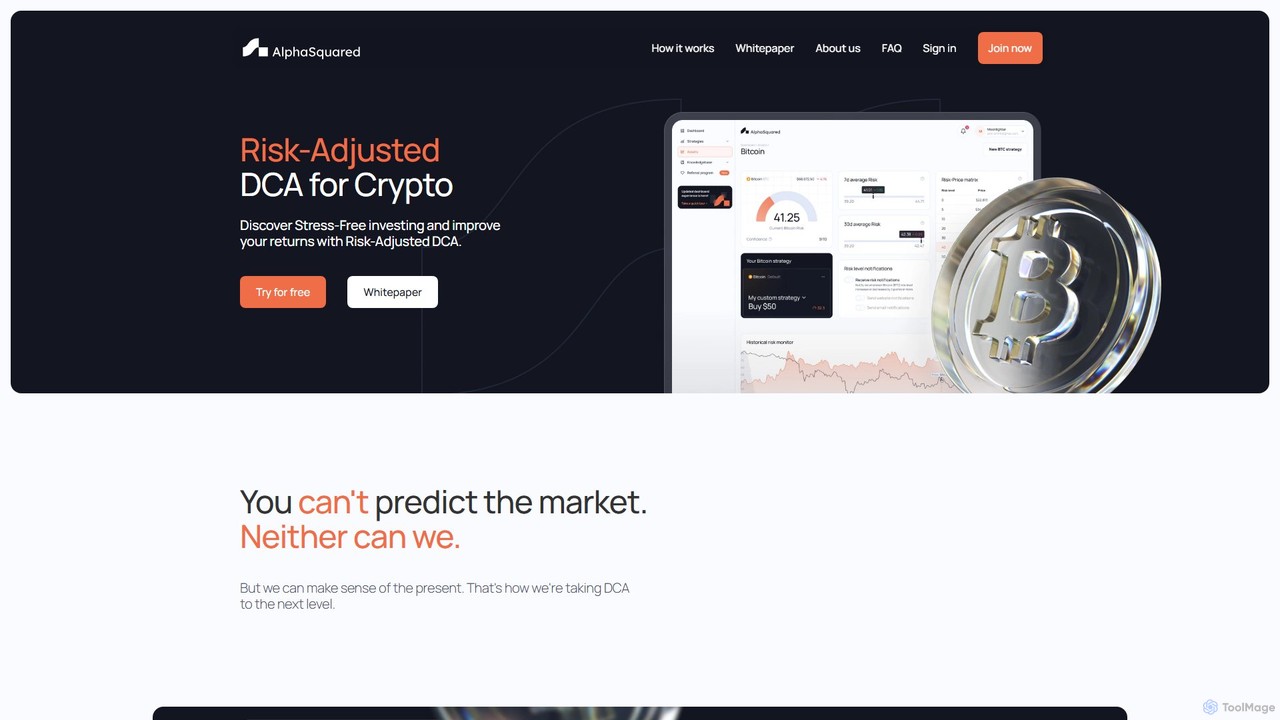
alphasquared is an AI-powered platform that provides a unique risk metric for crypto assets like Bitcoin and Ethereum. …

4.0K
Free
One Click Crypto

One Click Crypto

One Click Crypto is an AI-powered DeFi platform that provides personalized yield farming portfolio recommendations. It helps users …

7.7K
WeInvest

WeInvest

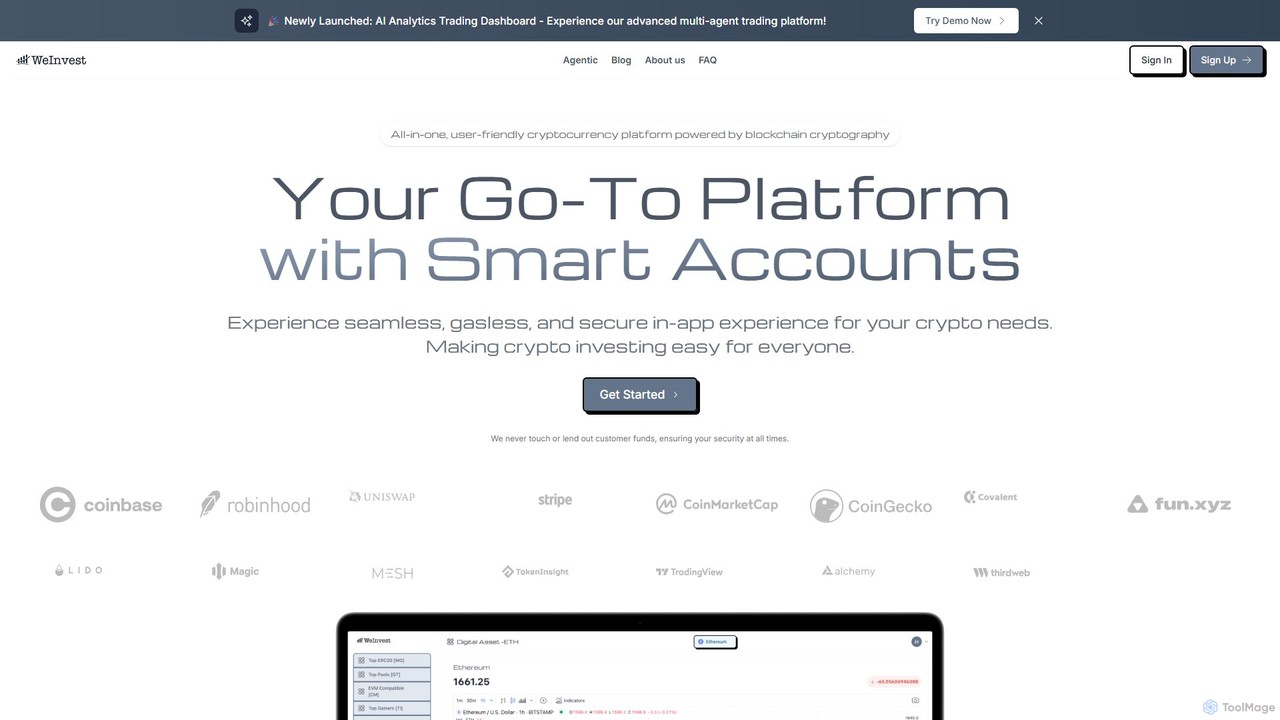
WeInvest is an all-in-one, AI-powered cryptocurrency investment platform designed to simplify digital asset management. It combines non-custodial security …

4.1K

About Investing

AI Investing tools are applications that use artificial intelligence to analyze financial markets and inform investment decisions. These tools leverage machine learning models and natural language processing to process vast amounts of data, including market prices, financial reports, and news sentiment. Their primary value is to identify potential opportunities, assess risk, and automate complex analysis, significantly enhancing an investor's productivity and decision-making capabilities. They transform raw data into actionable insights for stocks, cryptocurrencies, and other assets.

Core Features

  • Predictive Market Analysis: Utilizes machine learning algorithms to forecast potential price movements and market trends based on historical data.
  • Sentiment Analysis: Scans news articles, social media, and reports to gauge market sentiment towards specific assets.
  • Automated Portfolio Optimization: Suggests or automatically executes portfolio rebalancing to align with risk tolerance and financial goals.
  • Advanced Risk Assessment: Models various market scenarios to quantify the potential risk of an investment strategy or individual asset.
  • Data Aggregation: Consolidates financial data from multiple sources into a unified, easy-to-analyze dashboard.

Use Cases

These tools are valuable for individual retail investors, professional financial analysts, and wealth management firms. Common applications include screening thousands of stocks for undervalued opportunities, backtesting trading strategies against historical data without risking capital, and monitoring real-time news flow for events that could impact a portfolio.

How to Choose

When selecting an AI investing tool, consider the scope of data sources (e.g., stocks, crypto, forex), the depth of analysis provided (technical, fundamental, or sentiment), integration capabilities with your brokerage accounts, and the user interface's complexity. It's also important to match the tool's features with your personal investment strategy and technical expertise.

InvestingUse Cases

1

Identifying Undervalued Stocks for Retail Investors

A retail investor aims to build a long-term portfolio by finding fundamentally strong but undervalued companies. Using an AI investing tool, they can set up complex screeners that go beyond simple P/E ratios. The investor inputs criteria like consistent revenue growth, low debt-to-equity ratios, and positive free cash flow. The AI scans thousands of public companies in minutes, presenting a shortlist of potential investments. It can also analyze recent earnings call transcripts for positive or negative sentiment, providing a qualitative layer to the quantitative data and saving the investor dozens of hours of manual research.

2

Backtesting Algorithmic Trading Strategies

An advanced trader or a small hedge fund develops a new trading strategy based on technical indicators and market volatility. Before deploying real capital, they use an AI investing tool's backtesting module. They can define their entry and exit rules, stop-loss parameters, and position sizing. The AI engine then simulates this strategy against years of historical market data, providing detailed performance reports. These reports include metrics like total return, Sharpe ratio, maximum drawdown, and win/loss rate, allowing the trader to refine the strategy and understand its potential risks without losing any money.

3

Monitoring Market Sentiment for Crypto Assets

A cryptocurrency trader needs to stay ahead of the highly volatile market, which is heavily influenced by social media trends and news. They use an AI tool that specializes in sentiment analysis for digital assets. The tool continuously monitors Twitter, Reddit, Telegram, and major news outlets for mentions of specific cryptocurrencies. It analyzes the tone (positive, negative, neutral) and volume of conversations, presenting the data on a real-time dashboard. The trader can set up alerts for sudden spikes in negative sentiment or a surge in hype, allowing them to make timely decisions to either take profits or cut losses before the broader market reacts.

4

Automating Portfolio Rebalancing for Busy Professionals

A busy professional wants to maintain a diversified investment portfolio with a target allocation of 60% stocks and 40% bonds, but lacks the time for frequent manual adjustments. They connect their brokerage account to an AI-powered portfolio management tool. The tool monitors their holdings in real-time. When market movements cause the portfolio to drift from the target allocation (e.g., to 65% stocks), the AI automatically calculates and executes the necessary trades to rebalance it. This ensures the portfolio stays aligned with the investor's long-term strategy and risk tolerance without requiring constant manual intervention.

5

Analyzing Macroeconomic Data for Sector Rotation

A portfolio manager for an investment fund needs to decide which economic sectors to overweight or underweight for the upcoming quarter. They use an AI tool that aggregates and analyzes macroeconomic indicators like inflation rates, GDP growth forecasts, employment data, and central bank statements. The AI identifies correlations between these indicators and the historical performance of different sectors (e.g., technology, healthcare, energy). It might highlight that rising interest rates have historically led to underperformance in the tech sector. Based on these AI-driven insights, the manager can make a more informed decision to rotate capital from technology into sectors like consumer staples, which tend to be more resilient.

6

Generating Investment Theses and Reports

A financial analyst is tasked with preparing a detailed report on a potential investment target. Instead of spending days gathering data, they use a generative AI investing tool. The analyst inputs the company's ticker symbol, and the AI generates a structured draft report. This report includes a summary of the business, analysis of financial statements, a list of key competitors with their strengths and weaknesses, a summary of recent news and sentiment, and an outline of potential risks and opportunities. The analyst then uses this AI-generated foundation to apply their own expertise, verify the data, and add their final recommendation, reducing the report creation time by over 50%.

InvestingFrequently Asked Questions