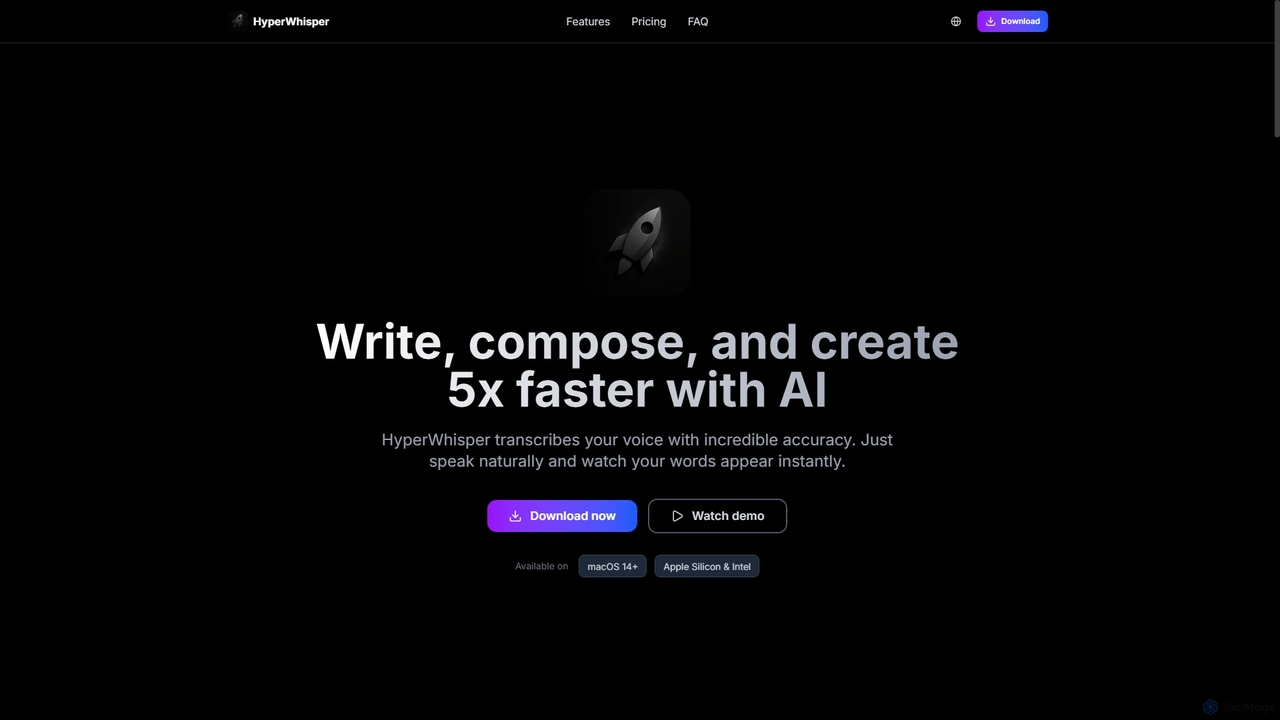
HyperWhisper
HyperWhisper is an AI-powered voice transcription application for macOS, designed to convert spoken words into text with exceptional …
HyperWhisper is an AI-powered voice transcription application for macOS, designed to convert spoken words into text with exceptional accuracy and speed. It supports over 100 languages, offers robust offline capabilities, and prioritizes user privacy, making it ideal for professionals seeking efficient content creation and note-taking.
About Legal Assistant
AI Legal Assistants are specialized tools designed to automate and augment legal workflows for professionals. Leveraging Natural Language Processing (NLP) and machine learning, these platforms analyze legal documents, conduct research, and manage case-related information. This enables law firms and corporate legal departments to increase efficiency, reduce human error, and focus on high-value strategic tasks. They provide critical support in areas ranging from contract lifecycle management to litigation preparation.
Core Features
- Document Analysis: Automatically extracts key clauses, dates, risks, and obligations from contracts and other legal documents.
- Legal Research: Rapidly searches vast databases of case law, statutes, and legal precedents to find relevant information.
- E-Discovery Support: Assists in identifying, collecting, and reviewing electronically stored information (ESI) for litigation.
- Case Management Automation: Helps organize case files, track deadlines, manage calendars, and automate routine client communications.
Applicable Scenarios
These tools are primarily used by lawyers, paralegals, and corporate counsel within law firms and enterprise legal departments. They are essential for processes such as due diligence in mergers and acquisitions, preparing for litigation by analyzing thousands of documents, and ensuring regulatory compliance by monitoring contractual obligations.
Selection Criteria
When choosing an AI Legal Assistant, evaluate its specialization (e.g., contract law, litigation), jurisdiction coverage, and data security protocols to ensure client confidentiality. Also, consider its integration capabilities with your existing case management software and the user-friendliness of its interface for your team.
Legal AssistantUse Cases
Automate Contract Review and Risk Analysis
Corporate lawyers and paralegals often review numerous contracts for compliance and risk. An AI Legal Assistant automates this by analyzing uploaded agreements against company policies or legal standards. The tool flags non-standard clauses, identifies potential risks, and highlights missing provisions in minutes. This process can reduce manual review time by over 70%, ensuring consistency and allowing legal teams to focus on negotiation and strategic advice rather than routine checks.
Accelerate Legal Research for Case Preparation
Litigators and legal researchers need to find relevant case law and statutes quickly. Instead of manually searching through databases, an AI Legal Assistant can understand natural language queries (e.g., "find precedents for intellectual property disputes in California involving software"). It then instantly surfaces the most relevant cases, statutes, and legal articles, often summarizing key points. This dramatically speeds up the research phase of litigation, allowing legal teams to build stronger arguments faster.
Streamline Due Diligence in M&A Transactions
During mergers and acquisitions (M&A), legal teams must review thousands of documents in a virtual data room. An AI Legal Assistant can be deployed to automatically categorize documents, extract critical information like change-of-control clauses or liabilities, and generate summary reports. This allows the M&A team to quickly identify red flags and assess risk, reducing the manual effort by hundreds of hours and enabling a more thorough and accurate due diligence process within tight deadlines.
Manage and Monitor Contractual Obligations
For in-house legal teams, tracking obligations across hundreds or thousands of active contracts is a major challenge. An AI Legal Assistant can extract all key dates, renewal deadlines, payment terms, and other obligations from contracts and centralize them in a dashboard. The system can then send automated alerts for upcoming deadlines, helping the company avoid missed renewals or breaches of contract. This proactive management minimizes financial and legal risks associated with contract non-compliance.
Draft Initial Legal Documents from Templates
Paralegals and junior associates spend significant time drafting routine legal documents like non-disclosure agreements (NDAs), employment contracts, or simple motions. An AI Legal Assistant can generate a first draft in seconds based on a few key inputs (e.g., names, dates, specific clauses). The tool uses approved templates and clause libraries to ensure compliance and consistency. This allows legal professionals to move directly to the review and customization phase, saving hours of foundational drafting work on each document.
Support E-Discovery Document Review
In litigation, legal teams must sift through massive volumes of electronic data (emails, documents, messages) to find relevant evidence. An AI Legal Assistant with e-discovery capabilities can automate the initial review. It uses predictive coding and keyword analysis to quickly identify and tag potentially relevant documents, separating them from irrelevant ones. This significantly reduces the number of documents requiring manual review by expensive human lawyers, cutting costs and accelerating the discovery process.