HyperWhisper
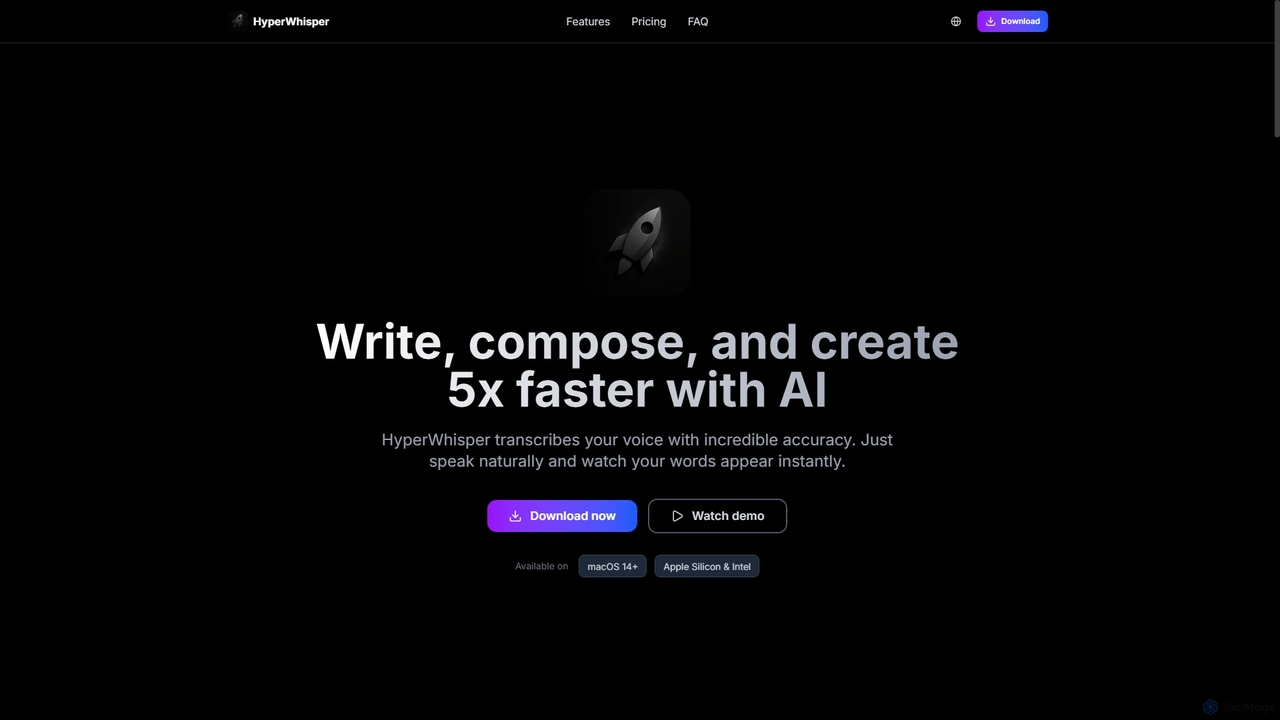
HyperWhisper is an AI-powered voice transcription application for macOS, designed to convert spoken words into text with exceptional …
HyperWhisper is an AI-powered voice transcription application for macOS, designed to convert spoken words into text with exceptional accuracy and speed. It supports over 100 languages, offers robust offline capabilities, and prioritizes user privacy, making it ideal for professionals seeking efficient content creation and note-taking.
About Medical Assistant
AI Medical Assistants are specialized software tools that leverage artificial intelligence to support healthcare professionals with clinical and administrative tasks. They utilize technologies like Natural Language Processing (NLP) and machine learning to analyze patient data, automate documentation, and provide decision support. These tools aim to reduce the administrative burden on clinicians, improve diagnostic accuracy, and enhance the efficiency of healthcare operations. By handling repetitive tasks, they allow medical staff to focus more on direct patient care and complex clinical decision-making.
Core Features
- Clinical Documentation Automation: Automatically transcribes patient-doctor conversations into structured clinical notes (e.g., SOAP notes) and integrates them into Electronic Health Records (EHR).
- Diagnostic Decision Support: Analyzes medical images (X-rays, CT scans), lab results, and patient symptoms to identify potential conditions and highlight areas for review.
- Medical Coding and Billing Automation: Suggests or automates the assignment of ICD-10 and CPT codes based on clinical documentation, reducing errors and speeding up billing cycles.
- Intelligent Patient Triage: Uses AI-powered chatbots to conduct initial symptom assessments, guiding patients to the appropriate level of care and scheduling appointments.
- Data Analysis for Research: Processes large datasets of clinical records to identify trends, patient cohorts, and insights for medical research and clinical trials.
Use Cases
AI Medical Assistants are primarily used in hospitals, private clinics, telehealth services, and medical research institutions. They are valuable for physicians, nurses, radiologists, and clinic administrators seeking to optimize workflows, reduce burnout from paperwork, and improve the quality of care. For example, a primary care physician can use an AI scribe to eliminate after-hours charting, while a hospital can deploy an AI triage system to manage patient flow more effectively.
How to Choose
When selecting an AI Medical Assistant, prioritize tools with robust security and compliance certifications, such as HIPAA and GDPR. Ensure the tool offers seamless integration with your existing Electronic Health Record (EHR) system to avoid data silos. Evaluate the clinical accuracy and validation of its AI models, looking for peer-reviewed studies or regulatory approvals. Finally, consider the tool's specialization—whether it's tailored for a specific field like radiology, dermatology, or general practice—to ensure it meets your specific clinical needs.

Medical AssistantUse Cases
Automating Clinical Note-Taking for Physicians
A primary care physician uses an AI Medical Assistant during patient consultations. The tool functions as an ambient scribe, listening to the natural conversation between the doctor and patient. It automatically transcribes the dialogue, identifies key clinical information such as symptoms, diagnoses, and treatment plans, and structures it into a standard SOAP note format directly within the Electronic Health Record (EHR). This eliminates the need for manual data entry after appointments, saving the physician an average of 10-15 minutes per patient and significantly reducing after-hours administrative work and burnout.
Preliminary Analysis of Medical Images for Radiologists
A radiologist in a busy hospital uses an AI assistant to pre-screen medical images like chest X-rays or CT scans. The AI algorithm analyzes each image for specific abnormalities, such as potential nodules, fractures, or signs of pneumonia. It highlights suspicious regions and assigns a priority score to each case. This allows the radiologist to triage their worklist, focusing first on the most critical scans identified by the AI. The tool acts as a 'second pair of eyes,' improving detection rates for subtle findings and increasing the overall efficiency and accuracy of the diagnostic process.
Automating Medical Coding and Billing for Clinics
A medical billing specialist at a multi-physician clinic uses an AI Medical Assistant to streamline the revenue cycle. The tool integrates with the clinic's EHR and analyzes clinical notes, lab results, and physician orders. Based on this documentation, it automatically suggests the most accurate ICD-10 (diagnosis) and CPT (procedure) codes. This reduces manual coding time by up to 70% and minimizes human error, leading to fewer claim denials from insurance companies. The system also flags incomplete or ambiguous documentation, prompting physicians for clarification to ensure compliance and maximize reimbursement.
Intelligent Triage and Appointment Scheduling for Patients
A large healthcare system implements an AI Medical Assistant on its patient portal and mobile app. When a patient reports symptoms, the AI-powered chatbot engages them in a conversational triage process, asking questions based on established clinical protocols. It assesses the urgency of the condition and recommends the appropriate care setting—such as the emergency room, an urgent care clinic, or a telehealth visit. If an appointment is needed, the AI seamlessly integrates with the scheduling system to find and book a suitable time slot, improving patient access to care and optimizing clinic resource allocation.
Personalizing Chronic Disease Management Plans
A care manager for patients with diabetes uses an AI Medical Assistant to monitor and personalize treatment plans. The platform collects data from various sources, including the patient's glucose monitor, fitness tracker, and electronic food diary. The AI analyzes this continuous stream of data to identify trends, predict potential hyperglycemic or hypoglycemic events, and provide personalized, real-time feedback to the patient. It also alerts the care manager to concerning patterns, enabling proactive intervention and adjustment of the care plan, ultimately leading to better glycemic control and patient outcomes.
Accelerating Clinical Trial Data Analysis
A medical researcher at a pharmaceutical company uses an AI assistant to analyze vast amounts of data from clinical trials. The tool can process structured data (like lab results) and unstructured data (like clinician notes) from thousands of participants far faster than manual methods. It helps identify patient cohorts with specific characteristics, detect subtle adverse event patterns, and find correlations between biomarkers and treatment outcomes. This significantly accelerates the research and development process, helping to bring new, effective treatments to market more quickly and safely.