Property Management Best in category 1 results Automation AI Tool

Popular AI tools in the Automation field of Property Management include AutomatePropertyManagement, etc., helping you quickly improve efficiency.

AutomatePropertyManagement

AutomatePropertyManagement

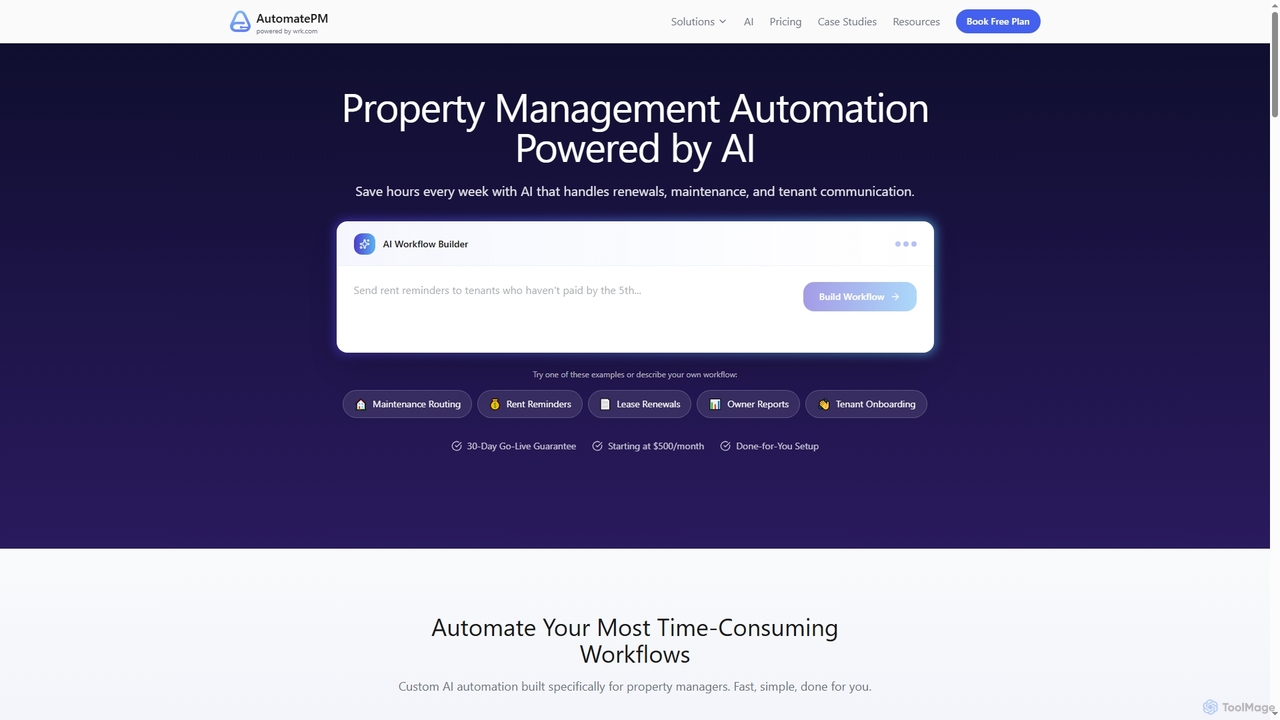
AutomatePropertyManagement is an AI-powered platform designed to streamline property management workflows, saving property managers 20-40 hours per month. …

2.9K

About Automation

Automation tools for property management are specialized platforms designed to streamline and automate routine operational tasks. These tools leverage AI and rule-based workflows to handle processes like tenant communication, maintenance requests, and rent collection without direct manual intervention. Their primary value lies in reducing administrative overhead, minimizing human error, and allowing property managers to focus on strategic growth and tenant satisfaction. Many platforms also offer predictive analytics for maintenance needs and tenant retention.

Core Features

  • Automated Workflows: Set up rule-based triggers for tasks like rent reminders, lease renewal notices, and maintenance dispatch.
  • AI-Powered Communication: Utilize chatbots and automated email/SMS sequences for tenant inquiries, onboarding, and announcements.
  • Financial Automation: Automate rent collection, late fee calculation, invoice processing, and financial reporting.
  • Maintenance Coordination: Automatically log service requests, assign vendors based on predefined criteria, and track job progress.
  • Automated Reporting: Generate scheduled reports on financials, occupancy, and maintenance for property owners and stakeholders.

Use Cases

These tools are essential for property management companies, individual landlords, real estate investment trusts (REITs), and facility managers. They are applied to automate daily operations in residential, commercial, and mixed-use properties, from managing a single unit to a large portfolio, ensuring consistency and efficiency at scale.

How to Choose

When selecting a tool, consider its integration capabilities with your existing property management software (PMS). Evaluate its scalability to handle your portfolio size, the level of customization available for workflows, and the robustness of its financial and reporting features. Also, assess the user interface for both managers and tenants to ensure ease of use.

AutomationUse Cases

1

Automating Tenant Rent Collection and Reminders

Property managers often spend hours chasing late payments. Automation tools automatically send rent reminders via email or SMS before the due date. If a payment is missed, the system can automatically calculate and apply late fees according to the lease agreement and send follow-up notifications. This process ensures consistent cash flow, reduces uncomfortable conversations, and provides a clear, documented history of all financial transactions, saving significant administrative time each month.

2

Streamlining Maintenance Request Workflows

When a tenant submits a maintenance request, an automation tool can instantly categorize the issue, create a work order, and assign it to the appropriate pre-approved vendor based on skill set and availability. The system keeps the tenant, manager, and vendor updated at every stage—from scheduling to completion. This eliminates phone tag, reduces response times, and ensures all requests are tracked and resolved efficiently, improving tenant satisfaction and protecting property value.

3

Optimizing the Leasing and Onboarding Process

For leasing agents, automation tools can manage the entire applicant journey. They can automatically syndicate vacancy listings to multiple platforms, use AI chatbots to answer initial prospect questions 24/7, and schedule property viewings. Once an application is received, the system can automate credit and background checks, send the lease agreement for e-signature, and trigger a welcome sequence for new tenants, ensuring a smooth and professional onboarding experience.

4

Automating Lease Renewal Management

Manually tracking lease expiration dates for a large portfolio is prone to error. Automation platforms can monitor all lease end-dates and automatically trigger a renewal workflow 60-90 days in advance. This includes sending personalized renewal offers to tenants, providing options for month-to-month or new term agreements, and facilitating digital signing. This proactive approach helps reduce vacancy rates and secures renewals with minimal manual effort from the leasing team.

5

Generating Automated Financial and Operational Reports

Compiling monthly or quarterly reports for property owners is a time-consuming task. Automation tools connect directly to financial and operational data, generating comprehensive reports on demand. These can include rent rolls, profit and loss statements, maintenance summaries, and vacancy rate analyses. By automating report generation, managers provide owners with timely, accurate insights into portfolio performance without spending days manually compiling data in spreadsheets.

6

Managing Smart Building Access and Security

For properties equipped with smart locks and IoT devices, automation tools can manage access control. They can automatically generate temporary access codes for maintenance vendors or self-guided tours, which expire after use. For new tenants, the system can activate their permanent access upon lease start and automatically revoke it upon move-out. This enhances security, eliminates the hassle of physical keys, and creates a modern, convenient experience for residents.

AutomationFrequently Asked Questions