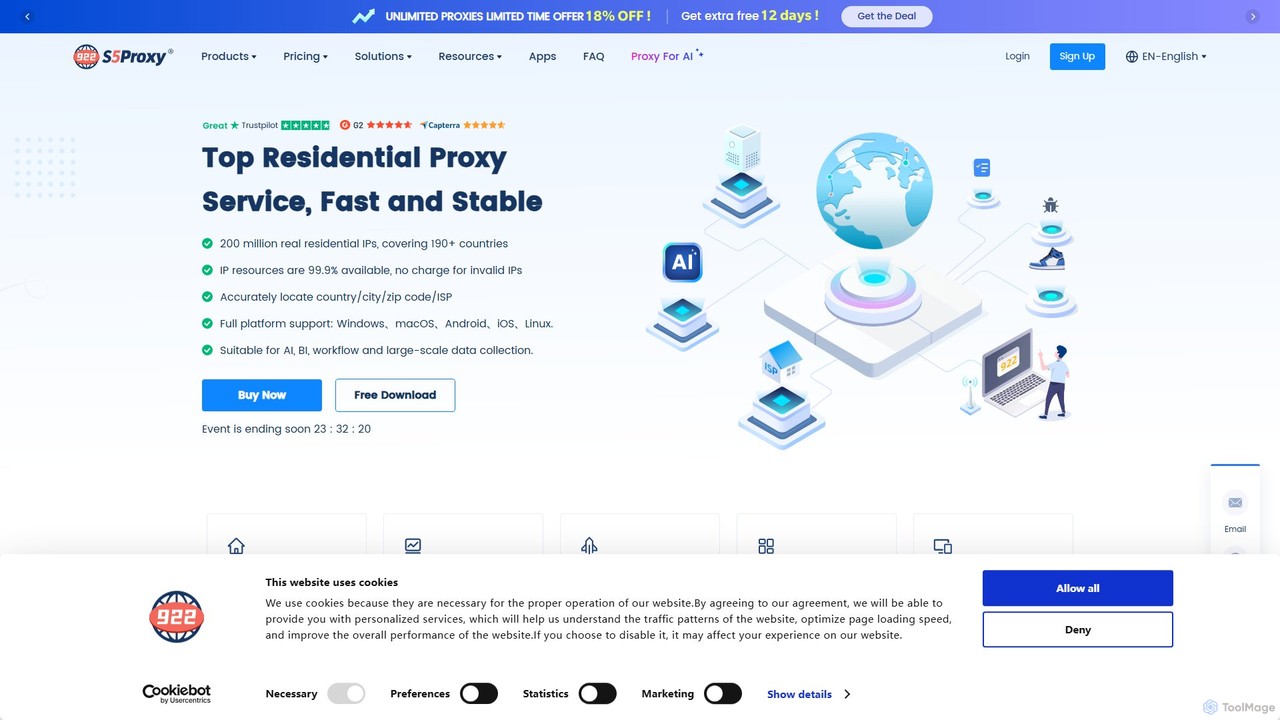
Residential proxies are a sophisticated type of proxy service that routes internet traffic through IP addresses assigned by Internet Service Providers (ISPs) to real, legitimate residential users. Unlike data center proxies, these IPs originate from genuine home internet connections, making online activities appear as if they are performed by a regular, organic user. This inherent authenticity provides an unparalleled level of anonymity and significantly reduces the risk of detection or blocking by even the most advanced anti-bot systems and online services, making them ideal for sensitive data collection and identity management tasks. Within the broader category of proxy services, residential proxies stand out for their high trust factor and ability to mimic human browsing behavior.
Core Features
- High Anonymity: Traffic is virtually indistinguishable from that of a real user, offering superior stealth and trust to target websites.
- Extensive Geo-targeting: Users can precisely select IP addresses from a vast network spanning specific countries, regions, cities, or even ISPs worldwide.
- High Success Rate: Due to their legitimate nature, residential IPs are far less prone to being blacklisted or detected by sophisticated anti-bot and fraud prevention systems.
- Flexible Session Control: Offers options for both rotating IPs (a new IP for each request) and sticky sessions (maintaining the same IP for a defined duration), crucial for multi-step online tasks.
Applicable Scenarios
Residential proxies are indispensable for a wide array of tasks requiring high trust and authenticity. This includes comprehensive web scraping for market intelligence, where businesses collect competitor pricing or product data without triggering IP bans. They are also vital for ad verification and brand protection, allowing marketing agencies to verify ad placements and detect fraudulent clicks from specific geographical regions, ensuring campaign integrity. Furthermore, they enable secure management of multiple social media accounts, robust SEO monitoring across diverse locations, and accessing geo-restricted content seamlessly.
Key Selection Criteria
When selecting a residential proxy service, several factors are paramount. Evaluate the size and global distribution of the IP pool to ensure comprehensive coverage in target regions. Consider the granularity of geo-targeting options and the flexibility of session control, which impacts task continuity and success. Assess bandwidth limitations and the pricing structure, often based on bandwidth usage, to align with budget and operational needs. Finally, prioritize providers offering robust infrastructure, high uptime, and responsive 24/7 customer support to ensure reliable and uninterrupted operation.