Freudly
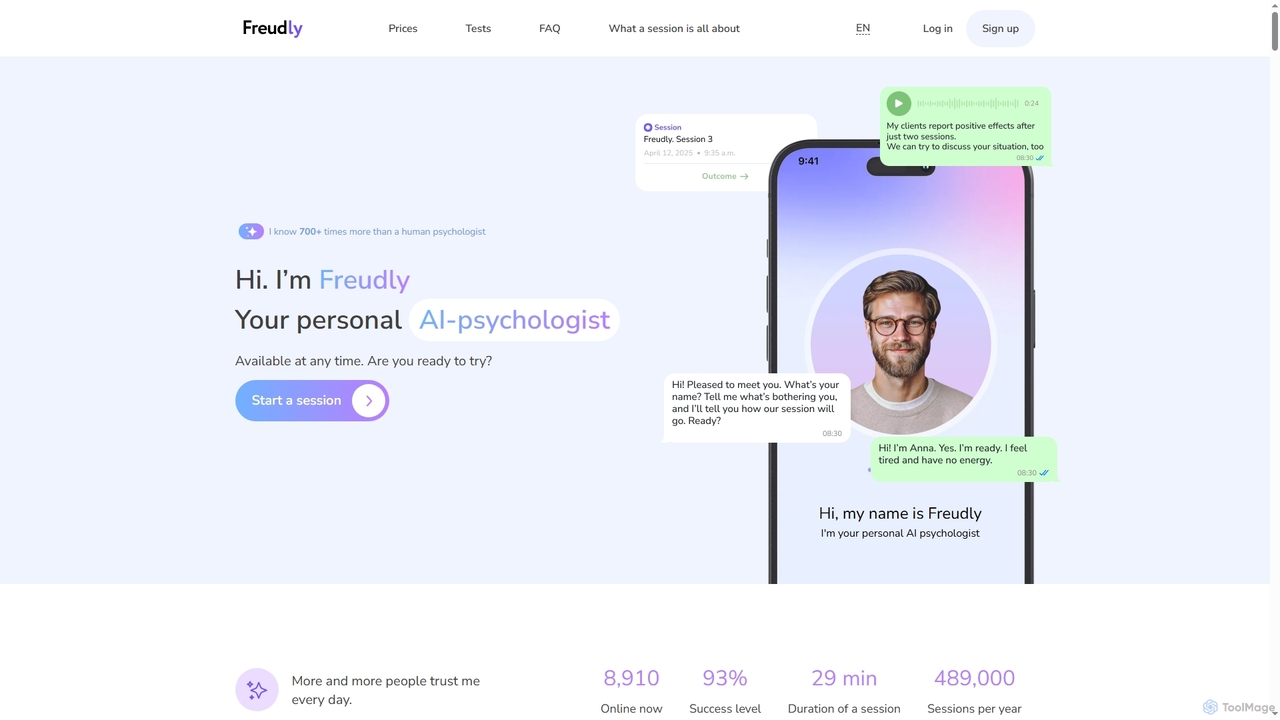
Freudly is an AI-powered personal psychologist offering 24/7 anonymous mental health support. It provides evidence-based therapy sessions, psychological …
Freudly is an AI-powered personal psychologist offering 24/7 anonymous mental health support. It provides evidence-based therapy sessions, psychological tests, emotion journaling, and personalized growth plans to help users understand emotions, manage stress, anxiety, and improve overall well-being.
About Diagnostic Tools
Diagnostic Tools are AI-powered tools designed to assess, identify, and analyze psychological states, cognitive functions, or behavioral patterns within the broader field of psychology. These tools leverage machine learning, natural language processing, and data analysis to interpret various inputs like text, voice, or physiological data. Their primary purpose is to provide objective insights, aiding mental health professionals, researchers, and individuals in understanding well-being, detecting potential issues early, and informing personalized interventions.
Core Features
- Emotion Recognition: Analyzes text, voice, or facial expressions to identify a user's emotional state.
- Cognitive Assessment: Evaluates memory, attention, and problem-solving skills through interactive tasks or questionnaires.
- Behavioral Pattern Analysis: Monitors and analyzes user behavior data (e.g., social media activity, device usage) to identify anomalies or specific patterns.
- Mental Health Screening: Conducts preliminary screenings for risks like depression or anxiety based on questionnaires or conversational input.
- Personalized Reporting: Generates detailed diagnostic reports and individualized insights to support professional decision-making.
Applicable Scenarios
These tools are invaluable in clinical psychology for initial assessments and tracking patient progress, in corporate wellness programs for anonymous employee mental health screening, and in education to identify learning disabilities or emotional issues for early intervention.
How to Choose
When selecting AI diagnostic tools, prioritize data privacy and security compliance (e.g., GDPR, HIPAA). Evaluate the diagnostic accuracy and clinical validation of the algorithms. Consider integration capabilities with existing healthcare systems and assess user experience, ensuring results are interpretable and actionable.

Diagnostic ToolsUse Cases
Automating Initial Mental Health Screenings
Clinical psychologists and therapists can utilize AI diagnostic tools to conduct initial mental health screenings for new patients. By analyzing patient intake forms, self-reported symptoms, and even voice patterns during an initial interview, the AI can quickly identify potential risk factors or indicators for common conditions like depression, anxiety, or PTSD. This streamlines the assessment process, allowing practitioners to focus on more in-depth evaluations and personalized care plans, saving significant time in the diagnostic journey.
Early Identification of Adolescent Mental Health Risks
School counselors utilize AI tools to analyze student online behavior and text communications, identifying early signs of depression or anxiety for timely intervention and support. This proactive approach helps educators and parents address potential issues before they escalate, fostering a healthier learning environment and improving student well-being.
Personalized Cognitive Assessment for Learning Disabilities
Educational psychologists and special education teachers can deploy AI diagnostic tools to conduct personalized cognitive assessments for students suspected of having learning disabilities. These tools can adapt assessment tasks based on a student's responses, pinpointing specific areas of cognitive weakness (e.g., working memory, processing speed, executive function). The detailed, objective data generated helps in creating highly individualized education plans (IEPs) and intervention strategies, leading to more effective support and improved academic outcomes for students.
Assisting Clinical Depression Assessment
Psychologists employ AI diagnostic tools to analyze a patient's voice tone, micro-expressions, and conversational content, aiding in the assessment of depression severity and type. This objective data complements traditional clinical interviews, providing a more comprehensive and nuanced understanding of the patient's condition, which can lead to more targeted treatment plans.
Monitoring Treatment Progress and Relapse Risk
Mental health professionals can use AI diagnostic tools for continuous monitoring of patients undergoing treatment. By regularly collecting data through questionnaires, mood tracking apps, or even passive data from wearables, these tools can detect subtle changes in symptoms or behavior patterns. This allows for early identification of treatment plateaus, potential relapses, or the need for adjusting therapeutic approaches, providing timely interventions and improving long-term patient outcomes by proactively managing their mental health journey.
Corporate Employee Mental Wellness Surveys
HR departments deploy anonymous AI mental health screening tools to regularly assess employee stress levels and emotional states, identifying potential risks and offering support resources. This allows companies to proactively address mental health concerns, reduce burnout, and create a more supportive work environment, ultimately boosting productivity and employee retention.
Supporting Research in Mental Health Trends
Researchers in psychology and public health can leverage AI diagnostic tools to analyze large datasets for identifying emerging mental health trends, prevalence rates, and correlations between various factors. These tools can process anonymized data from diverse populations, offering insights into how societal changes, environmental factors, or specific interventions impact mental well-being. This capability significantly accelerates the pace of research, enabling evidence-based policy-making and the development of more effective public health strategies to address mental health challenges on a broader scale.
Elderly Cognitive Impairment Screening
Nursing homes use AI cognitive assessment tools, through simple gamified tasks or dialogues, to regularly screen seniors' memory and attention, enabling early detection of conditions like Alzheimer's risk. This non-invasive and engaging method helps identify subtle changes in cognitive function, allowing for timely medical consultation and personalized care plans to maintain quality of life.
Enhancing Accessibility to Mental Health Assessments
AI diagnostic tools can significantly improve accessibility to mental health assessments, especially in underserved or remote areas. Individuals can complete initial screenings or self-assessments through user-friendly interfaces on their devices, reducing geographical barriers and wait times. This democratizes access to early detection and guidance, allowing more people to understand their mental health needs and seek professional help sooner, ultimately contributing to better population-level mental well-being and reducing the burden on traditional healthcare systems.
Personalized Learning Disability Diagnosis
Educational specialists leverage AI tools to analyze student learning patterns, answering habits, and emotional responses, diagnosing learning disabilities such as dyslexia or ADHD to inform customized teaching plans. This data-driven approach allows for highly personalized interventions, ensuring students receive the specific support they need to overcome challenges and achieve their full academic potential.
Objective Assessment for Forensic Psychology
In forensic psychology, AI diagnostic tools can provide objective assessments that complement traditional methods. For instance, they can analyze linguistic patterns in written statements or interviews to detect inconsistencies, emotional states, or potential deception, aiding in credibility assessments. While not replacing human judgment, these tools offer an additional layer of data-driven insight, enhancing the rigor and impartiality of psychological evaluations in legal contexts, such as competency evaluations or risk assessments for reoffending, thereby supporting more informed judicial decisions.
Remote Teletherapy Diagnostic Support
Remote therapists integrate AI diagnostic tools into video sessions to real-time analyze client emotional shifts and language patterns, providing objective data support to enhance diagnostic efficiency and accuracy. This allows therapists to gain deeper insights into client states, even in a virtual setting, leading to more informed clinical decisions and improved therapeutic outcomes for individuals seeking remote mental health care.