Mental Health Best in category 1 results Ai Therapy AI Tool

Popular AI tools in the Ai Therapy field of Mental Health include Freudly, etc., helping you quickly improve efficiency.

Freudly

Freudly

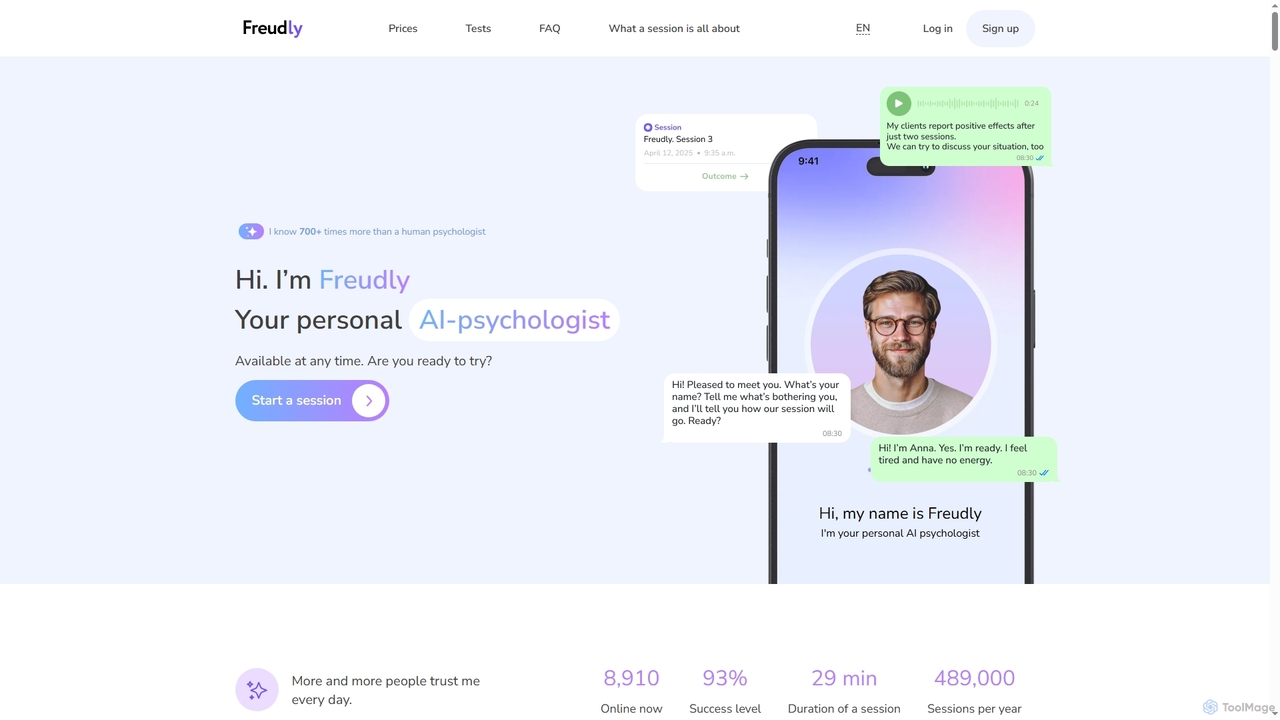
Freudly is an AI-powered personal psychologist offering 24/7 anonymous mental health support. It provides evidence-based therapy sessions, psychological …

255.2K

About Ai Therapy

AI Therapy tools are a category of AI-powered applications designed to provide accessible, personalized, and confidential support for mental and emotional well-being. Leveraging advanced natural language processing and machine learning, these tools offer conversational interfaces, guided exercises, and data-driven insights to help users manage stress, anxiety, and other psychological challenges. They serve as a convenient resource for self-help, emotional regulation, and supplementary mental health care, making support more readily available to a wider audience.

Core Features

  • Personalized Conversational Support: AI chatbots engage users in empathetic dialogues, offering guidance and active listening based on individual needs and responses.
  • Mood Tracking & Analysis: Tools monitor emotional patterns over time, providing insights into triggers and progress, often through journaling or check-ins.
  • Cognitive Behavioral Techniques (CBT/DBT): Deliver structured exercises and modules based on evidence-based therapeutic approaches to help users reframe thoughts and develop coping skills.
  • Guided Meditation & Mindfulness: Offer audio-guided sessions for relaxation, stress reduction, and improving focus, often customized to user preferences.
  • Crisis Resource Integration: Provide immediate access to emergency helplines and professional support networks in situations requiring urgent intervention.

Use Cases

AI Therapy tools are utilized by individuals seeking proactive mental wellness support, those managing mild to moderate stress or anxiety, and users looking for supplementary resources alongside traditional therapy. They are particularly valuable for people in remote areas, those with busy schedules, or individuals who prefer the anonymity and convenience of digital platforms for emotional support and self-improvement.

How to Choose

When selecting an AI Therapy tool, prioritize data privacy and security protocols, ensuring your personal information is protected. Look for tools that incorporate evidence-based therapeutic techniques like CBT or DBT, and consider the level of personalization and adaptability offered by the AI. Evaluate the user interface for ease of use and assess whether it provides integration options with human therapists or crisis resources if needed. Finally, compare pricing models and subscription options to find a solution that fits your budget and long-term needs.

Ai TherapyUse Cases

1

Providing Accessible Emotional Support

For individuals experiencing daily emotional fluctuations or mild stress, AI therapy tools offer an immediate and non-judgmental space to express feelings. Users can engage in text-based conversations with an AI companion, receiving empathetic responses and guided reflections, helping to process emotions and gain perspective without the need for scheduled appointments.

2

Managing Daily Stress and Anxiety

Individuals experiencing everyday stress or mild anxiety can use AI therapy tools for immediate, private support. The AI provides guided breathing exercises, mindfulness techniques, and conversational prompts to help users process thoughts, identify stressors, and develop healthier coping mechanisms, offering a discreet outlet for emotional release and regulation.

3

Managing Daily Stress and Anxiety

Professionals or students facing high-pressure environments can utilize AI therapy for proactive stress and anxiety management. The tools provide guided breathing exercises, mindfulness meditations, and cognitive reframing techniques. By integrating these practices into daily routines, users can develop resilience and reduce the impact of stressors on their mental well-being.

4

Supplementing Traditional Therapy Sessions

Clients undergoing traditional human therapy can leverage AI therapy tools between sessions to reinforce learned techniques and practice new skills. The AI can provide reminders for homework, offer a space to journal thoughts, and guide users through exercises like thought challenging or exposure therapy, extending the therapeutic benefits beyond the clinic.

5

Practicing Cognitive Behavioral Techniques

Individuals working on specific thought patterns or behaviors can use AI therapy to practice CBT exercises. The AI guides users through identifying negative automatic thoughts, challenging cognitive distortions, and developing healthier coping strategies. This allows for consistent application of therapeutic principles in a private, self-paced environment, reinforcing learning from therapy sessions.

6

Improving Sleep Quality and Relaxation

Users struggling with sleep disturbances can utilize AI therapy for guided relaxation and sleep hygiene improvement. The tools offer personalized meditation sessions, calming soundscapes, and cognitive restructuring exercises to address racing thoughts before bed, promoting a more peaceful mindset conducive to falling asleep and maintaining restful sleep.

7

Tracking Mood and Progress Over Time

For anyone wanting to understand their emotional landscape better, AI therapy apps often include mood tracking features. Users log their daily emotions, activities, and sleep patterns. The AI then analyzes this data to identify trends, potential triggers, and highlight areas of improvement, providing valuable insights for personal growth and discussions with human therapists.

8

Developing Emotional Regulation Skills

Young adults and individuals seeking to enhance their emotional intelligence can engage with AI therapy to learn and practice emotional regulation. The AI guides them through identifying emotions, understanding their triggers, and applying techniques from dialectical behavior therapy (DBT) or cognitive behavioral therapy (CBT) to manage intense feelings more effectively.

9

Supplementing Traditional Therapy Sessions

Clients undergoing face-to-face or online therapy can use AI therapy tools as a supplementary resource. Between sessions, the AI can reinforce concepts learned, provide homework assignments, or offer immediate support during moments of distress. This continuous engagement helps maintain therapeutic momentum and allows for deeper exploration of topics at the user's convenience.

10

Accessible Support for Remote or Underserved Communities

For individuals in remote areas or those facing barriers to accessing traditional mental health services, AI therapy offers a vital alternative. These tools provide confidential, on-demand support, bridging gaps in care by delivering therapeutic interventions and resources directly to users, regardless of their geographical location or socioeconomic status.

11

Learning and Applying Coping Mechanisms

Individuals seeking to build a repertoire of healthy coping mechanisms for various life challenges can leverage AI therapy. The tools introduce and guide users through different techniques, such as progressive muscle relaxation, journaling prompts, or problem-solving strategies. This empowers users to independently manage difficult situations and build self-efficacy in their mental health journey.

12

Proactive Mental Wellness and Self-Improvement

Individuals focused on personal growth and maintaining proactive mental wellness use AI therapy for self-reflection and skill-building. The AI can facilitate journaling, goal setting, and habit formation, helping users cultivate resilience, improve self-awareness, and develop positive psychological traits for overall life enhancement.

Ai TherapyFrequently Asked Questions