Mental Health Best in category 1 results Communication AI Tool

Popular AI tools in the Communication field of Mental Health include Rage Text Preventer, etc., helping you quickly improve efficiency.

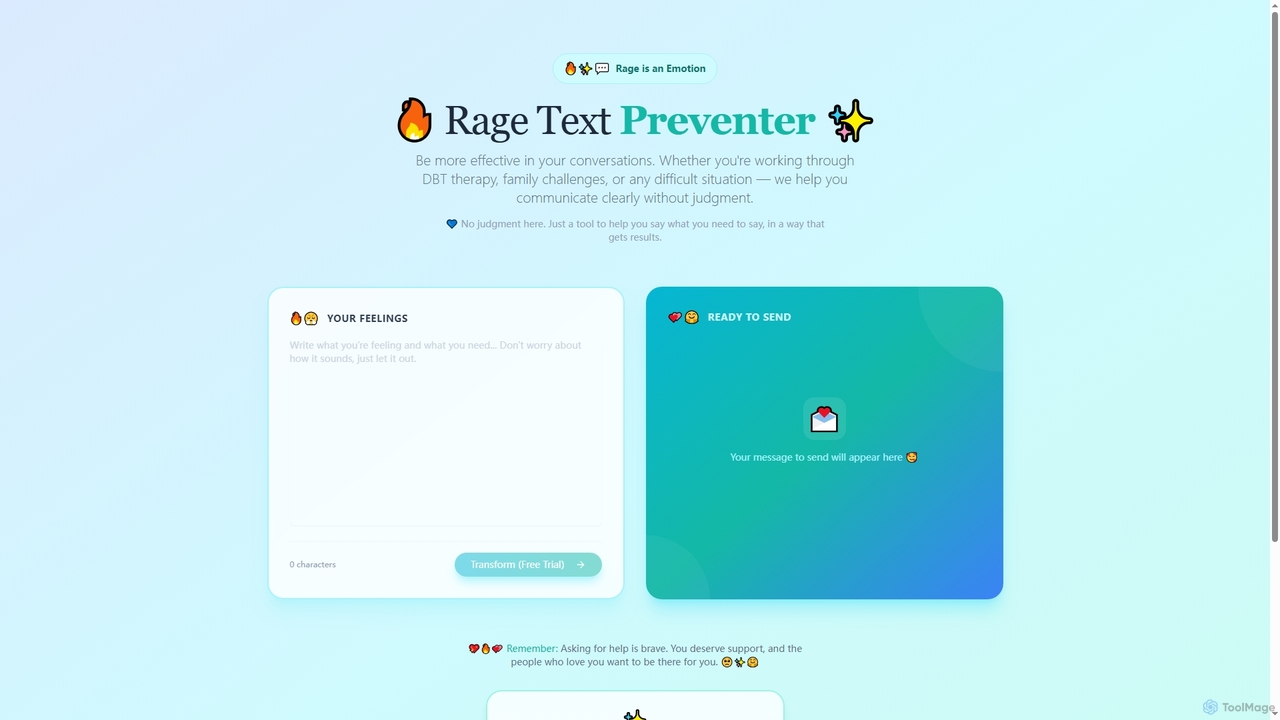
Rage Text Preventer

Rage Text Preventer

An AI-powered communication tool that helps you transform emotionally charged or angry texts into clear, effective, and non-judgmental …

3.2K

About Communication

Communication AI tools are specialized platforms leveraging artificial intelligence to enhance and support interpersonal interactions, particularly within the realm of mental well-being. These tools utilize natural language processing, behavioral analytics, and simulated environments to offer guidance, practice, and insights into effective communication strategies. They aim to improve clarity, empathy, and understanding, fostering healthier relationships and reducing communication-related stress. By providing personalized feedback and structured exercises, they empower users to navigate complex social dynamics more confidently and articulate their feelings effectively.

Core Features

  • Empathy Training: AI-driven simulations to practice understanding and responding empathetically in various social scenarios.
  • Conflict Resolution Guidance: Step-by-step AI advice for de-escalating disagreements and finding constructive solutions.
  • Social Skills Practice: Interactive conversational scenarios for improving conversational flow, assertiveness, and active listening.
  • Emotional Expression Support: Tools to help users identify, articulate, and communicate their feelings clearly and appropriately.
  • Communication Pattern Analysis: AI that identifies personal communication habits, strengths, and areas for improvement, offering tailored suggestions.

Use Cases

Individuals struggling with social anxiety can practice conversations in a safe, judgment-free environment. Couples seeking to improve their dialogue and mutual understanding can use these tools to identify communication breakdowns. Professionals in sensitive fields, such as healthcare or counseling, can refine their client communication skills.

How to Choose

When selecting a Communication AI tool, consider its specific focus area, such as social anxiety or relationship dynamics. Evaluate the interaction modality, whether it's text-based, voice-based, or involves simulated role-play. Assess the level of personalization and how well it adapts to individual progress. Crucially, verify the tool's privacy policies and data security measures, especially for sensitive mental health information.

CommunicationUse Cases

1

Enhancing Conversation Confidence for Individuals with Social Anxiety

Individuals experiencing social anxiety can utilize AI communication tools to practice various conversational scenarios, such as small talk, job interviews, or social gatherings. The AI acts as a non-judgmental conversation partner, providing instant feedback on tone, clarity, and social cues. This allows users to build confidence, refine their responses, and gradually reduce anxiety in real-life interactions, fostering better mental well-being.

2

Improving Communication Patterns in Intimate Relationships

Couples or family members can use AI communication tools to analyze their interaction patterns and identify areas for improvement. By inputting transcripts of difficult conversations or engaging in simulated dialogues, the AI can highlight communication breakdowns, such as accusatory language or passive aggression. It then suggests more constructive ways to express needs and feelings, fostering healthier and more empathetic exchanges, which is vital for relationship well-being.

3

Navigating Workplace Conflicts and Feedback

Professionals can leverage AI communication tools to practice navigating challenging workplace scenarios, such as delivering difficult feedback, negotiating, or resolving team conflicts. The AI can simulate various colleague personalities and provide real-time suggestions on phrasing, tone, and non-verbal cues. This helps users develop assertiveness, maintain professionalism, and foster a more positive work environment, reducing work-related stress and improving mental resilience.

4

Supporting Emotional Expression Development in Children and Adolescents

Parents and educators can utilize AI communication tools to help children and adolescents develop healthier emotional expression skills. Through interactive games, story-telling, or guided conversations with an AI companion, young users can learn to identify and articulate their feelings, understand different perspectives, and practice appropriate responses. This fosters emotional intelligence and reduces behavioral issues stemming from communication difficulties, contributing to their overall mental health.

5

Assisting Therapists with Communication Practice and Training

Mental health professionals, including therapists and counselors, can utilize AI communication tools for training and skill refinement. These tools can simulate complex client scenarios, allowing practitioners to practice active listening, empathetic responses, and challenging therapeutic conversations in a controlled environment. The AI provides objective feedback on communication effectiveness, helping therapists enhance their rapport-building and intervention skills, ultimately leading to better client outcomes and professional development.

6

Facilitating Cross-Cultural Communication Adaptation

Individuals engaging in cross-cultural interactions, such as international students or expatriates, can use AI communication tools to adapt to different communication norms. The AI can simulate culturally specific scenarios, providing insights into appropriate greetings, body language, and conversational styles. This helps users navigate cultural nuances, avoid misunderstandings, and build stronger connections, reducing the stress and isolation often associated with cross-cultural adjustment and supporting mental well-being.

CommunicationFrequently Asked Questions