Mental Health Best in category 1 results Well Being AI Tool

Popular AI tools in the Well Being field of Mental Health include Solemnsir, etc., helping you quickly improve efficiency.

Solemnsir

Solemnsir

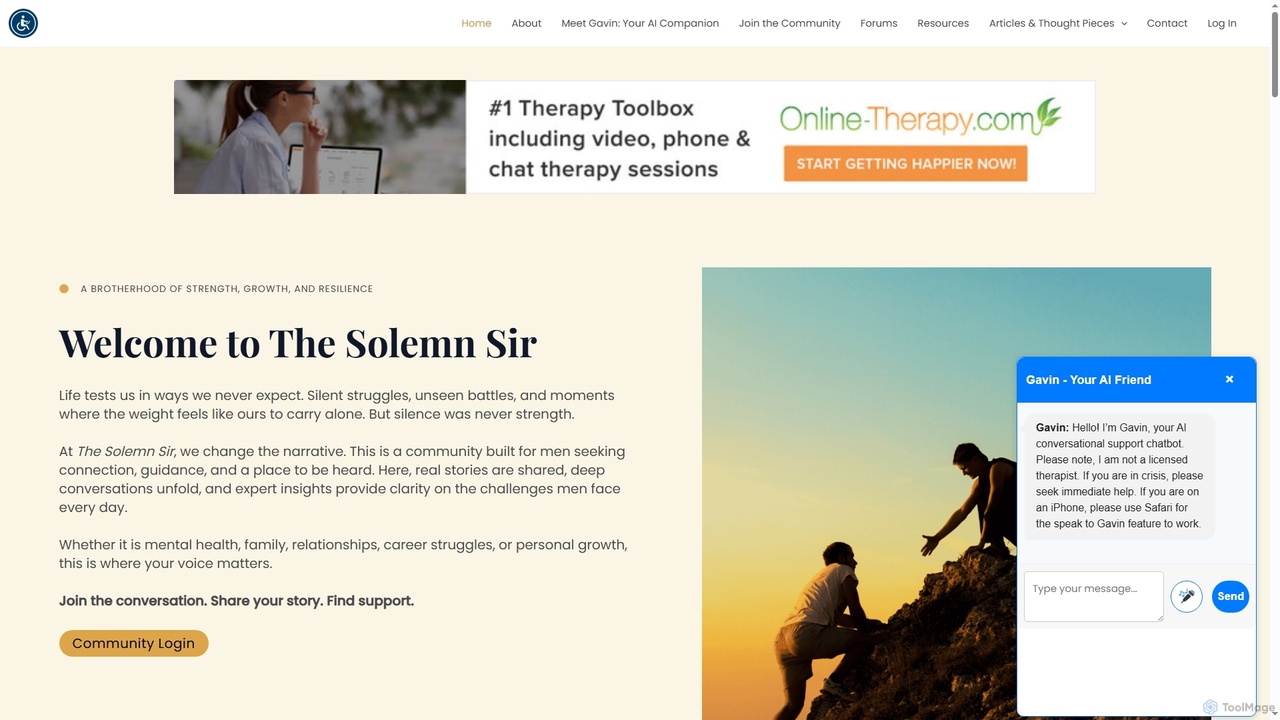
Solemnsir is a dedicated online community and resource hub for men, offering a supportive brotherhood, expert articles, and …

4.5K

About Well Being

AI Well Being tools are applications designed to proactively improve your mental, emotional, and physical balance. Using techniques from positive psychology and data science, these tools offer personalized guidance for stress management, mindfulness, and habit formation. They help users build resilience and cultivate a greater sense of life satisfaction through daily practices and insights. Unlike tools focused on clinical treatment, these focus on preventative care and personal growth within the broader mental health landscape.

Core Features

  • Guided Mindfulness & Meditation: Offers AI-curated or generated audio sessions for relaxation and focus.
  • Mood & Emotion Tracking: Analyzes journal entries and inputs to reveal emotional patterns and triggers.
  • Personalized Habit Coaching: Provides AI-driven recommendations and reminders to build positive routines like exercise or gratitude.
  • Stress Reduction Exercises: Includes interactive breathing exercises, soundscapes, and biofeedback-based activities.
  • Cognitive Skill Building: Delivers self-guided modules based on Cognitive Behavioral Therapy (CBT) to reframe negative thoughts.

Use Cases

These tools are widely used by individuals seeking to manage daily stress, improve sleep quality, and enhance emotional awareness. Professionals use them for quick mindfulness breaks during busy workdays, while students leverage them to cope with academic pressure. They are also valuable for anyone looking to build healthy habits, such as a consistent meditation practice or a daily gratitude journal.

How to Choose

When selecting an AI Well Being tool, consider the specific area you want to improve (e.g., sleep, stress, focus). Evaluate the scientific basis of their techniques—look for tools based on CBT or positive psychology. Assess the level of personalization and review data privacy policies. Finally, consider the user interface and whether a subscription model or a one-time purchase fits your needs.

Well BeingUse Cases

1

Daily Stress Management for Office Workers

A project manager facing tight deadlines uses an AI Well Being app to maintain focus and reduce stress. During short breaks, they initiate a 5-minute AI-guided breathing exercise. The tool may use a smartwatch to provide real-time feedback on heart rate, helping them calm their nervous system. This practice helps them return to tasks with a clearer mind, preventing burnout and improving decision-making under pressure.

2

Building a Consistent Meditation Habit

A beginner who finds it difficult to meditate consistently uses an AI coach. The tool starts with short, 3-minute guided sessions and gradually increases the duration as the user's consistency improves. The AI provides personalized feedback based on session completion rates and user-logged reflections, suggesting different meditation styles (e.g., body scan, loving-kindness) to keep the practice engaging and help establish a sustainable daily routine.

3

Improving Sleep Quality and Hygiene

An individual struggling with inconsistent sleep uses an AI Well Being tool to analyze their sleep patterns. They log their bedtime, wake-up time, and daily activities like caffeine intake and exercise. The AI identifies correlations, such as late-day caffeine affecting sleep onset, and provides a personalized action plan. This includes guided wind-down meditations, reminders to dim lights, and optimized alarm times to improve overall sleep quality.

4

Enhancing Emotional Awareness Through Journaling

A user wanting to better understand their emotional fluctuations uses an AI-powered journal. Each day, they write a few sentences about their feelings and experiences. The tool's natural language processing (NLP) identifies key emotions, themes, and recurring thought patterns. It then generates a weekly summary chart, helping the user visually connect events (like work deadlines) with feelings (like anxiety), fostering greater self-awareness and emotional regulation.

5

Cultivating Positivity with Gratitude Practices

To shift towards a more positive mindset, a user engages with an AI tool's gratitude journaling feature. Each morning, the app sends a prompt asking them to list three things they are grateful for. The AI occasionally resurfaces past entries to remind the user of positive memories. This simple, consistent practice, facilitated by the tool, helps rewire the user's thought patterns, increase feelings of happiness, and build emotional resilience over time.

6

Integrating Mindful Movement into the Workday

A remote software developer experiencing stiffness from long hours of sitting uses an AI Well Being app for mindful breaks. The tool sends reminders to stand up and stretch every hour. It offers short, 2-3 minute guided video sessions for desk-friendly yoga or simple stretches. The AI tracks completion and allows the user to rate how they feel afterward, tailoring future recommendations to the most effective exercises for relieving their physical tension and mental fatigue.

Well BeingFrequently Asked Questions