ToolMage
Sign in

Best 1 Self Publishing Tools for Publishing

Popular Self Publishing Tools in Publishing include WriterCasa, helping you work more efficiently.

WriterCasa
Freemium

WriterCasa

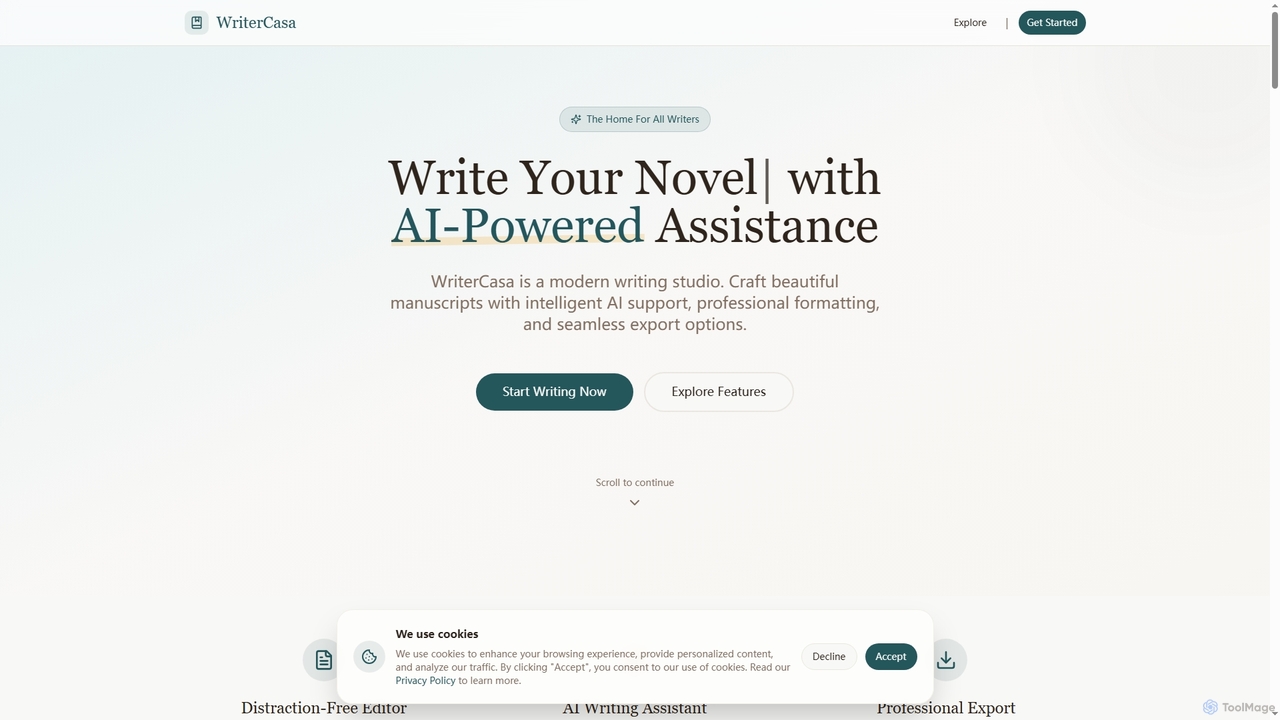
WriterCasa is an AI-powered book writing studio designed for authors to craft beautiful manuscripts with intelligent assistance. It offers a distraction-free editor, context-aware AI writing suggestions, real-time grammar checking, and professional export options. Additionally, it features an AI Book Cover Studio to design stunning covers in seconds, making it a comprehensive tool for aspiring and established writers.

Writing Assistant
Visits 4.9KFavorites 148Likes 160

About Self Publishing Tools

Self Publishing Tools are AI-powered applications designed to empower authors and content creators to independently produce, publish, and market their books or digital content. These tools leverage artificial intelligence to streamline complex tasks like manuscript editing, cover design, formatting, and promotional content generation. They significantly reduce the barriers to entry for independent publishing, enabling creators to maintain full creative control and maximize their royalties. By automating labor-intensive processes, these platforms allow authors to focus more on writing and connecting with their audience.

Core Features

  • AI-powered Editing & Proofreading: Automatically checks grammar, style, readability, and suggests improvements for manuscript refinement.
  • Automated Formatting: Converts manuscripts into various e-book and print-ready formats (EPUB, MOBI, PDF) with professional layouts.
  • Cover Design Assistance: Generates cover concepts, suggests design elements, and helps create visually appealing book covers using AI.
  • Marketing Copy Generation: Creates compelling book descriptions, ad copy, and social media posts to promote published works.
  • Audience Analysis & Keyword Research: Identifies target reader demographics and relevant keywords for better discoverability on platforms.

Applicable Scenarios

Independent authors use these tools to manage their entire book production workflow, from initial draft to final publication. Small businesses and entrepreneurs leverage them to create professional e-books or whitepapers for lead generation. Content creators can quickly transform blog series or articles into cohesive digital products for their audience.

How to Choose

When selecting self-publishing tools, consider the specific stages of your publishing journey you need assistance with (e.g., editing, design, marketing). Evaluate the tool's AI capabilities for accuracy and customization, its compatibility with major publishing platforms (Amazon KDP, Apple Books), and its pricing model. User-friendliness and community support are also crucial for a smooth publishing experience.

Featured tool rankings

Self Publishing Tools use cases

1

Streamline Manuscript Editing and Polishing

An independent author uses AI editing tools to quickly identify grammatical errors, improve sentence structure, and enhance the overall readability of their novel before sending it to a human editor for final review. This significantly reduces the initial editing time and cost, allowing the author to present a more refined manuscript.

2

Generate Professional Book Cover Concepts

A first-time author with no design background utilizes an AI cover design tool. By inputting genre, themes, and desired mood, the tool generates several unique cover options, which the author then customizes with fonts and colors to create an eye-catching design that stands out on digital shelves.

3

Automate E-book and Print Formatting

A non-technical writer uploads their finished manuscript to an AI formatting tool. The tool automatically converts it into perfectly formatted EPUB for e-readers and a print-ready PDF for print-on-demand services, ensuring professional presentation across all platforms without manual adjustments, saving significant time and effort.

4

Craft Engaging Marketing Descriptions

A self-published non-fiction author employs an AI marketing copy generator. By providing key themes and target audience information, the AI creates compelling book descriptions for Amazon, social media ad copy, and email newsletter snippets, saving hours of brainstorming and ensuring consistent, high-quality promotional material.

5

Optimize Book Discoverability with Keyword Research

A fantasy novelist uses an AI tool to analyze popular keywords and categories within their genre on major online bookstores. This helps them choose the most effective keywords and categories for their book listing, increasing its visibility to potential readers and improving its chances of being discovered by the target audience.

6

Convert Blog Series into a Cohesive E-book

A content creator with a popular blog uses a self-publishing tool to compile their best blog posts into a single, professionally formatted e-book. The tool helps organize chapters, create a table of contents, and design a cover, allowing them to quickly offer premium content to their subscribers and expand their product offerings.

Self Publishing Tools FAQ

What are Self Publishing Tools?

Self Publishing Tools are AI-driven applications that assist authors and content creators in independently producing, publishing, and marketing their books or digital content. They leverage AI for tasks like editing, formatting, cover design, and marketing copy generation, empowering creators to bypass traditional publishing routes. These tools aim to democratize publishing by making it accessible and efficient for individuals, offering a comprehensive suite of features for the entire publishing lifecycle.

How do AI Self Publishing Tools differ from traditional publishing services?

AI Self Publishing Tools offer automation and direct control to the author, handling tasks like editing, formatting, and design with AI assistance. Traditional publishing services involve a publishing house managing these processes, often with human editors, designers, and marketing teams, taking a larger share of royalties and offering less author control. AI tools provide speed and cost-effectiveness, while traditional services offer extensive human expertise and distribution networks, albeit with a more selective process.

What are the key benefits of using AI for self-publishing?

Using AI for self-publishing offers several key benefits: significant time savings through automation of tasks like editing and formatting; cost reduction by minimizing the need for professional designers or copywriters; enhanced creative control for authors; and improved discoverability through AI-driven keyword research and marketing content generation. It lowers the barrier to entry, allowing more creators to share their work with a professional finish and broader reach.

Can AI Self Publishing Tools help with book marketing?

Yes, many AI Self Publishing Tools offer robust marketing assistance. They can generate compelling book descriptions, social media posts, and ad copy tailored to your target audience. Some tools also provide insights into market trends, keyword optimization for online bookstores, and even help create promotional images or videos, significantly boosting your book's visibility and sales potential across various platforms.

What should I consider when choosing a Self Publishing Tool?

When choosing a Self Publishing Tool, consider your specific needs: do you require help with writing, editing, design, formatting, or marketing? Evaluate the tool's AI capabilities for accuracy and customization, its integration with major publishing platforms (Amazon KDP, Apple Books), and its pricing structure. Look for user-friendly interfaces, good customer support, and positive reviews from other independent authors to ensure a smooth and effective publishing journey.