ToolMage
Sign in

Best 1 Book Enhancement AI tools for Reading

Popular Book Enhancement AI tools in Reading include TextWiz, helping you work more efficiently.

TextWiz
Freemium

TextWiz

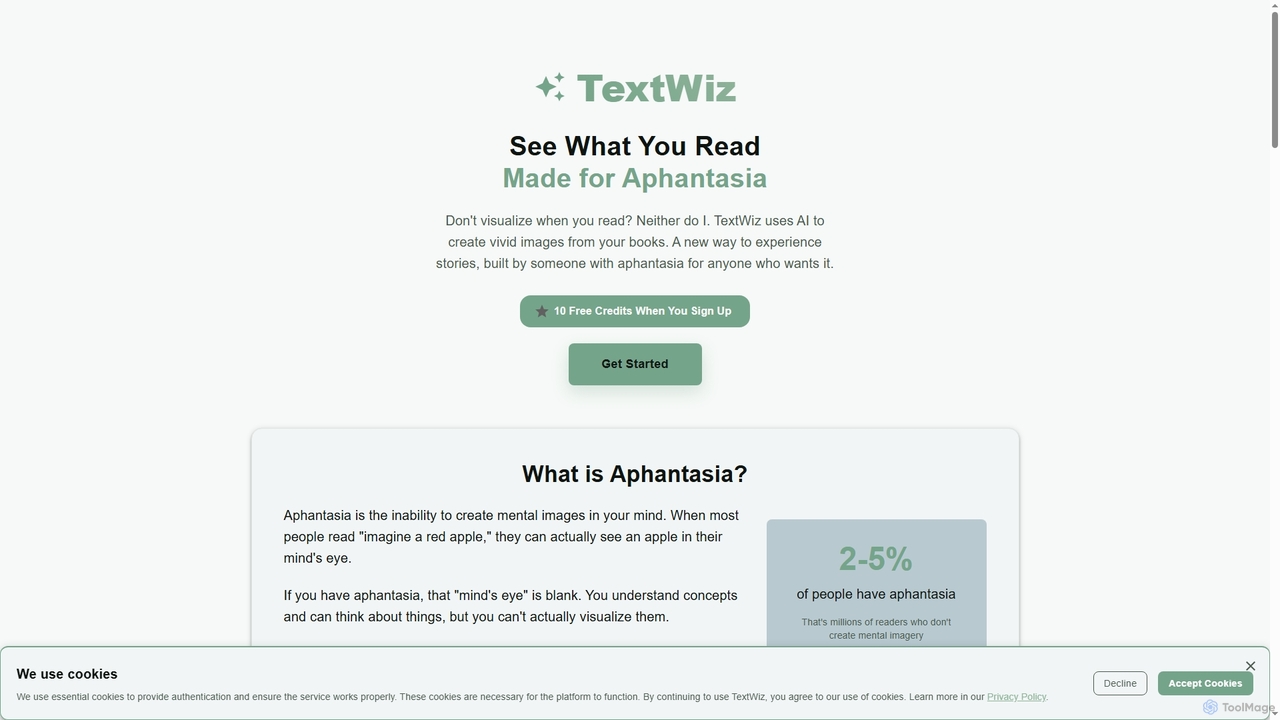
TextWiz is an innovative AI tool designed to transform your digital books into visually rich experiences. It generates vivid images from EPUB files, enhancing comprehension and engagement for readers, especially those with aphantasia or visual learners, by seamlessly integrating contextual artwork into stories.

Visual Aids
Visits 5.6KFavorites 139Likes 156

About Book Enhancement

Book Enhancement tools are a class of AI-powered applications designed to analyze, transform, and enrich the content of books. These tools utilize Natural Language Processing (NLP) to deconstruct text, enabling them to generate summaries, create audio versions, or repurpose content into new formats. They go beyond simple reading by adding layers of interaction and understanding, making dense information more accessible and versatile. This allows users to engage with book content in entirely new ways, from listening on the go to creating supplementary materials.

Core Features

  • AI Summarization & Analysis: Generates concise summaries, identifies key themes, and analyzes characters or plot structures.
  • Text-to-Audiobook Conversion: Transforms written text into natural-sounding audiobooks using advanced AI voices.
  • Content Repurposing: Converts book chapters or concepts into blog posts, social media content, or course outlines.
  • Interactive Material Generation: Creates quizzes, discussion prompts, and study guides based on the book's content.
  • Metadata & Keyword Extraction: Helps authors and publishers by identifying relevant keywords and generating book descriptions.

Use Cases

These tools are valuable for students creating study aids from textbooks, authors generating marketing copy from their manuscripts, and busy professionals extracting key insights from business books. Content creators also use them to repurpose non-fiction works into different media formats, while avid readers can generate discussion points for book clubs.

How to Choose

When selecting a Book Enhancement tool, consider your primary goal: are you a reader seeking comprehension aids or an author needing marketing support? Evaluate the quality of the AI output, such as the naturalness of the audio voice or the coherence of the summary. Also, check supported file formats (e.g., PDF, EPUB), the range of output options, and whether the pricing model aligns with your usage frequency.

Book Enhancement use cases

1

Create Comprehensive Study Guides from Textbooks

A university student preparing for final exams uploads a 500-page digital textbook in PDF format to a book enhancement tool. The AI processes the entire book, allowing the student to generate summaries for each chapter, create a list of key terms with definitions, and even produce a set of flashcards for quick review. This transforms a passive reading task into an active learning process, saving dozens of hours of manual note-taking and helping to solidify complex concepts more effectively.

2

Generate Marketing Content from a Manuscript for Authors

An independent author has just finished their non-fiction book manuscript. Instead of spending weeks brainstorming marketing angles, they upload the document to an AI tool. The tool analyzes the core themes and target audience, then generates a series of compelling book descriptions for different platforms (e.g., Amazon, personal website), a dozen social media posts with engaging hooks, and several blog post ideas based on the book's chapters. This automates a significant part of the book launch process, allowing the author to focus on writing and connecting with readers.

3

Convert Ebooks into Personal Audiobooks for Accessibility

A user with dyslexia finds it challenging to read long-form text. They have a collection of ebooks in EPUB format they wish to enjoy. Using a book enhancement tool with text-to-speech capabilities, they convert each ebook into an MP3 audio file. The AI voice is highly natural, with options to adjust speed and tone. This allows the user to listen to their books during their commute or while doing chores, making literature and knowledge accessible in a way that suits their needs, effectively removing a barrier to reading.

4

Extract Key Insights from Business Books for Professionals

A busy executive needs to stay current with the latest business trends but lacks the time to read a new book every week. They use an AI book enhancement tool to process a highly-recommended business book. Within 15 minutes, the tool provides a multi-page summary, a list of the top 10 actionable takeaways, and an analysis of the core arguments presented by the author. This allows the executive to grasp the essential concepts quickly and apply them in their work, without committing 8-10 hours to reading the entire book.

5

Repurpose a Non-Fiction Book into a Mini-Course Outline

A content creator wants to develop an online course based on their published book. They use a book enhancement tool to upload the entire manuscript. The AI analyzes the structure and breaks down the content into logical modules and lessons. It generates a complete course outline, including lesson titles, key learning objectives for each lesson, and suggested activities or assignments. This provides a structured foundation for the course content, saving weeks of planning and ensuring the course curriculum logically follows the book's narrative.

6

Generate Discussion Questions for a Book Club

A book club organizer is preparing for the monthly meeting. To foster a deeper and more engaging conversation, they input the title and author of the selected novel into a book enhancement tool. The AI, having access to information about the book's plot, themes, and characters, generates a list of 20 thought-provoking discussion questions. The questions range from character motivations and thematic analysis to plot twists, ensuring a lively and structured conversation that goes beyond simple likes and dislikes. This elevates the quality of the club's meetings with minimal preparation effort.

Book Enhancement FAQ

What are AI Book Enhancement tools?

AI Book Enhancement tools are applications that use artificial intelligence to go beyond the traditional reading experience. Instead of just displaying text, they actively process and transform a book's content to create new value. Key functions include generating summaries, analyzing plot and characters, converting text into audiobooks, and repurposing content into formats like blog posts or study guides. They serve a wide range of users, from students and researchers to authors and content creators.

How to choose the right Book Enhancement tool?

Choosing the right tool depends on your specific needs. Consider the following factors:

  • Primary Goal: Are you a reader who needs summaries and analysis, or an author who needs marketing content and audiobook creation? Different tools specialize in different areas.
  • Input Formats: Ensure the tool supports the format of your books, such as PDF, EPUB, DOCX, or direct text input.
  • Output Quality: If you need audiobooks, listen to voice samples to judge their quality. For summaries, check if the output is coherent and accurate.
  • Feature Set: Look for specific features you need, like quiz generation, character mapping, or social media post creation.
  • Pricing: Compare pricing models (subscription vs. pay-per-use) and choose one that fits your budget and expected usage.
What's the difference between Book Enhancement tools and E-reader apps?

The primary difference lies in their function: interaction versus presentation. E-reader apps (like Kindle or Apple Books) are designed to present book content for reading. Their main features revolve around display settings like font size, bookmarks, and highlighting. In contrast, Book Enhancement tools are designed to interact with and transform the content. They analyze the text to create new outputs like summaries, audio files, or marketing materials. An e-reader is for consumption, while a book enhancement tool is for analysis and creation.

Can these tools create high-quality, commercial-grade audiobooks?

The quality of AI-generated audio has improved dramatically and can be very natural-sounding for personal use, accessibility purposes, or creating draft versions. Many tools offer a range of voices, accents, and emotional tones. However, for a commercial-grade audiobook intended for wide distribution (e.g., on Audible), a professional human narrator is still often preferred. Human narrators can provide nuanced emotional performances and character distinctions that AI is still learning to replicate perfectly. Therefore, while excellent for many applications, AI audio may not yet meet the standards of all major commercial publishers.

Who can benefit most from using Book Enhancement tools?

A wide variety of individuals can benefit significantly from these tools. Key groups include:

  • Students & Researchers: For quickly summarizing dense academic texts, creating study guides, and identifying key arguments.
  • Authors & Publishers: For generating marketing copy, creating promotional content, and exploring audiobook production.
  • Busy Professionals: For extracting actionable insights from business and self-help books without needing to read them cover-to-cover.
  • Content Creators: For repurposing book content into blog posts, social media updates, or online course material.
  • Avid Readers & Book Clubs: For generating discussion questions and gaining deeper insights into themes and characters.