Real Estate Best in category 1 results Location Intelligence AI Tool

Popular AI tools in the Location Intelligence field of Real Estate include Placer.ai, etc., helping you quickly improve efficiency.

Placer.ai

Placer.ai

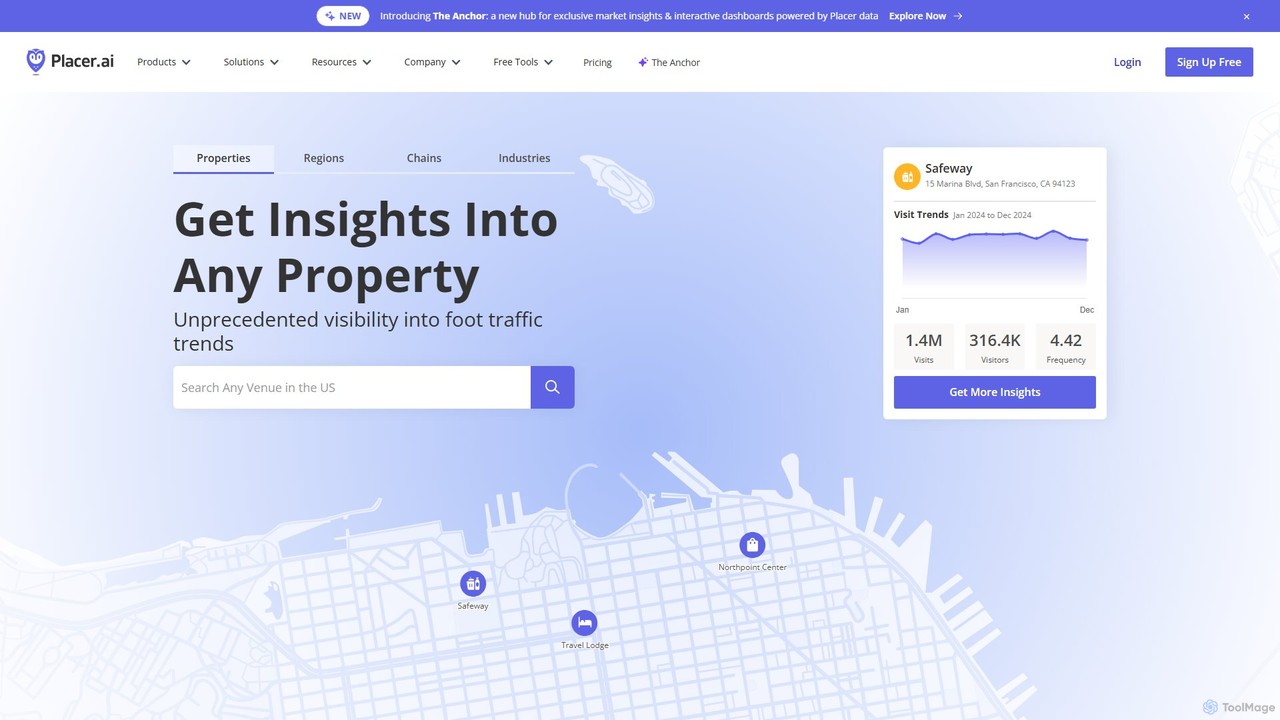
Placer.ai is a leading location intelligence and foot traffic analytics platform. It provides businesses with actionable insights into …

221.7K

About Location Intelligence

Location Intelligence is a category of AI-powered tools that analyze and visualize geospatial data to derive actionable insights, particularly valuable within the real estate sector. These tools leverage advanced algorithms to process location-specific information, revealing patterns, trends, and relationships that are not immediately apparent. They empower businesses and individuals to make data-driven decisions regarding property development, market analysis, and strategic planning by understanding the 'where' behind critical business questions.

Core Features

  • Geospatial Data Integration: Combines diverse datasets like demographics, traffic, infrastructure, and environmental factors with geographic coordinates.
  • Predictive Analytics: Utilizes machine learning to forecast market trends, property values, and demand in specific locations.
  • Site Selection Optimization: Identifies optimal locations for new developments, retail outlets, or infrastructure projects based on predefined criteria.
  • Interactive Mapping & Visualization: Presents complex location data through intuitive, interactive maps and dashboards for easy interpretation.
  • Demographic & Psychographic Profiling: Analyzes population characteristics and consumer behaviors within geographic areas to inform targeted strategies.

Use Cases

Real estate developers use Location Intelligence to identify prime land for new projects, assessing factors like proximity to amenities, transport links, and competitor presence. Retail strategists leverage these tools to optimize store placement, understanding customer footfall patterns and local purchasing power. Urban planners apply Location Intelligence for infrastructure development, evaluating population density and service accessibility to improve city living.

How to Choose

When selecting a Location Intelligence tool, consider its data integration capabilities, ensuring it can ingest relevant datasets for your specific needs. Evaluate the accuracy and sophistication of its predictive models, especially for forecasting market dynamics. Assess the quality of its visualization features for clear insight communication. Finally, consider its scalability and ease of integration with existing real estate management or CRM systems.

Location IntelligenceUse Cases

1

Optimizing Retail Store Placement

Retail chains and franchisees utilize Location Intelligence to identify high-potential sites for new stores. By analyzing demographic data, traffic patterns, competitor locations, and local purchasing power, these tools help pinpoint areas with unmet demand and optimal customer accessibility, significantly increasing the likelihood of a successful launch and maximizing return on investment.

2

Predicting Property Value Trends

Real estate investors and developers employ Location Intelligence to forecast future property values. Integrating historical sales data, local economic indicators, planned infrastructure projects, and environmental factors, AI algorithms predict appreciation or depreciation, enabling strategic acquisition or divestment decisions and mitigating financial risks.

3

Enhancing Urban Planning & Infrastructure

City planners and government agencies use Location Intelligence to make informed decisions about urban development. By mapping population density, public transport routes, service accessibility, and environmental impact, these tools help optimize resource allocation, plan new infrastructure (e.g., schools, hospitals), and design sustainable, livable communities.

4

Targeted Real Estate Marketing Campaigns

Real estate agencies and marketers leverage Location Intelligence to create highly targeted advertising campaigns. By analyzing the demographics, lifestyle, and online behavior of residents in specific neighborhoods, they can tailor marketing messages and channels to reach the most relevant potential buyers or renters, improving conversion rates and reducing marketing spend.

5

Assessing Environmental Risks for Properties

Property insurers and buyers use Location Intelligence to evaluate environmental risks associated with specific properties. Tools can map flood zones, wildfire risk areas, seismic activity, and pollution levels, providing critical insights for risk assessment, insurance premium calculation, and informed purchasing decisions, especially in climate-vulnerable regions.

6

Optimizing Logistics & Supply Chain Routes

Logistics companies and e-commerce businesses apply Location Intelligence to optimize delivery routes and warehouse locations. By analyzing real-time traffic, road networks, delivery addresses, and customer density, these tools minimize travel time, reduce fuel consumption, and improve delivery efficiency, leading to significant cost savings and enhanced customer satisfaction.

Location IntelligenceFrequently Asked Questions