ToolMage
Sign in

Best 2 Mortgage AI tools for Real Estate

Popular Mortgage AI tools in Real Estate include Flyhomes and aurumkuberx, helping you work more efficiently.

aurumkuberx
Freemium

aurumkuberx

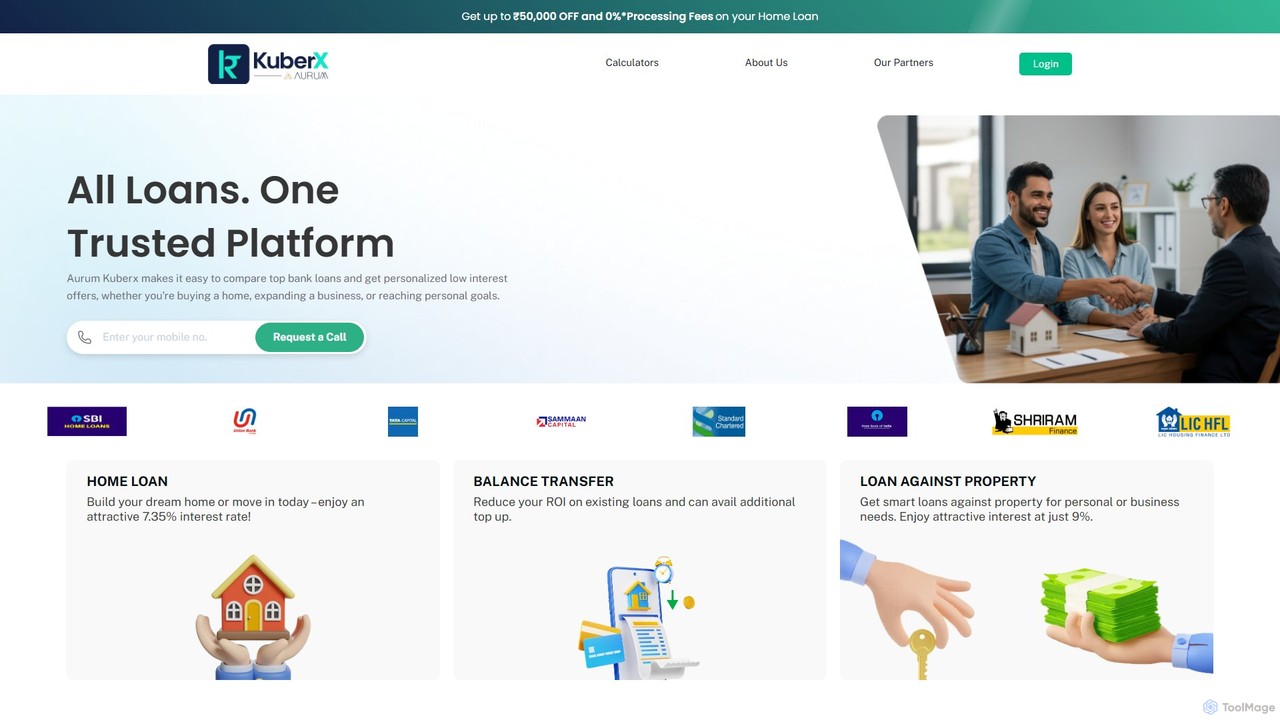
Aurum KuberX is an AI-powered FinTech platform designed to help users find the best home loan interest rates and personalized mortgage offers in India. It simplifies the complex loan discovery process by leveraging artificial intelligence to analyze user profiles and match them with the most suitable lenders, ensuring transparency and efficiency.

Loan Aggregator
Visits 8.2KFavorites 134Likes 121
Flyhomes
Paid

Flyhomes

Flyhomes is a FinTech/PropTech company that revolutionizes the home buying process with its "Buy Before You Sell" solution. It empowers homebuyers to purchase their next home before selling their current one, providing financial tools to make competitive, cash-like offers and unlock home equity. This service streamlines the transition, eliminating the need for double moves and reducing the stress associated with traditional real estate transactions.

Real Estate
Visits 26.8KFavorites 155Likes 154

About Mortgage

AI Mortgage tools are specialized software designed to automate and optimize the entire mortgage lending lifecycle. Leveraging machine learning and data analytics, these platforms process vast amounts of financial data to assess risk, verify applicant information, and streamline underwriting. Their primary purpose is to accelerate loan processing, reduce manual errors, and provide more accurate and fair lending decisions for both lenders and borrowers. This focus on the financial transaction distinguishes them from broader real estate tools that concentrate on property discovery and market trends.

Core Features

  • Automated Underwriting: AI models analyze applicant data to make initial, data-driven underwriting recommendations.
  • Risk Assessment & Fraud Detection: Algorithms identify high-risk applications and detect fraudulent documents or information.
  • Loan Origination Automation: Streamlines the application process from intelligent data capture to automated document management.
  • Personalized Loan Matching: Matches borrowers with the most suitable mortgage products based on their comprehensive financial profile.
  • Compliance Monitoring: Helps ensure all stages of the mortgage process adhere to complex regulatory standards.

Applicable Scenarios

These tools are primarily used by financial institutions such as banks, credit unions, and dedicated mortgage lenders. Key users include loan officers managing applications, underwriters assessing risk, and compliance officers ensuring adherence to regulations like TILA-RESPA. They are essential for high-volume lending operations seeking efficiency and accuracy.

Selection Criteria

When choosing an AI Mortgage tool, consider its integration capabilities with your existing Loan Origination System (LOS). Evaluate its compliance and security features, ensuring it meets industry standards. Assess the accuracy and explainability of its AI models for risk assessment, which is crucial for audits. Finally, confirm the platform can scale to handle your institution's loan application volume.

Mortgage use cases

1

Accelerating Loan Application Processing

A loan officer at a high-volume mortgage lending firm uses an AI tool to streamline new applications. Instead of manually entering data from applicant-submitted documents like pay stubs and bank statements, the officer uploads them to the system. The AI uses Optical Character Recognition (OCR) and Natural Language Processing (NLP) to automatically extract and populate the data into the Loan Origination System (LOS). This reduces data entry time by over 80% and minimizes human error, allowing the officer to process more applications and focus on client relationships.

2

AI-Powered Underwriting and Risk Assessment

An underwriter is tasked with evaluating a complex loan application with variable income sources. They use an AI mortgage platform that analyzes thousands of data points beyond a simple credit score, including transaction history, employment stability, and asset verification. The AI provides a comprehensive risk score and highlights specific areas of concern, such as unusual cash deposits. It also compares the applicant's profile against historical data of similar borrowers to predict the likelihood of default. This enables the underwriter to make a more informed, consistent, and defensible decision in a fraction of the time.

3

Automating Document Verification and Fraud Detection

A mortgage processing team uses an AI tool to validate the authenticity of submitted documents. The system scans bank statements, tax returns, and employment letters, using computer vision to detect signs of tampering, such as altered numbers or mismatched fonts. It cross-references information across documents to ensure consistency. If the AI detects a discrepancy, like a stated income on an application not matching tax records, it automatically flags the file for human review. This proactive approach significantly reduces the risk of mortgage fraud and protects the lender from potential losses.

4

Enhancing Borrower Experience with Personalized Options

A prospective homebuyer interacts with a lender's AI-powered online portal to get pre-qualified. Instead of a generic form, the AI chatbot guides them through the process, asking relevant questions about their financial situation and goals. Based on the input, the system instantly analyzes hundreds of loan products and presents the top three most suitable options, clearly breaking down interest rates, monthly payments, and closing costs for each. This self-service, transparent, and personalized experience improves customer satisfaction and helps the borrower make a more confident financial decision.

5

Ensuring Regulatory Compliance with AI Monitoring

A compliance officer at a national bank uses an AI mortgage platform to ensure adherence to fair lending laws and disclosure requirements. The system continuously audits loan files in real-time, flagging any potential violations, such as missing disclosures or inconsistencies that could suggest discriminatory practices. It generates automated reports for internal audits and regulatory reviews, providing a clear, documented trail of compliance activities. This reduces the risk of costly fines and legal challenges, while upholding the bank's commitment to fair and equitable lending.

6

Portfolio Risk Analysis for Mortgage Investors

A portfolio manager at an investment firm uses an AI analytics tool to assess the risk profile of a large mortgage-backed securities (MBS) portfolio. The AI analyzes macro-economic indicators, regional housing market trends, and aggregated borrower data to forecast delinquency and prepayment rates. It can run stress tests based on various economic scenarios, such as a rise in unemployment or interest rates, to predict potential losses. These insights allow the manager to rebalance the portfolio, hedge against risks, and make more strategic investment decisions to maximize returns.

Mortgage FAQ

What are AI Mortgage tools?

AI Mortgage tools are specialized software applications that use artificial intelligence, particularly machine learning, to automate and enhance various stages of the mortgage lending process. Their core functions include automated data extraction from documents, AI-powered underwriting for risk assessment, fraud detection, and ensuring regulatory compliance. Unlike general real estate platforms that focus on property search and valuation, these tools are specifically designed to optimize the financial transaction of securing a loan, making the process faster, more accurate, and more efficient for both lenders and borrowers.

How do I choose the right AI Mortgage tool for my institution?

Choosing the right tool involves evaluating several key factors. First, assess its integration capabilities with your current Loan Origination System (LOS) and other critical software. Second, verify its compliance and security features to ensure it meets all regulatory requirements and data protection standards. Third, scrutinize the accuracy and explainability of its AI models, as you must be able to justify its decisions to auditors. Finally, consider its scalability to ensure it can handle your current and future loan volume.

What's the difference between AI Mortgage tools and general Real Estate AI platforms?

The primary difference lies in their focus. AI Mortgage tools are specialized for the financial transaction of lending. They concentrate on tasks like underwriting, risk assessment, compliance, and loan processing. Their goal is to make the lending process more efficient and accurate. In contrast, general Real Estate AI platforms focus on the property and market. They assist with tasks like property search, market analysis, automated property valuation (AVM), and lead generation for agents. While both operate within the real estate ecosystem, mortgage tools handle the financing, and real estate platforms handle the property discovery and sales process.

What are the main benefits of using AI in the mortgage process?

Using AI in the mortgage process offers significant benefits for lenders. Key advantages include:

  • Increased Efficiency: Automating manual tasks like data entry and document verification dramatically speeds up loan processing times.
  • Reduced Costs: Automation lowers operational costs by reducing the need for manual labor and minimizing errors that require costly rework.
  • Improved Accuracy: AI models can analyze vast datasets to make more consistent and accurate risk assessments than human underwriters alone.
  • Enhanced Compliance: AI can continuously monitor for regulatory compliance, reducing the risk of fines and legal issues.
Can AI completely replace human underwriters in the mortgage industry?

While AI can automate a significant portion of the underwriting process, it is unlikely to completely replace human underwriters in the near future. AI excels at processing large volumes of data and identifying patterns for standard loan applications. However, human expertise remains crucial for handling complex, non-standard cases that require nuanced judgment, ethical considerations, and direct communication with borrowers. The most effective approach is a hybrid model where AI tools assist human underwriters, freeing them from repetitive tasks to focus on high-level analysis and decision-making.