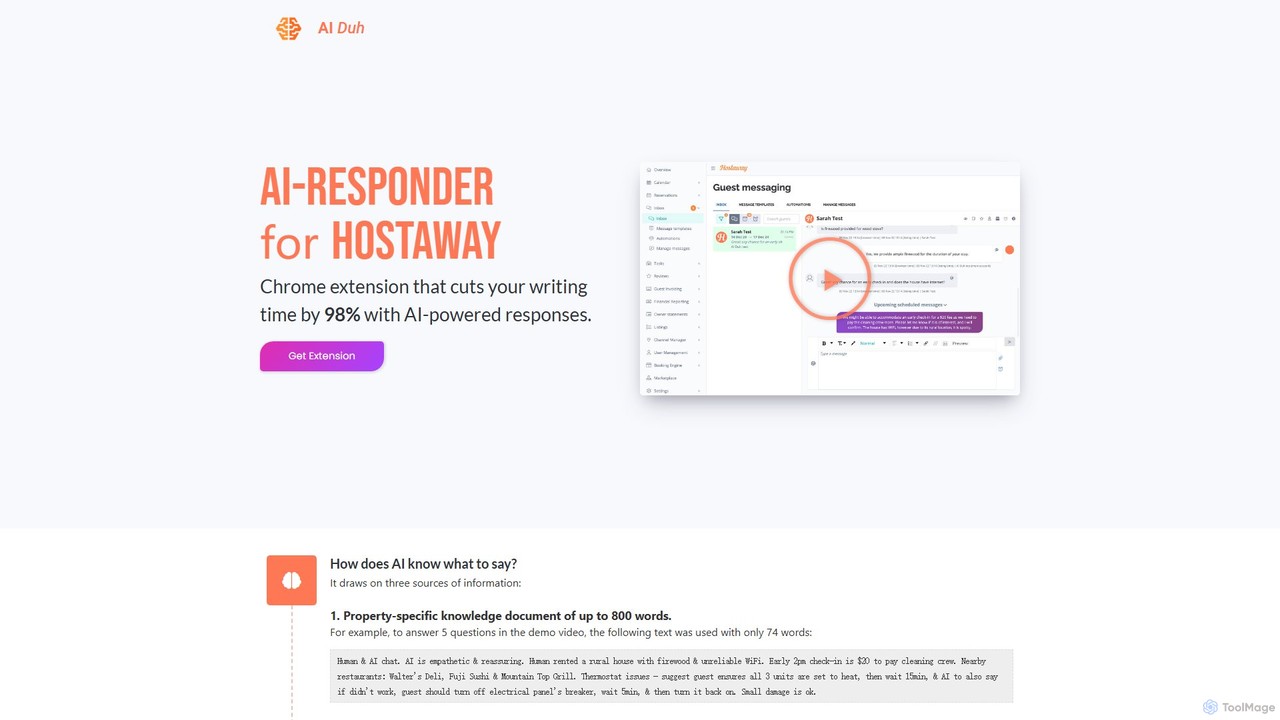
AI-Responder for HostAway
An AI-powered Chrome extension for HostAway that automates guest communication. It analyzes property data, guest details, and chat …
An AI-powered Chrome extension for HostAway that automates guest communication. It analyzes property data, guest details, and chat history to generate instant, human-like responses, cutting writing time by up to 98% for property managers.

Arold
Arold is an AI-powered assistant for Airbnb hosts that integrates directly into the Airbnb inbox. It provides one-tap, …
Arold is an AI-powered assistant for Airbnb hosts that integrates directly into the Airbnb inbox. It provides one-tap, intelligent, and customizable reply suggestions to save time, enhance guest communication, and improve overall satisfaction.
About Property Management
AI Property Management tools are specialized platforms that leverage artificial intelligence to automate and streamline the operational tasks of managing residential and commercial properties. They utilize machine learning for predictive maintenance, natural language processing (NLP) for tenant communication, and data analytics for financial optimization. These tools help property managers, landlords, and real estate firms reduce administrative workload, improve tenant satisfaction, and maximize rental income. As a key component of the broader Real Estate technology ecosystem, they focus specifically on the post-acquisition management lifecycle.
Core Features
- Automated Tenant Communication: AI-powered chatbots handle inquiries, rent reminders, and service requests 24/7.
- Predictive Maintenance: Algorithms analyze property data to forecast equipment failures and schedule preventative maintenance.
- Dynamic Pricing Optimization: AI models suggest optimal rental rates based on market trends, seasonality, and unit availability.
- Intelligent Document Processing: Automatically extracts key information from leases, invoices, and applications using OCR and NLP.
- Financial Analytics & Reporting: AI-driven dashboards provide insights into cash flow, occupancy rates, and portfolio performance.
Use Cases
These tools are primarily used by property management companies, individual landlords with multiple units, and real estate investment trusts (REITs). They are applied to manage tasks like automated lease renewals, screening potential tenants by analyzing application data, and efficiently dispatching maintenance vendors based on AI-generated work orders.
How to Choose
When selecting a tool, consider the scale of your portfolio (number of units), integration capabilities with existing accounting software, the sophistication of its AI features (e.g., basic chatbots vs. predictive analytics), and the pricing model (per unit vs. subscription). The user-friendliness of the platform for both managers and tenants is also a critical factor.
Property ManagementUse Cases
Automating Tenant Service Requests
A property manager for a multi-family apartment complex is often overwhelmed with daily emails and calls about leaky faucets, broken appliances, and noise complaints. By implementing an AI tool with an integrated tenant portal, tenants can submit requests via a chatbot. The AI automatically categorizes the issue, creates a work order, and assigns the appropriate vendor. This process reduces manual processing time for requests by up to 90% and improves tenant satisfaction with faster, more consistent response times.
Optimizing Rental Pricing for Vacant Units
A portfolio manager for a real estate investment firm needs to set competitive rental prices for dozens of vacant units across different neighborhoods. Using an AI property management tool's dynamic pricing feature, the AI analyzes real-time market data, competitor pricing, local demand, and unit amenities. It then recommends the optimal rent to minimize vacancy loss. This approach helps achieve a 5% increase in rental income and reduces the average time a unit stays vacant by 15 days.
Streamlining Tenant Screening and Onboarding
An independent landlord with a small portfolio spends hours manually reviewing applications, running background checks, and drafting lease agreements. By adopting an AI platform, the application process is automated. The AI screens applicants based on predefined criteria (credit score, income), flags high-risk candidates, and auto-generates a digital lease for the selected tenant. This system cuts the time-to-lease from several days to just a few hours and ensures a consistent, fair screening process for all applicants.
Proactive Maintenance Scheduling
A facilities manager for a commercial property portfolio struggles with unexpected, costly equipment failures like HVAC systems and elevators. By deploying a system with predictive maintenance capabilities, the AI analyzes sensor data and historical repair records. It predicts when an asset is likely to fail and automatically schedules preventative service beforehand. This proactive approach reduces emergency repair costs by 30% and increases tenant retention by providing a more reliable building environment.
Automating Rent Collection and Financial Reporting
An accountant at a property management company manually tracks payments, sends late fee notices, and compiles monthly reports for property owners. Using an AI-integrated system, rent collection is automated through online portals. The system sends AI-generated reminders for overdue payments and generates real-time financial dashboards showing income, expenses, and profitability per property. This automation eliminates hours of manual data entry, reduces late payments by 25%, and provides owners with instant, transparent access to their portfolio's financial health.
Enhancing Tenant Communication and Community Engagement
A community manager at a large residential building wants to improve communication and build a stronger sense of community. They leverage an AI tool's communication module to send personalized announcements and survey residents about new amenities. An AI chatbot is also deployed to answer common questions about building policies or local events 24/7. This strategy increases resident engagement scores by 20% and streamlines the dissemination of important information, freeing up the manager's time to organize community events.