Reference Best in category 1 results Dictionary AI Tool

Popular AI tools in the Dictionary field of Reference include Blanked, etc., helping you quickly improve efficiency.

Free
Blanked

Blanked

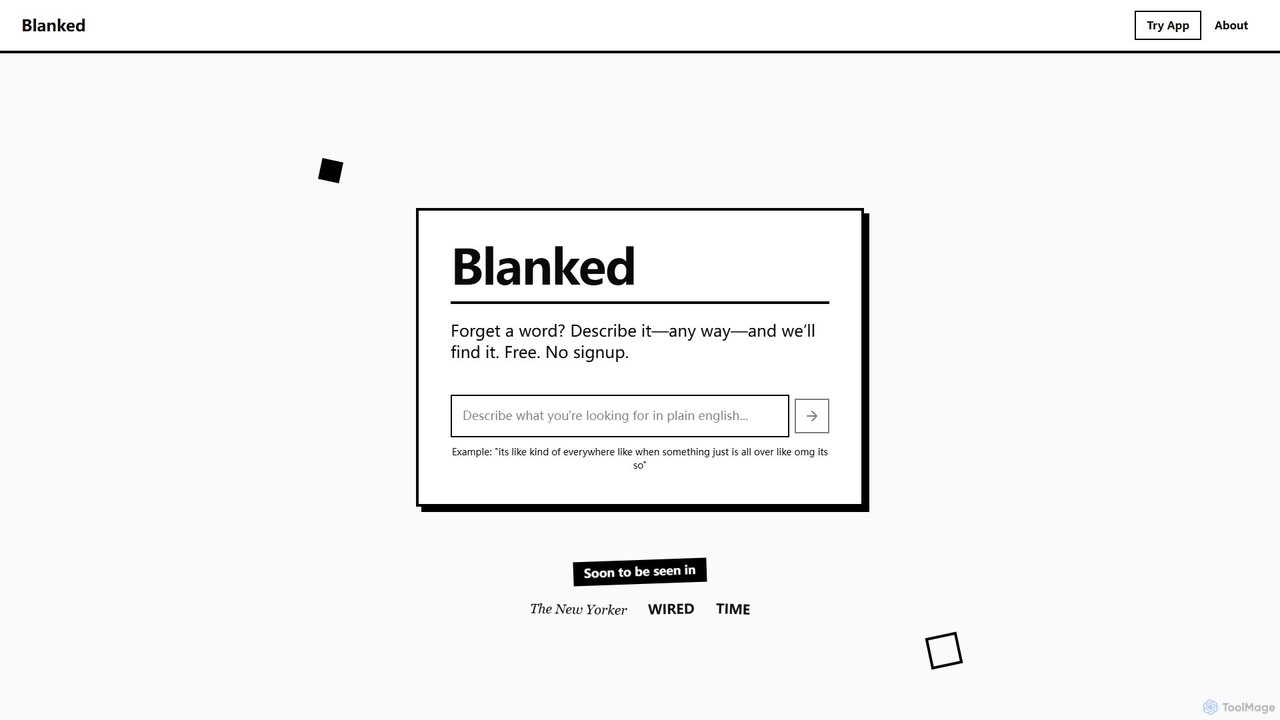
Blanked is an AI-powered reverse dictionary and word finder designed to solve the 'tip-of-the-tongue' problem. Simply describe a …

2.3K

About Dictionary

AI-powered Dictionary tools are advanced linguistic resources that leverage artificial intelligence to provide comprehensive word definitions, translations, synonyms, and contextual usage. Unlike traditional dictionaries, these tools utilize natural language processing (NLP) and machine learning to understand nuances, offer more accurate translations, and provide richer, context-aware information. They serve as invaluable aids for language learners, writers, and professionals seeking precise linguistic insights and efficient communication across various languages.

Core Features

  • Contextual Definitions: Provide definitions that adapt to the surrounding text or specific domain, enhancing understanding.
  • Multilingual Translation: Offer accurate, real-time translation of words, phrases, and even sentences between numerous languages.
  • Synonym & Antonym Generation: Suggest a wide range of related words, helping users enrich vocabulary and improve writing style.
  • Usage Examples & Idioms: Present practical examples of how words are used in sentences, including common idioms and phrases.
  • Pronunciation & Etymology: Include audio pronunciations and historical origins of words, aiding in comprehensive language mastery.

Use Cases

These tools are essential for language students aiming to expand their vocabulary and grasp complex grammar, as well as for professional writers and editors who require precise word choices and stylistic variations. They also support global business communication by ensuring accurate terminology and cultural appropriateness in multilingual exchanges.

How to Choose

When selecting an AI Dictionary, prioritize tools with extensive language coverage and robust contextual understanding capabilities. Evaluate the breadth of features, such as pronunciation guides, usage examples, and integration options (e.g., browser extensions). Consider the accuracy of its data sources and its ability to handle specialized terminology relevant to your field.

DictionaryUse Cases

1

Enhance Language Learning Vocabulary

Language learners can use AI dictionaries to quickly look up unfamiliar words, understand their contextual meaning, and access pronunciation guides. By exploring synonyms and antonyms, they can build a richer vocabulary, practice correct usage through example sentences, and accelerate their language acquisition process beyond basic memorization.

2

Refine Professional Writing & Editing

Writers, editors, and content creators leverage AI dictionaries to find the most precise words, explore stylistic alternatives, and avoid repetition. These tools help in identifying appropriate synonyms or antonyms for specific contexts, ensuring clarity, conciseness, and impact in their written communications, from academic papers to marketing copy.

3

Facilitate Multilingual Communication

Global business professionals and international travelers utilize AI dictionaries for real-time translation of terms and phrases, ensuring accurate and culturally sensitive communication. This is crucial for understanding foreign documents, participating in international meetings, or simply navigating daily interactions in a new linguistic environment.

4

Support Academic Research & Study

Students and researchers employ AI dictionaries to quickly grasp the meaning of specialized jargon or technical terms encountered in academic texts. The ability to access detailed definitions, etymology, and usage examples helps in comprehending complex subjects and accurately citing sources, improving research efficiency.

5

Improve Cross-Cultural Content Creation

Content marketers and localizers use AI dictionaries to ensure that their translated content resonates culturally and linguistically with target audiences. By verifying the nuances of words and phrases in different languages, they can avoid misinterpretations and create more effective, localized marketing campaigns and product descriptions.

6

Aid in Technical Documentation & Translation

Technical writers and translators rely on AI dictionaries to maintain consistency and accuracy in specialized documentation. These tools help in standardizing terminology across complex manuals, software interfaces, and legal documents, ensuring that technical terms are correctly defined and translated, which is vital for clarity and compliance.

DictionaryFrequently Asked Questions