Brand Aware
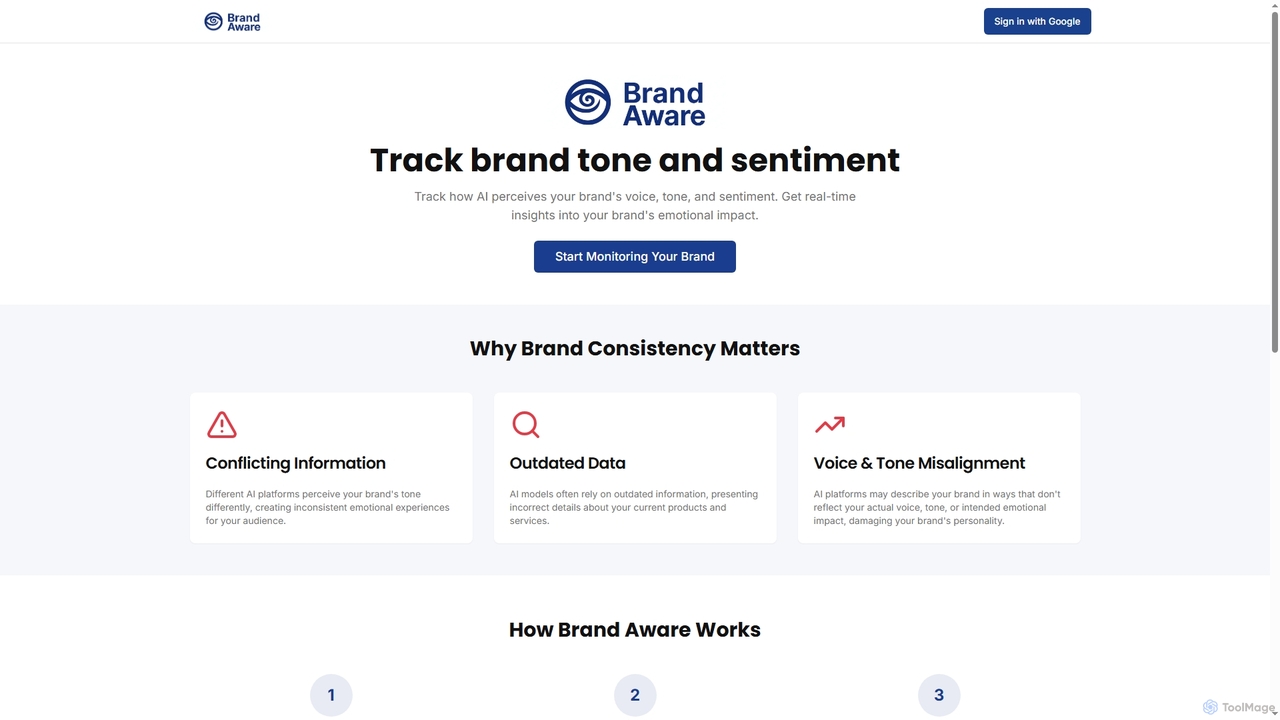
Brand Aware is an AI-powered tracker that monitors how leading AI platforms perceive your brand's tone, sentiment, and …
Brand Aware is an AI-powered tracker that monitors how leading AI platforms perceive your brand's tone, sentiment, and factual accuracy. It provides real-time insights to identify inconsistencies, correct misinformation, and ensure your brand's digital identity remains consistent and on-message across OpenAI, Gemini, and Claude.
About Digital Reputation
Digital Reputation tools are AI-powered platforms that automate the monitoring, analysis, and management of an individual's or brand's online presence. These tools utilize Natural Language Processing (NLP) to analyze vast amounts of data from social media, news sites, forums, and review platforms in real time. Their primary value lies in providing actionable insights into public perception, identifying potential crises early, and protecting brand equity in the digital space. By aggregating mentions and assessing sentiment, they enable organizations to respond proactively to feedback and maintain a positive online image.
Core Features
- Sentiment Analysis: Automatically categorizes online mentions as positive, negative, or neutral to gauge public opinion.
- Real-time Mention Tracking: Monitors keywords, brand names, and hashtags across the web and social media, providing instant alerts.
- Review Aggregation: Collects and centralizes customer reviews from various platforms like Google, Yelp, and Trustpilot for unified analysis.
- Crisis Detection: Identifies unusual spikes in negative mentions or specific keywords to warn of potential PR crises.
- Competitive Benchmarking: Tracks the online reputation and sentiment of competitors to provide a comparative market view.
Use Cases
These tools are essential for marketing, public relations, and customer service teams across various sectors. In e-commerce, they help track product feedback and brand perception. In the hospitality industry, they are used to manage online reviews and improve guest experiences. Financial services and healthcare also use them to maintain trust and manage sensitive public commentary.
How to Choose
When selecting a Digital Reputation tool, consider the breadth of data sources it covers (social media, news, blogs, reviews). Evaluate the accuracy of its sentiment analysis, especially for nuanced language. Key factors also include the customizability of alerts and reports, integration capabilities with other systems like CRM or helpdesks, and a pricing model that aligns with your monitoring volume.
Digital ReputationUse Cases
Proactive Brand Health Monitoring
A marketing manager for a consumer electronics brand uses a digital reputation tool to track public sentiment following a major product launch. The platform monitors social media, tech blogs, and news sites for mentions of the new product. By analyzing the real-time sentiment dashboard, the manager can quickly identify positive talking points for future campaigns and address any emerging negative feedback, such as complaints about battery life, before it escalates. This allows the team to adjust messaging and provide proactive customer support, protecting the launch's success.
Early Crisis Detection for a Restaurant Chain
A PR manager for a national restaurant chain sets up alerts for keywords related to food safety issues (e.g., "food poisoning," "sick"). The digital reputation tool detects a sudden spike in negative mentions linked to a specific location on social media. The PR team is immediately notified, allowing them to contact the branch manager, investigate the issue, and release a public statement within hours, not days. This rapid, informed response helps contain the situation, mitigate damage to the brand's reputation, and demonstrate accountability to customers.
Aggregating Hotel Reviews for Service Improvement
The manager of a boutique hotel uses a digital reputation tool to aggregate guest reviews from Google, TripAdvisor, and Booking.com into a single dashboard. The tool's NLP capabilities identify recurring themes in negative reviews, such as "slow check-in" and "noisy air conditioning." Armed with this data, the manager can prioritize operational improvements, retrain front-desk staff, and schedule maintenance for the AC units. They can also respond to reviews more efficiently from one platform, improving guest relations and boosting their overall online rating over time.
Managing an Executive's Digital Footprint
A corporate communications team for a Fortune 500 company is tasked with managing the CEO's online reputation. They use a digital reputation tool to monitor news articles, social media conversations, and forum discussions that mention the CEO. The tool helps them track sentiment around key announcements, identify misinformation that needs correcting, and discover positive press to amplify. This ensures the CEO's public persona remains professional and aligned with the company's values, which is crucial for investor confidence and employee morale.
Benchmarking Against Competitors in the SaaS Market
A product marketing team at a SaaS company uses a digital reputation tool to benchmark their brand's share of voice and sentiment against two main competitors. The platform provides comparative reports showing which brand is mentioned most frequently and which has a more positive public perception. They discover that a competitor is receiving praise for a new feature. This insight allows the team to analyze the competitor's strategy, inform their own product roadmap, and adjust their marketing messaging to highlight their own unique advantages, helping them stay competitive.
Identifying Product Flaws from User Forums
A product manager for a software application uses a digital reputation tool to monitor discussions on Reddit and specialized user forums. The tool's AI filters through thousands of comments to identify recurring complaints about a specific bug that causes the application to crash. This data is more direct and unfiltered than traditional support tickets. The product manager uses these insights to create a high-priority bug report, providing the development team with real-world examples and context, leading to a faster fix and a more stable product in the next release.