Research Best in category 1 results Clinical Trials AI Tool

Popular AI tools in the Clinical Trials field of Research include Sinkove, etc., helping you quickly improve efficiency.

Sinkove

Sinkove

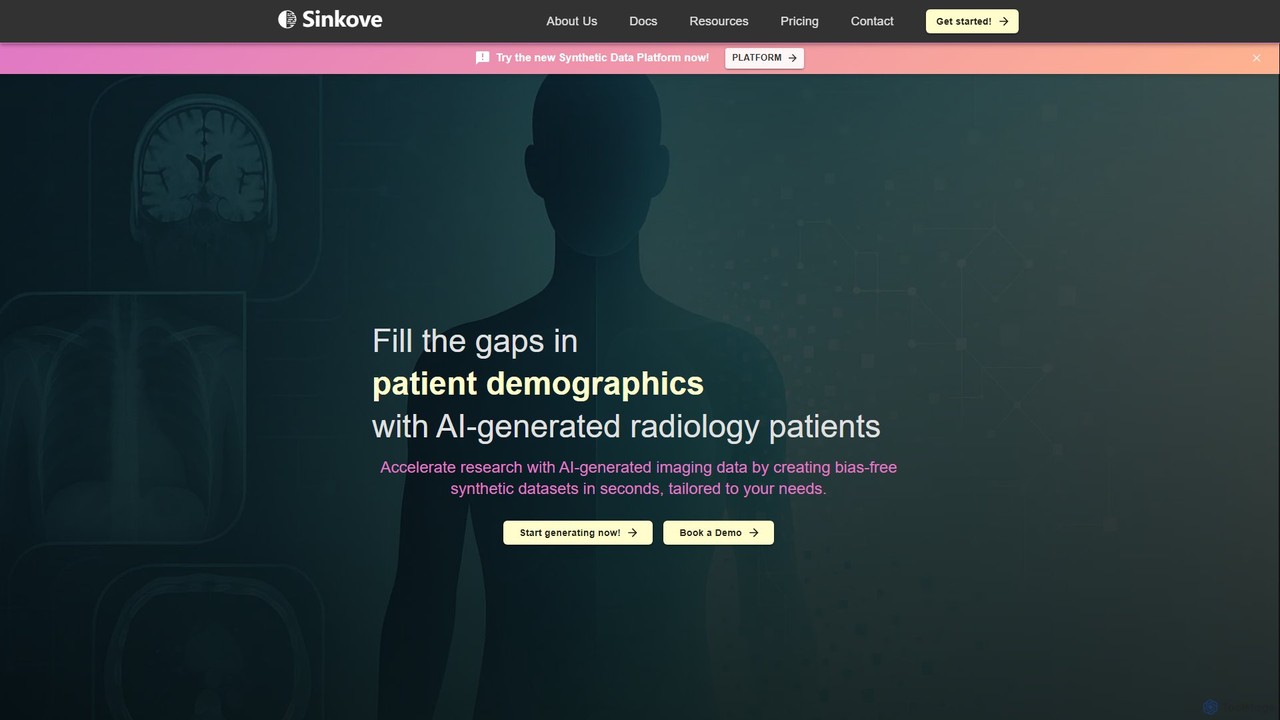
Sinkove is an AI platform that generates high-quality, synthetic radiology data. It helps medical researchers and clinicians accelerate …

3.1K

About Clinical Trials

AI for Clinical Trials are specialized tools that leverage machine learning to optimize and accelerate every phase of the clinical trial process. They utilize predictive analytics, natural language processing (NLP), and computer vision to analyze complex biomedical data, identify patient cohorts, and forecast trial outcomes. These tools significantly reduce trial timelines, lower costs, and improve the accuracy of results, from initial study design to final regulatory submission. Unlike general research platforms, they are specifically designed to handle the stringent regulatory requirements and complex data structures inherent in clinical research.

Core Features

  • Predictive Patient Recruitment: Uses AI to scan electronic health records (EHRs) and identify eligible participants who meet complex inclusion/exclusion criteria.
  • Optimized Trial Design: Simulates trial outcomes with digital twins and synthetic data to refine protocols before launch.
  • Real-time Data Monitoring: Automates the detection of adverse events and data anomalies, ensuring patient safety and data integrity.
  • Biomarker Discovery: Analyzes genomic and imaging data to identify novel biomarkers for patient stratification and endpoint analysis.
  • Automated Document Generation: Employs NLP to draft study protocols, consent forms, and clinical study reports (CSRs) more efficiently.

Use Cases

These tools are primarily used by pharmaceutical companies, biotechnology firms, and Contract Research Organizations (CROs) to manage large-scale, multi-center trials. Clinical research coordinators, data managers, and medical writers use them for daily operational tasks like patient matching, data quality control, and report generation.

How to Choose

When selecting an AI tool for clinical trials, consider its regulatory compliance (e.g., HIPAA, GDPR, 21 CFR Part 11), its ability to integrate with diverse data sources like EHRs and imaging systems, the transparency of its AI models (explainability), and its scalability to handle growing data volumes throughout the trial lifecycle.

Clinical TrialsUse Cases

1

Accelerate Patient Recruitment for Oncology Trials

A clinical research coordinator at a major cancer center is tasked with finding 50 patients with a rare genetic mutation for a new Phase III oncology trial. Manually screening thousands of electronic health records (EHRs) would take months. By using an AI-powered patient recruitment tool, the coordinator inputs the complex inclusion/exclusion criteria. The AI scans millions of anonymized records across multiple hospital networks in minutes, identifying a shortlist of 120 highly qualified potential candidates. This reduces the screening time by over 90% and allows the trial to start months ahead of schedule.

2

Optimize Trial Protocol Design with Simulations

A clinical scientist at a biotech firm is designing a protocol for a Phase II trial. There are uncertainties about the optimal dosing regimen and patient inclusion criteria. Instead of running multiple costly and slow physical trials, the scientist uses an AI simulation tool. The tool creates 'digital twin' patients and simulates the trial's outcome under various scenarios. The results predict that a slightly lower dose will maintain efficacy while significantly reducing side effects, leading to a revised, more effective protocol. This pre-trial optimization saves millions of dollars and reduces risks to patients.

3

Automate Adverse Event Detection and Reporting

A pharmacovigilance team at a large pharmaceutical company is responsible for monitoring patient safety across dozens of ongoing trials. Manually reviewing all incoming data is prone to delays and human error. They implement an AI system that continuously monitors real-time data from patient diaries, lab results, and wearable devices. The system's NLP capabilities identify mentions of potential adverse events (AEs) and its anomaly detection algorithms flag unusual lab values. This allows the team to investigate potential safety signals hours or days earlier, improving patient safety and ensuring timely reporting to regulatory authorities.

4

Analyze Imaging Data for Neurological Studies

A Contract Research Organization (CRO) is managing a trial for an Alzheimer's drug where brain atrophy measured by MRI is a key endpoint. Manually measuring volume changes in thousands of scans is subjective and time-consuming. The CRO uses an AI imaging analysis platform. Radiologists upload the MRI scans, and the AI algorithm automatically segments brain regions and quantifies volume changes with high precision and consistency. This provides an objective, scalable, and reproducible endpoint measure, strengthening the quality of the trial data and the subsequent regulatory submission.

5

Streamline Clinical Study Report (CSR) Generation

A medical writer at a CRO is facing a tight deadline to produce a comprehensive Clinical Study Report (CSR). This involves manually compiling data, tables, and text from numerous source documents like the protocol, statistical analysis plan, and patient data listings. They use an AI-powered document generation tool. The writer connects the tool to the source data, and it automatically populates templates with the correct figures, tables, and standard text. The AI also ensures consistency in terminology and formatting across the entire document, reducing manual writing and review time by over 40% and minimizing the risk of errors.

6

Predict Patient Dropout Risk to Improve Retention

A trial manager for a long-term cardiovascular study is concerned about high patient dropout rates, which could jeopardize the study's statistical power. They deploy a predictive analytics tool that analyzes baseline patient data, early treatment responses, and engagement metrics (e.g., diary completion). The AI model identifies a profile of patients at high risk of discontinuing the trial. This allows the clinical team to proactively intervene with targeted support, such as additional reminders, educational materials, or telehealth check-ins, for these specific patients. As a result, the overall retention rate improves by 15%, ensuring the trial's validity.

Clinical TrialsFrequently Asked Questions