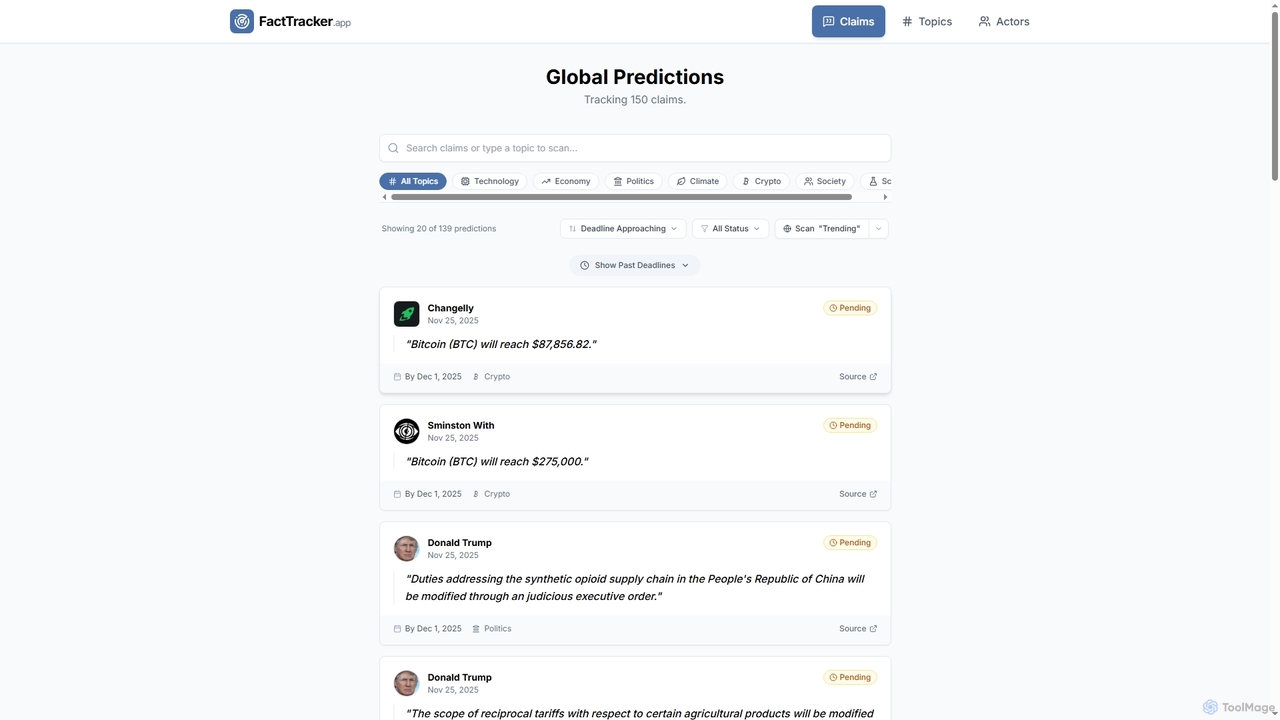
Credibility Assessment tools are AI-powered solutions designed to evaluate the trustworthiness and authenticity of information, sources, and digital content. These tools leverage advanced algorithms, natural language processing (NLP), and machine learning to analyze various data points, identifying potential biases, misinformation, or fabricated content. They provide users with objective insights to make informed decisions, crucial in an era of abundant and often misleading digital information.
Core Features
- Source Verification: Analyzes the reputation, history, and authority of information sources.
- Content Analysis: Scans text, images, and videos for factual accuracy, consistency, and signs of manipulation.
- Bias Detection: Identifies potential ideological or emotional leanings in content and reporting.
- Deepfake & Synthetic Media Detection: Employs computer vision and audio analysis to spot AI-generated fake media.
- Sentiment & Tone Analysis: Evaluates the underlying sentiment and tone to understand the emotional context and potential manipulation.
Use Cases
These tools are indispensable for professionals across various sectors. Journalists use them to verify facts and sources before publication, ensuring accuracy and maintaining public trust. Researchers leverage them to assess the reliability of academic papers and data, safeguarding the integrity of their studies. Marketing and PR teams utilize them to monitor brand reputation and detect misleading campaigns or reviews, protecting their public image.
How to Choose
When selecting a Credibility Assessment AI tool, prioritize accuracy and the breadth of data sources it analyzes, including news archives, social media, and academic databases. Consider its ability to detect various forms of misinformation, from text-based falsehoods to sophisticated deepfakes. Evaluate the transparency of its assessment methodology and the clarity of its reporting. Finally, assess its integration capabilities with existing workflows and its user-friendliness for your team's specific needs.