FactTracker
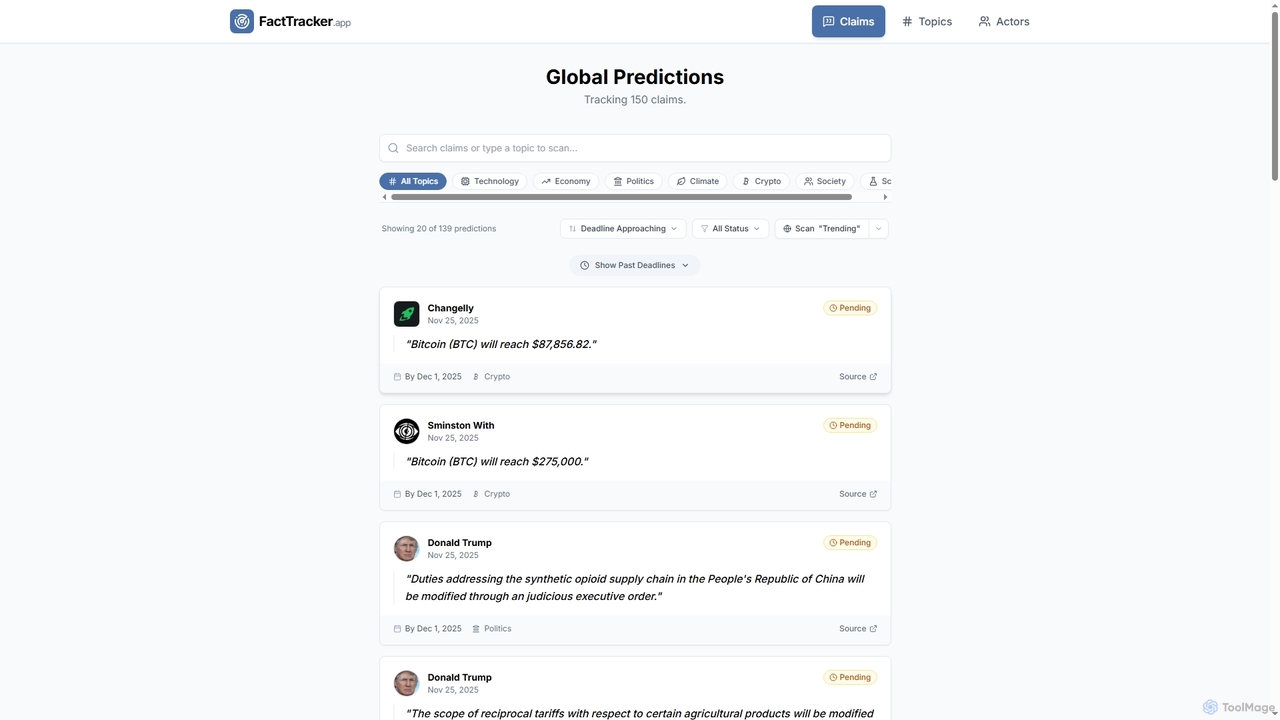
FactTracker is a platform that monitors and evaluates predictions and claims made by various sources across diverse global …
FactTracker is a platform that monitors and evaluates predictions and claims made by various sources across diverse global topics. It tracks these claims against real-world outcomes to reveal who consistently gets reality right, providing transparency and accountability for forecasts.
Pulse
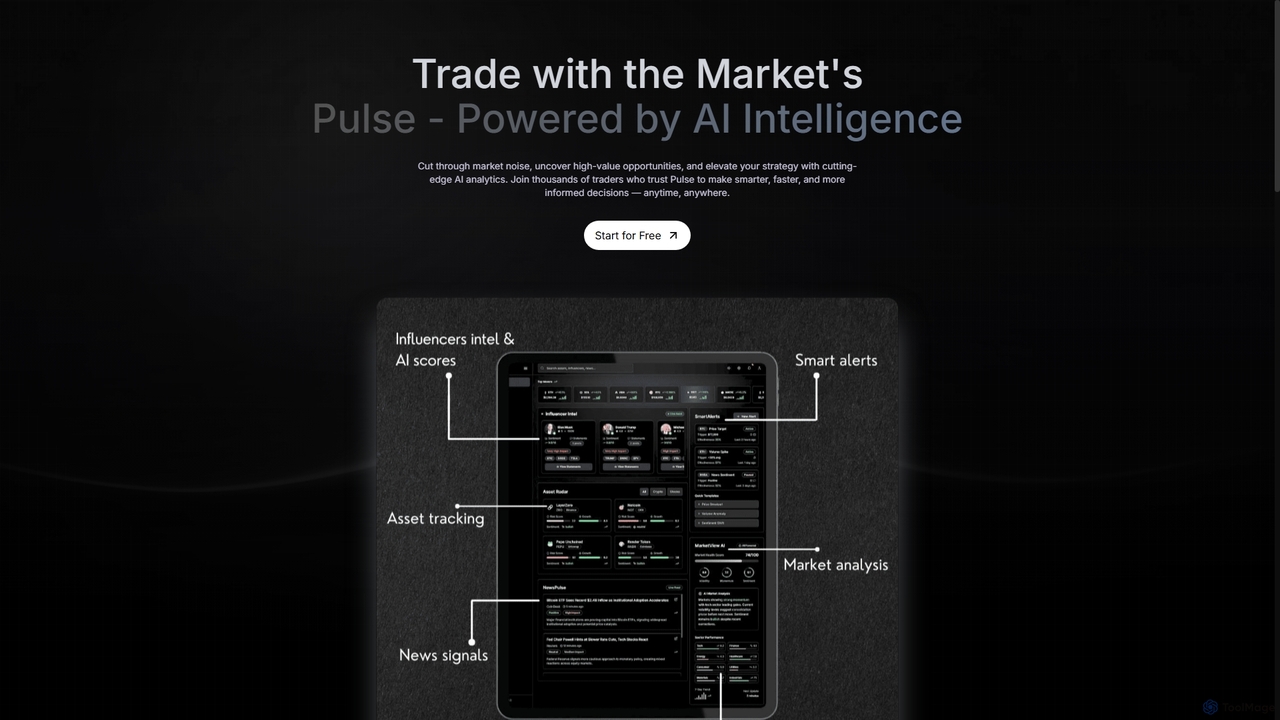
Pulse is an AI-powered market intelligence platform designed for traders and investors. It cuts through market noise, uncovers …
Pulse is an AI-powered market intelligence platform designed for traders and investors. It cuts through market noise, uncovers high-value opportunities, and elevates trading strategies with real-time analytics, sentiment analysis, risk scoring, and predictive insights.
TrendEdge
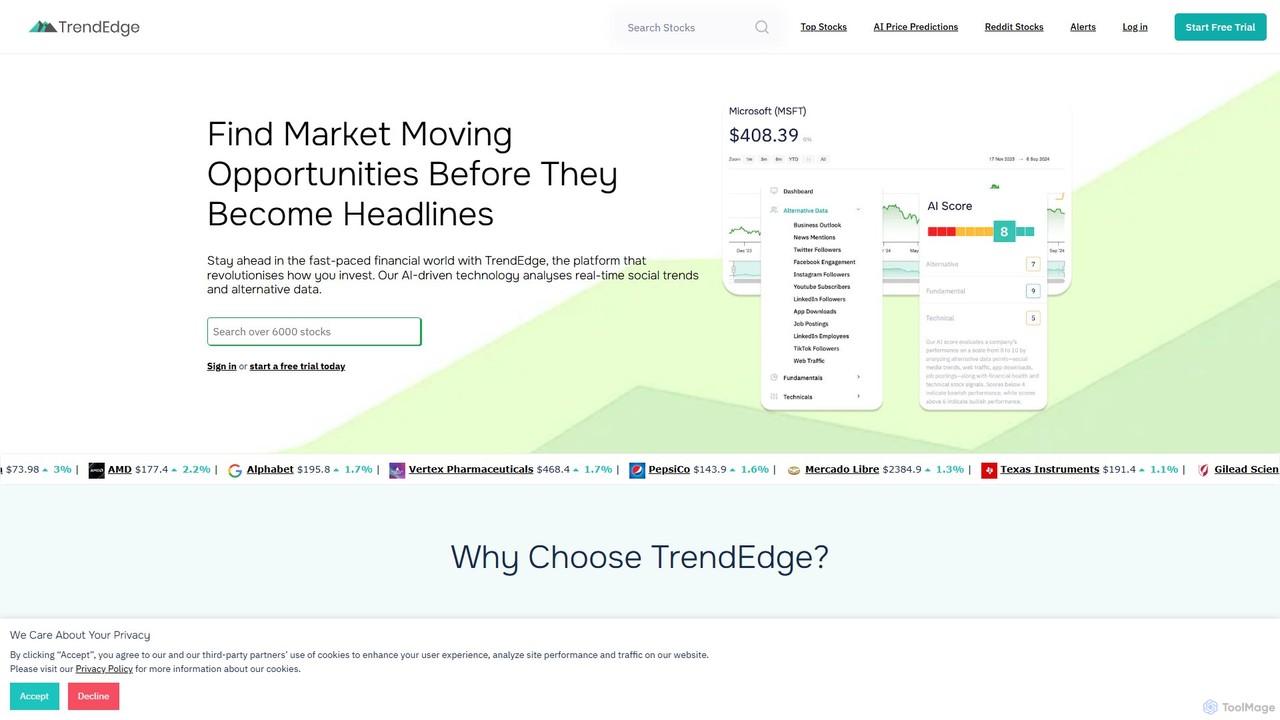
TrendEdge is an AI-powered investment intelligence platform that provides stock signals by analyzing alternative data sources. It evaluates …
TrendEdge is an AI-powered investment intelligence platform that provides stock signals by analyzing alternative data sources. It evaluates companies using social media trends, web traffic, job postings, and financial health to give investors an edge traditionally reserved for hedge funds.
About Market Intelligence
Market Intelligence tools are AI-powered platforms designed to collect, analyze, and interpret vast amounts of market data. They leverage advanced algorithms, including natural language processing and machine learning, to extract actionable insights from diverse sources. These tools help businesses understand market trends, competitive landscapes, and customer behaviors, enabling data-driven strategic decisions. By automating data aggregation and analysis, they provide a comprehensive and real-time view of the market.
Core Features
- Competitive Analysis: Monitor competitor strategies, product launches, pricing, and market share.
- Trend Prediction: Identify emerging market trends and forecast future demand or shifts.
- Customer Sentiment Analysis: Gauge public opinion and sentiment towards brands, products, or topics.
- Market Opportunity Identification: Discover untapped market segments or unmet customer needs.
- Pricing Strategy Optimization: Analyze market pricing dynamics to inform optimal pricing models.
Use Cases
Marketing teams utilize Market Intelligence tools to refine campaign strategies by understanding competitor ad spend and consumer engagement patterns. Product managers employ them to identify feature gaps in their offerings compared to rivals and to predict future product demand. Business development professionals leverage these insights to pinpoint new geographic markets or customer segments with high growth potential, ensuring strategic expansion based on solid data.
How to Choose
When selecting a Market Intelligence tool, consider its data source breadth (e.g., social media, news, financial reports), analysis depth (e.g., sentiment, predictive modeling), customization options for dashboards and reports, and integration capabilities with existing CRM or BI systems. Evaluate the accuracy of its AI models and the ease of interpreting its insights for your specific business needs.

Market IntelligenceUse Cases
Monitor Competitor Strategies and Market Share
Marketing and sales teams can use Market Intelligence tools to continuously track competitor activities, including product launches, pricing changes, and promotional campaigns. By analyzing competitor market share and growth trends, businesses can identify strategic gaps, anticipate competitive moves, and adjust their own strategies to maintain a competitive edge. This enables proactive decision-making rather than reactive responses, leading to more effective market positioning and resource allocation.
Identify Emerging Market Trends and Opportunities
Product development and innovation teams leverage Market Intelligence to detect nascent trends and unmet customer needs across various industries. These tools analyze vast datasets from social media, news, and research reports to highlight shifts in consumer preferences or technological advancements. This allows companies to proactively develop new products or services that align with future market demands, reducing the risk of investing in declining sectors and fostering innovation.
Optimize Product Pricing and Positioning
Revenue management and product teams utilize Market Intelligence to analyze pricing strategies of competitors and understand market elasticity. By monitoring how different price points impact sales and customer perception across the market, businesses can dynamically adjust their own pricing models. This ensures optimal revenue generation while maintaining competitive pricing, helping to maximize profitability and market penetration for new and existing products.
Enhance Customer Understanding and Sentiment Analysis
Customer experience and brand management teams deploy Market Intelligence to gauge public sentiment towards their brand, products, or specific campaigns. These tools analyze customer reviews, social media conversations, and forum discussions to identify pain points, satisfaction drivers, and emerging customer expectations. This deep understanding allows companies to refine their messaging, improve product features, and address customer concerns promptly, strengthening brand loyalty and reputation.
Support Strategic Market Entry and Expansion
Business development and international expansion teams use Market Intelligence to assess the viability of entering new geographic markets or launching new product lines. By analyzing market size, regulatory landscapes, competitive intensity, and consumer demographics in target regions, businesses can make informed decisions about resource allocation and market entry strategies. This minimizes risks associated with expansion and increases the likelihood of successful market penetration.
Inform Investment Decisions and Due Diligence
Investors and financial analysts employ Market Intelligence tools to conduct thorough due diligence on potential investments or acquisitions. These platforms provide comprehensive data on industry growth, company performance, competitive standing, and future market outlook. By synthesizing complex market information, they can identify undervalued assets, assess risks, and validate investment theses, leading to more robust and data-backed investment decisions.