Pulse
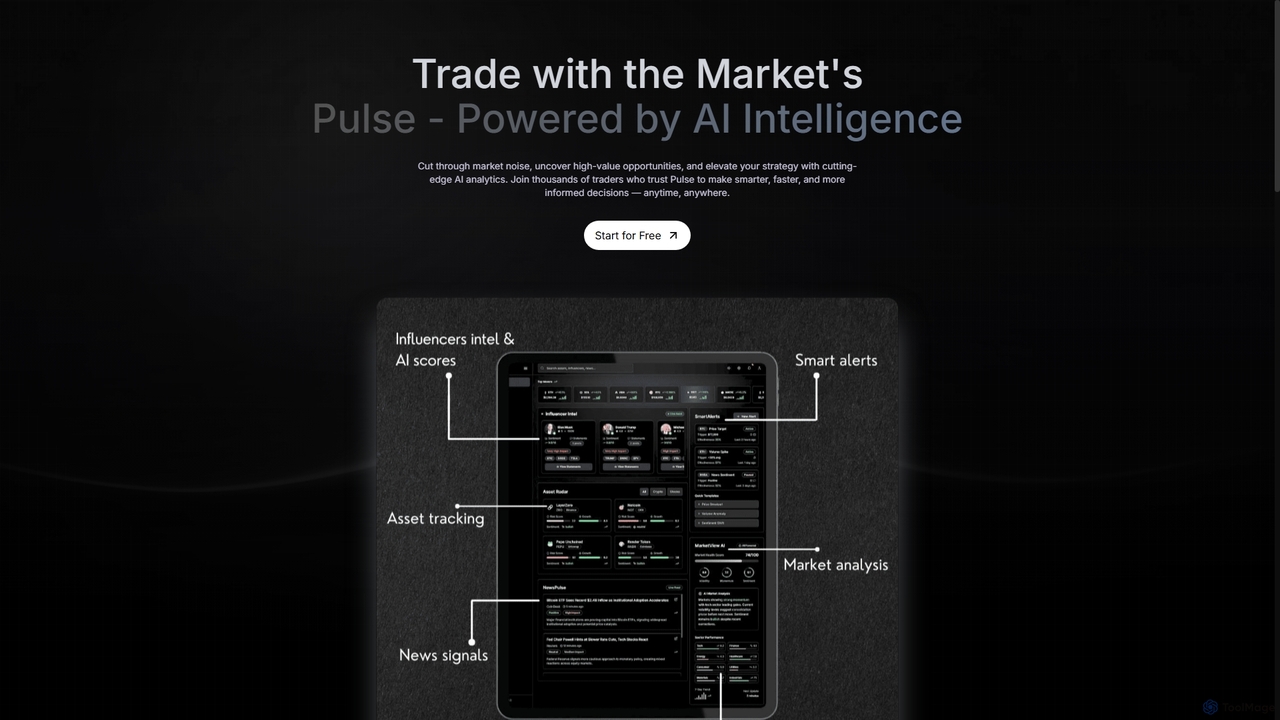
Pulse is an AI-powered market intelligence platform designed for traders and investors. It cuts through market noise, uncovers …
Pulse is an AI-powered market intelligence platform designed for traders and investors. It cuts through market noise, uncovers high-value opportunities, and elevates trading strategies with real-time analytics, sentiment analysis, risk scoring, and predictive insights.
SentraChart
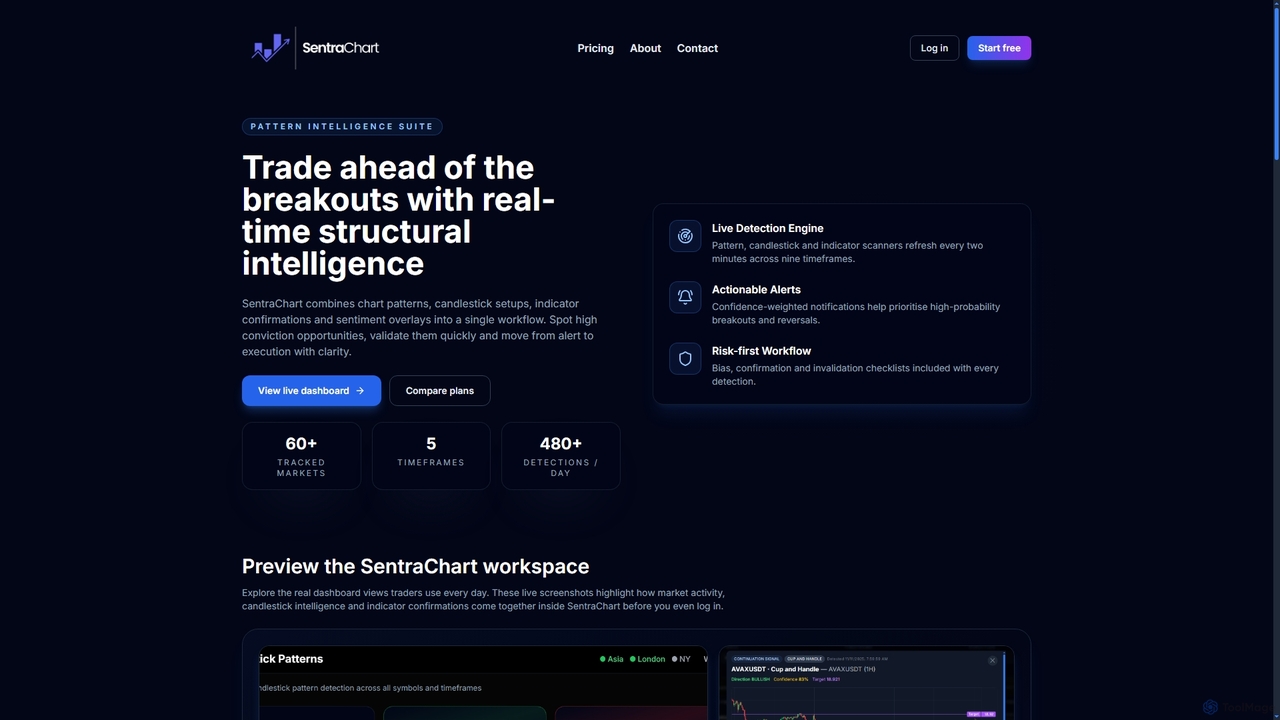
SentraChart is an advanced AI-assisted platform for cryptocurrency traders, offering real-time chart pattern scanning, candlestick intelligence, and indicator …
SentraChart is an advanced AI-assisted platform for cryptocurrency traders, offering real-time chart pattern scanning, candlestick intelligence, and indicator confirmations. It provides actionable alerts and a risk-first workflow to help traders identify high-probability breakouts and reversals, streamlining the discovery-to-execution process for crypto markets.
About Alerts
AI Alerts are intelligent tools that leverage artificial intelligence to monitor data streams, events, and conditions, automatically notifying users when predefined criteria are met or anomalies are detected. These tools go beyond traditional rule-based systems by learning patterns, reducing false positives, and identifying subtle, complex deviations. They are a critical component of automation, enabling proactive responses and informed decision-making across various operational domains.
Core Features
- Anomaly Detection: Automatically identifies unusual patterns or outliers in data that deviate from learned normal behavior.
- Predictive Alerting: Forecasts potential issues or trends before they fully materialize, based on historical data analysis.
- Contextual Notifications: Delivers alerts with rich, relevant context, often including potential root causes or suggested actions.
- Dynamic Thresholds: Adjusts alert sensitivity and thresholds automatically in response to changing data patterns.
- Multi-channel Delivery: Sends notifications through various platforms like email, SMS, Slack, Microsoft Teams, or custom webhooks.
Use Cases
AI Alert tools are indispensable for professionals in IT operations, cybersecurity, finance, and marketing. They are used to maintain system health, detect fraud, monitor brand sentiment, and manage inventory. By providing timely, intelligent notifications, these tools ensure critical issues are addressed swiftly, minimizing downtime and potential losses.
How to Choose
When selecting an AI Alert tool, consider its data source compatibility with your existing systems, the sophistication of its anomaly detection algorithms, and the flexibility of its notification customization. Evaluate its false positive rate to avoid alert fatigue, assess its scalability for your data volume, and ensure it offers an intuitive interface for easy configuration and management.

AlertsUse Cases
Real-time IT Infrastructure Monitoring
An IT operations manager uses AI Alert tools to continuously monitor server performance, network traffic, and application health. The AI system learns normal operational baselines and immediately triggers an alert via Slack when it detects unusual CPU spikes, memory leaks, or unexpected service downtimes, providing contextual data to help diagnose the issue. This proactive approach allows the team to address potential outages before they impact users, significantly reducing system downtime by up to 30%.
Proactive Financial Fraud Detection
A financial analyst in a banking institution deploys AI Alert tools to scrutinize millions of daily transactions. The AI identifies subtle, anomalous spending patterns or unusual login attempts that might indicate fraudulent activity, even if they fall within traditional rule-based thresholds. An immediate alert is sent to the fraud investigation team with a risk score and transaction details, enabling them to freeze suspicious accounts or contact customers within minutes, preventing an estimated 95% of potential financial losses from emerging fraud schemes.
Social Media Brand Sentiment Monitoring
A marketing specialist uses AI Alert tools to track brand mentions and public sentiment across social media platforms. The AI analyzes posts, comments, and reviews in real-time, triggering an alert when there's a sudden surge in negative sentiment or a critical mention from an influential user. This allows the marketing team to quickly respond to PR crises, engage with dissatisfied customers, or capitalize on positive trends, protecting brand reputation and improving customer satisfaction by 15%.
E-commerce Inventory & Sales Anomaly Detection
An e-commerce manager utilizes AI Alert tools to monitor inventory levels and sales data across multiple product lines. The AI detects unusual spikes in sales for a specific product, indicating a potential viral trend or a stockout risk, or conversely, a sudden drop in sales suggesting a product issue or competitor activity. Alerts are sent to the purchasing and marketing teams, allowing them to adjust stock orders, launch targeted promotions, or investigate product feedback, optimizing inventory turnover and preventing lost sales by 20%.
Customer Service Escalation & Prioritization
A customer support team leader employs AI Alert tools to analyze incoming customer inquiries and support tickets. The AI identifies urgent issues based on keywords, sentiment, and historical resolution times, automatically escalating critical cases (e.g., service outages, highly negative feedback) to senior agents or specialized teams. This ensures that high-priority customer problems are addressed immediately, improving first-response time by 40% and overall customer satisfaction scores by 10% by preventing critical issues from being overlooked.
Security Incident Response Automation
A cybersecurity analyst uses AI Alert tools to detect and respond to potential security breaches. The AI continuously monitors network logs, endpoint activities, and threat intelligence feeds, triggering an alert when it identifies suspicious login patterns, unauthorized data access attempts, or known malware signatures. The alert includes detailed forensic data and automatically initiates containment actions, such as isolating affected systems, reducing the average time to detect and respond to security incidents by 60% and minimizing potential damage from cyberattacks.