Automation Best in category 3 results Industrial Automation AI Tool

Popular AI tools in the Industrial Automation field of Automation include Figure、Sanctuary AI、Intelgic, etc., helping you quickly improve efficiency.

Figure

Figure

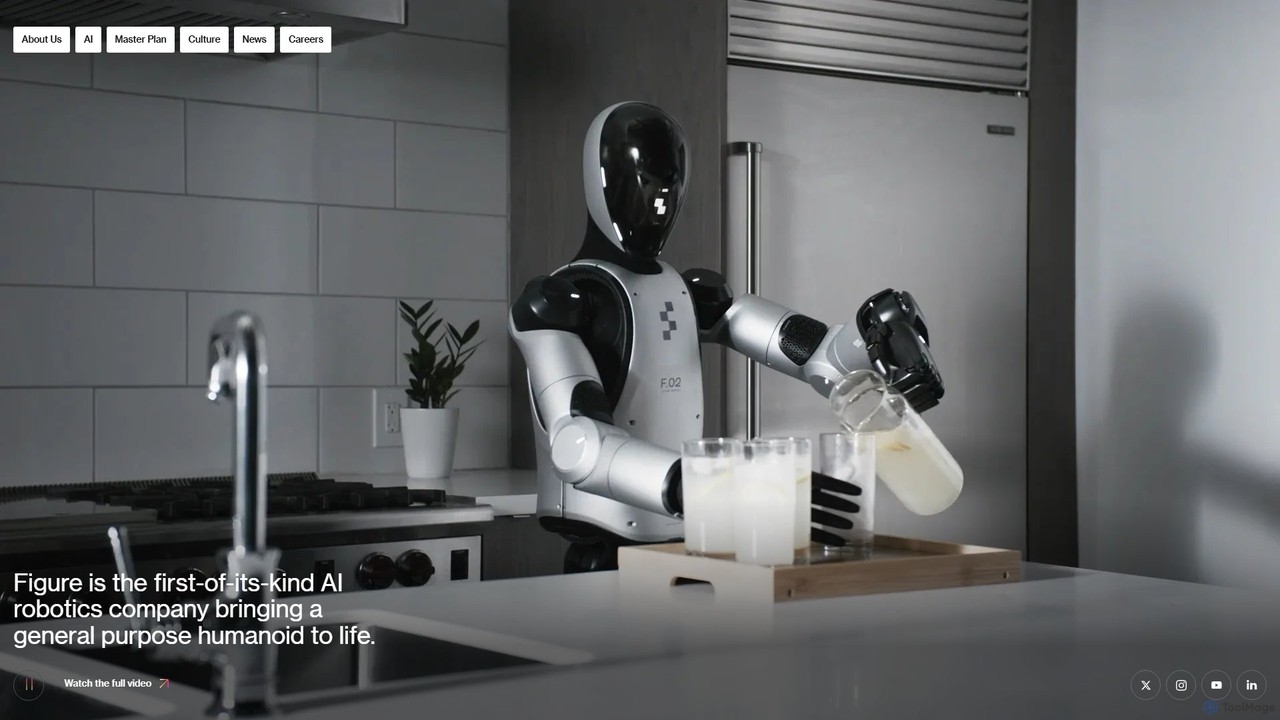
Figure is an AI robotics company developing general-purpose humanoid robots. Its flagship robot, Figure 02, is designed to …

269.2K
Intelgic

Intelgic

Intelgic provides comprehensive AI-powered machine vision solutions for industrial automation. Specializing in high-speed, high-precision defect detection, their system …

24.5K
Sanctuary AI

Sanctuary AI

Sanctuary AI is a robotics and physical AI company developing Phoenix, an industrial-grade, general-purpose humanoid robot. Powered by …

33.7K

About Industrial Automation

Industrial Automation tools are AI-powered systems designed to control and manage physical machinery and processes in industrial environments. These tools leverage technologies like machine learning, computer vision, and IoT sensor data to optimize manufacturing, logistics, and production lines. They go beyond simple automation by enabling predictive maintenance, intelligent quality control, and adaptive process optimization, leading to significant gains in efficiency and reliability. This allows for the creation of smart factories where operations are monitored and adjusted in real-time.

Core Features

  • Predictive Maintenance: Analyzes equipment data to forecast potential failures before they occur, minimizing downtime.
  • AI-Powered Quality Control: Uses computer vision to automatically detect defects or anomalies on production lines with high accuracy.
  • Robotic Process Optimization: Guides industrial robots for complex tasks like assembly, welding, and packaging with enhanced precision and efficiency.
  • Supply Chain & Logistics Optimization: Employs algorithms to forecast demand, manage inventory, and optimize transportation routes.
  • Digital Twin Simulation: Creates a virtual replica of a physical process or asset to test, monitor, and optimize operations without real-world risk.

Use Cases

These tools are essential in sectors like manufacturing, automotive, pharmaceuticals, and logistics. Production managers use them to increase throughput, maintenance engineers rely on them for proactive equipment care, and quality control specialists apply them to ensure product consistency. For example, an automotive plant might use AI to coordinate hundreds of robots on an assembly line, while a food processing facility uses it for automated sorting and quality checks.

How to Choose

When selecting an Industrial Automation tool, consider its integration capabilities with your existing hardware (like PLCs and sensors). Evaluate the accuracy and training requirements of its AI models for your specific tasks. Assess its scalability to handle growing production volumes and its robustness for 24/7 operation in an industrial environment. Finally, review data security protocols to protect sensitive operational information.

Industrial AutomationUse Cases

1

Predictive Maintenance for Manufacturing Lines

A maintenance manager in a large manufacturing plant is tasked with minimizing unplanned downtime. They deploy an AI-powered industrial automation platform that connects to IoT sensors on critical machinery. The system continuously analyzes vibration, temperature, and acoustic data, using machine learning models to detect subtle anomalies that precede equipment failure. When the AI predicts a high probability of a component failing within the next two weeks, it automatically generates a maintenance work order and alerts the team. This allows them to schedule repairs during planned downtime, preventing costly production halts and extending the lifespan of the machinery.

2

Automated Visual Quality Inspection

A quality control specialist in an electronics manufacturing company needs to ensure every circuit board is free of defects. They integrate an AI computer vision system into the production line. A high-resolution camera captures images of each board, and the AI tool, trained on thousands of images of good and defective boards, instantly analyzes them. It can detect microscopic soldering errors, misplaced components, or cracks that are difficult for the human eye to spot consistently. Any board flagged as defective is automatically diverted to a rework station, ensuring near-perfect quality control, increasing throughput, and reducing the cost of manual inspection.

3

Optimizing Robotic Arm Path Planning

An automation engineer at an automotive assembly plant is programming a robotic arm for a complex 'pick and place' task. Instead of manually programming every movement, they use an AI-based simulation tool. The engineer defines the start and end points, along with constraints like obstacle avoidance and payload stability. The AI algorithm then runs thousands of simulations to calculate the most efficient path in terms of speed and energy consumption. This not only reduces programming time from days to hours but also results in a faster, smoother robotic operation, increasing the overall cycle speed of the assembly line.

4

Managing Warehouse Inventory with Autonomous Robots

A logistics manager for a large e-commerce fulfillment center uses a fleet of autonomous mobile robots (AMRs) to manage inventory. These robots, guided by an AI central control system, navigate the warehouse independently. They perform tasks like transporting shelves of goods to human pickers, moving completed orders to the shipping area, and conducting automated cycle counts overnight using onboard scanners. The AI system optimizes robot routes to avoid congestion and prioritizes tasks based on real-time order flow. This leads to faster order fulfillment, significantly improved inventory accuracy, and a safer work environment by reducing manual material handling.

5

Optimizing Energy Consumption in a Factory

A plant manager aims to reduce the factory's high electricity costs. They implement an AI-driven energy management system that integrates with the production schedule and real-time energy pricing data. The AI analyzes patterns and predicts periods of peak energy demand and cost. It then automatically adjusts the operation of non-critical, energy-intensive machinery, like large HVAC systems or pumps, shifting their usage to off-peak, lower-cost hours without disrupting the core production schedule. This intelligent scheduling results in a 15-20% reduction in energy costs and supports the company's sustainability goals by lowering its overall carbon footprint.

6

Supply Chain Demand Forecasting

A supply chain planner for a consumer goods company uses an AI industrial automation tool to improve forecast accuracy. The tool analyzes vast datasets, including historical sales, weather patterns, social media trends, and macroeconomic indicators. By identifying complex correlations that are invisible to human analysts, the AI model generates highly accurate demand forecasts for each product line. This allows the planner to optimize raw material procurement, adjust production schedules proactively, and manage warehouse inventory levels more effectively, ultimately reducing stockouts and minimizing excess inventory holding costs.

Industrial AutomationFrequently Asked Questions