
Well
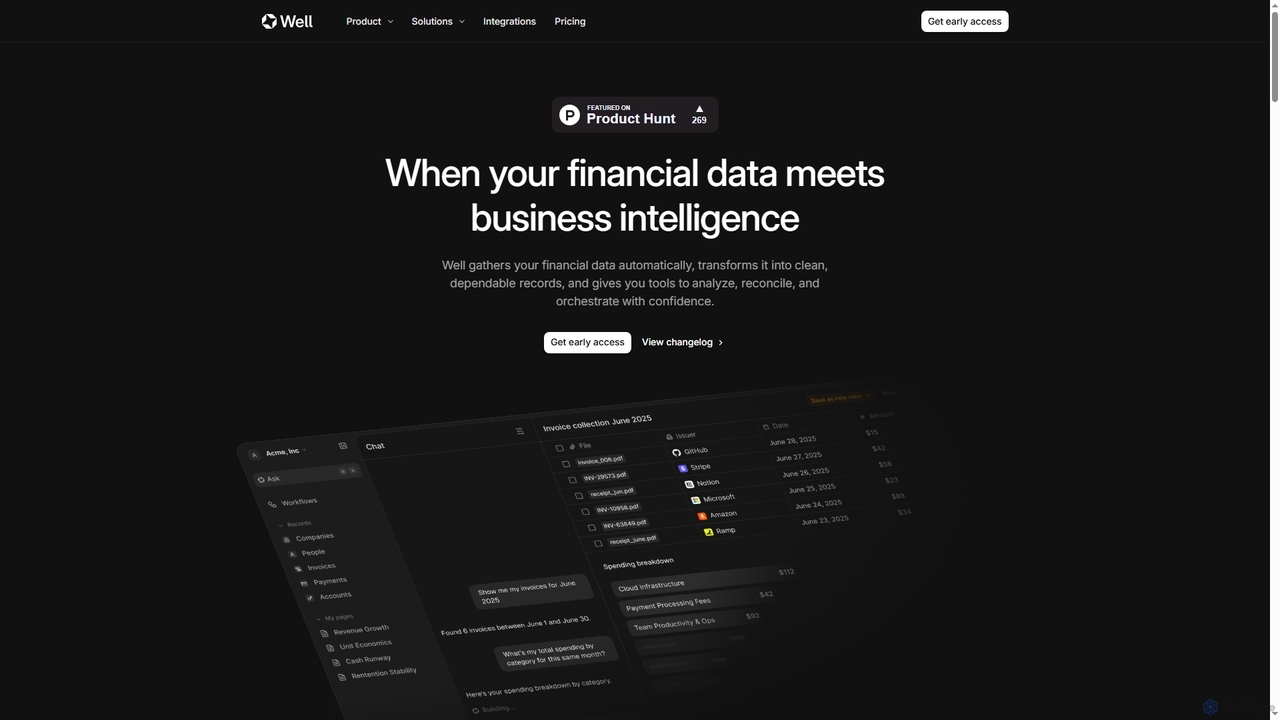
Well is an AI-native business intelligence platform designed for SMBs, automating financial data gathering, transformation, and analysis. It …
Well is an AI-native business intelligence platform designed for SMBs, automating financial data gathering, transformation, and analysis. It unifies scattered financial information from various sources, turning it into clean, dependable records and actionable insights. With natural language queries, users can generate reports, track spending, and manage cash flow effortlessly, significantly reducing manual administrative work.
About Financial Automation
Financial Automation tools are a specialized category of software that uses AI and machine learning to streamline and manage financial processes. These platforms automate repetitive tasks like data entry, transaction reconciliation, and invoice processing, significantly reducing manual effort. By doing so, they enhance accuracy, accelerate financial closing cycles, and provide real-time insights for better decision-making. This focus on financial workflows distinguishes them from general-purpose automation tools.
Core Features
- Intelligent Invoice Processing: Automatically extracts data from invoices and receipts using OCR and categorizes expenses.
- Automated Reconciliation: Matches transactions across bank statements, payment gateways, and accounting ledgers.
- Expense Management Workflow: Simplifies expense reporting, enforces spending policies, and automates reimbursement approvals.
- Real-time Financial Reporting: Generates dynamic dashboards and reports on cash flow, profitability, and budget variance.
- Compliance Monitoring: Continuously checks transactions against internal policies and external regulations to flag risks.
Use Cases
These tools are invaluable for finance departments in businesses of all sizes, from startups seeking to manage cash flow efficiently to large enterprises automating their accounts payable (AP) and accounts receivable (AR) processes. Accounting firms also leverage them to manage multiple clients' books with greater speed and accuracy.
How to Choose
When selecting a tool, prioritize its integration capabilities with your existing accounting software (e.g., Xero, QuickBooks) and ERP systems. Evaluate the accuracy of its data extraction (OCR) technology and the flexibility of its workflow automation rules. Also, consider its security protocols and compliance certifications to ensure your sensitive financial data is protected.
Financial AutomationUse Cases
Automating Accounts Payable for Small Businesses
A small business owner struggles with manually entering dozens of supplier invoices each week. Using a financial automation tool, they can simply forward PDF invoices to a dedicated email address. The tool's AI uses OCR to extract key details like vendor name, amount, and due date, creating a draft bill in their accounting software. This reduces data entry time by over 90% and helps prevent late payment fees by scheduling payments automatically.
Streamlining Employee Expense Reporting
A growing company's HR and finance teams spend hours chasing employees for receipts and manually verifying expense reports against company policy. With a financial automation app, employees snap photos of receipts on their phones. The app automatically creates an expense entry, checks it against spending limits, and submits it for approval. This accelerates reimbursement cycles from weeks to days and ensures consistent policy enforcement across the organization.
Accelerating Month-End Close for Accountants
An accounting team traditionally spends the first week of every month manually reconciling thousands of bank transactions with entries in the general ledger. A financial automation platform connects directly to bank feeds and the accounting system, automatically matching over 95% of transactions based on rules and historical data. The team only needs to review the few exceptions, cutting the month-end closing process from days to mere hours and freeing them up for more strategic analysis.
Real-time Cash Flow Forecasting for Startups
A startup founder needs a clear, up-to-the-minute view of their cash position to make critical decisions. Instead of relying on static spreadsheets updated weekly, they use a financial automation tool that integrates with their bank accounts, invoicing, and payroll systems. The tool provides a real-time dashboard and projects future cash flow based on current payables and receivables, helping to proactively manage runway and prevent unexpected cash shortages.
Managing Multi-Platform E-commerce Sales
An online retailer sells products on their website, Amazon, and eBay, receiving payments through Stripe and PayPal. Reconciling sales data with payouts from these different platforms is a complex and error-prone task. A financial automation tool automatically pulls data from all sales channels and payment gateways, matching transactions and calculating net revenue and fees for each platform accurately. This provides a clear profitability analysis per channel without hours of manual spreadsheet work.
Ensuring Compliance in Financial Services
A wealth management firm must adhere to strict anti-money laundering (AML) regulations. They use a financial automation tool to monitor client transactions in real-time. The system's AI is trained to detect unusual patterns, such as large, unexpected transfers or transactions with high-risk jurisdictions, automatically flagging them for review by a compliance officer. This strengthens their risk management framework and provides a clear audit trail for regulators.