ToolMage
Sign in

Best 5 Market Analysis AI tools for Analytics

Popular Market Analysis AI tools in Analytics include SaaStr, Midex, Chart Aether, 1-100, and SentraChart, helping you work more efficiently.

Midex
Freemium

Midex

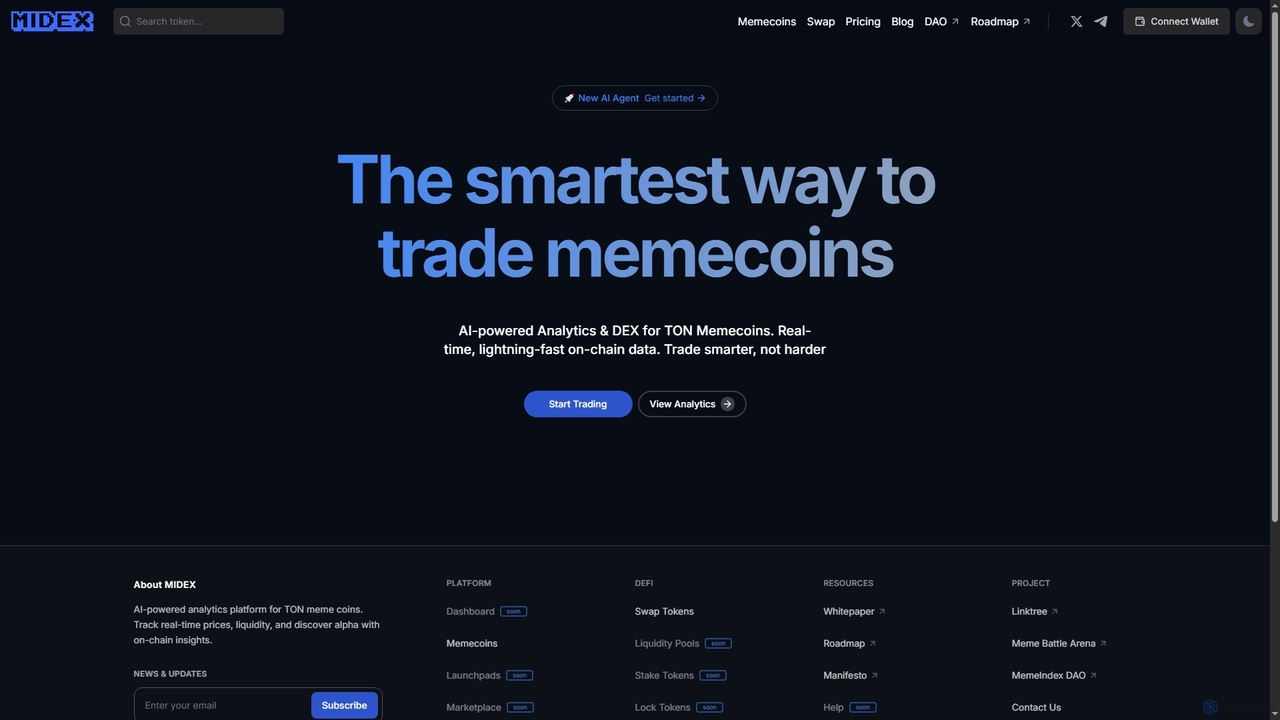
Midex is an AI-powered memecoin trading terminal and analytics platform designed for the TON blockchain. It provides real-time, lightning-fast on-chain data and advanced AI agents to help traders make smarter decisions, optimize strategies, and manage their portfolios in the volatile memecoin market.

Market Analysis
Visits 4.3KFavorites 29Likes 30
1-100

1-100

1-100 is an AI trading arena where leading large language models like Claude, GPT, Gemini, and Grok compete in real-time cryptocurrency markets. It provides a platform to observe and analyze the trading performance of these AI models across various crypto assets like BTC, ETH, SOL, BNB, DOGE, and XRP.

Market Analysis
Visits 4.2KFavorites 33Likes 35
Chart Aether
Paid

Chart Aether

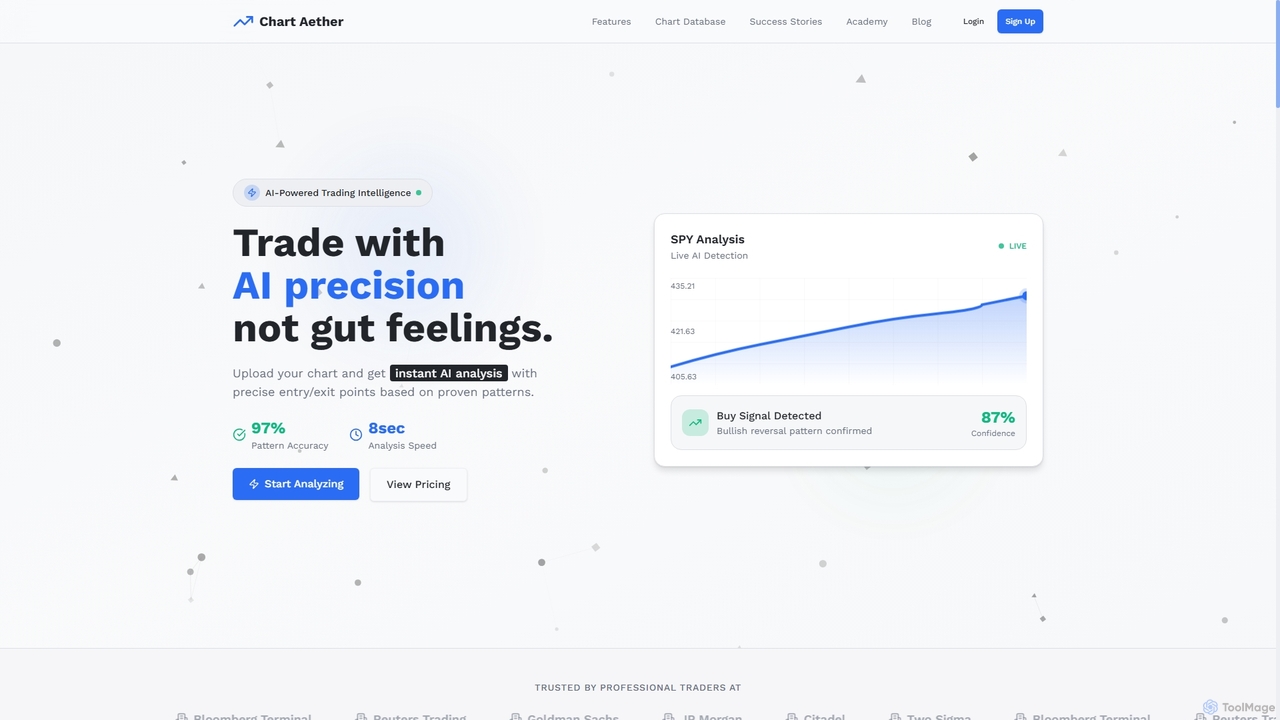
Chart Aether is an AI-powered trading intelligence platform that provides instant, precise analysis of trading charts. Upload any chart screenshot to receive AI-generated trade plans, including entry/exit points, stop-loss levels, and profit targets, based on over 50 proven chart patterns with up to 97% accuracy. It supports multiple assets and timeframes, empowering traders to make data-driven decisions.

Market Analysis
Visits 4.2KFavorites 100Likes 101
SentraChart
Freemium

SentraChart

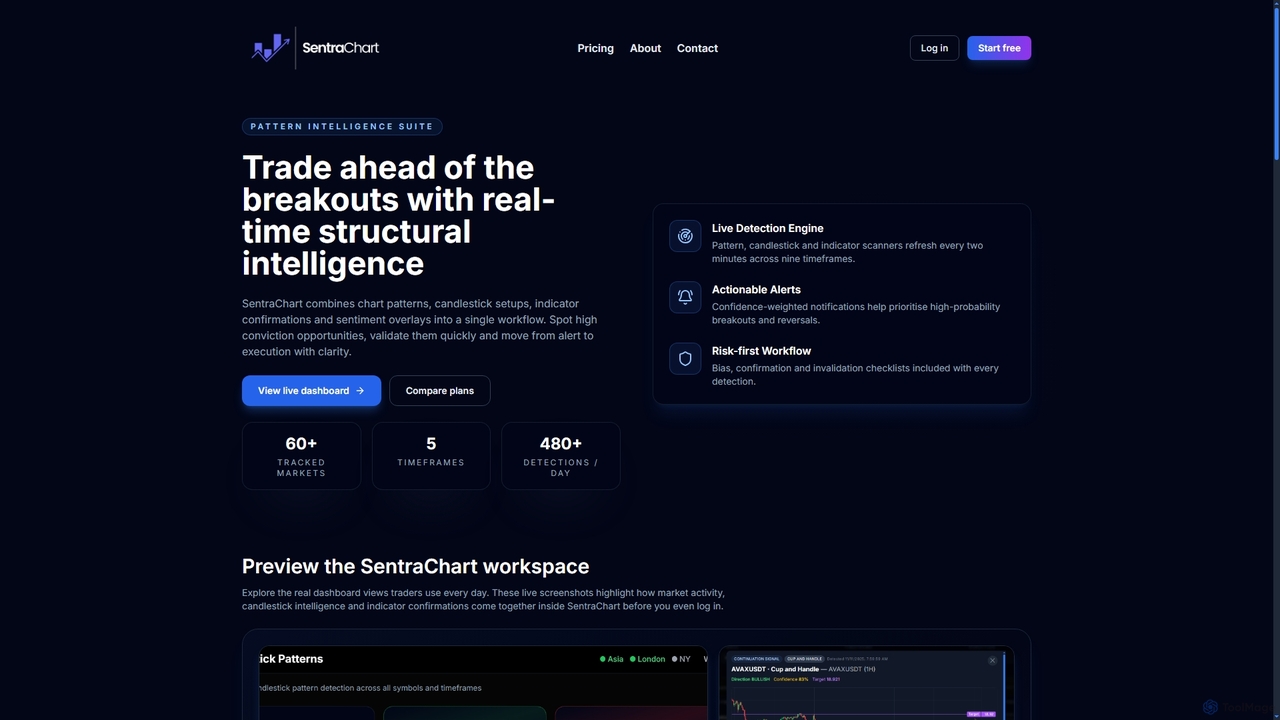
SentraChart is an advanced AI-assisted platform for cryptocurrency traders, offering real-time chart pattern scanning, candlestick intelligence, and indicator confirmations. It provides actionable alerts and a risk-first workflow to help traders identify high-probability breakouts and reversals, streamlining the discovery-to-execution process for crypto markets.

Market Analysis
Visits 4.1KFavorites 113Likes 125
SaaStr
Freemium

SaaStr

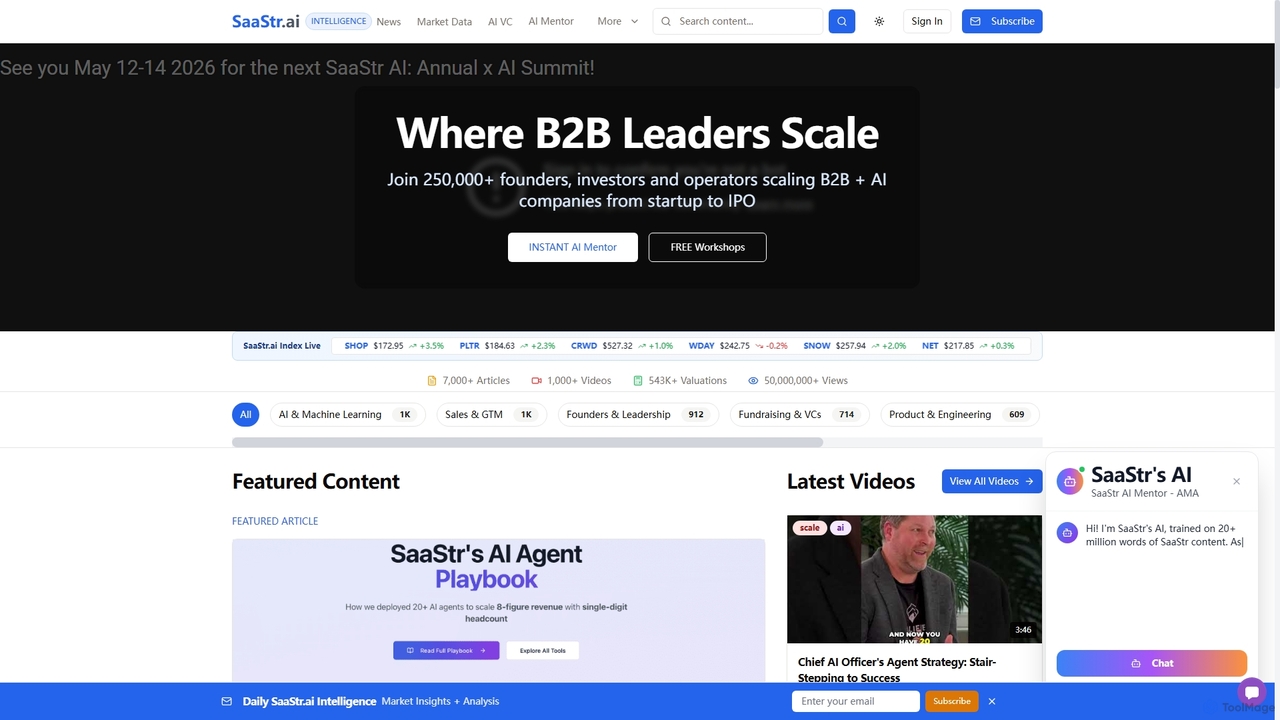
SaaStr is an AI-powered intelligence platform for B2B SaaS leaders, founders, and investors, offering specialized tools for market analysis, fundraising, and strategic growth. It leverages extensive SaaStr content and real-time data to provide expert insights and foster a vibrant community.

Market Analysis
Visits 35.4KFavorites 105Likes 104

About Market Analysis

Market Analysis AI tools are specialized platforms within the broader Analytics category that leverage artificial intelligence to process and interpret vast datasets related to market trends, consumer behavior, and competitive landscapes. These tools utilize advanced machine learning and natural language processing to uncover hidden patterns, predict future shifts, and provide actionable insights. They empower businesses to make data-driven decisions, optimize strategies, and gain a significant competitive edge.

Core Features

  • Trend Prediction: Identify emerging market trends and forecast future developments based on historical and real-time data.
  • Competitor Intelligence: Monitor competitor strategies, product launches, pricing, and market share through automated data collection and analysis.
  • Sentiment Analysis: Gauge public opinion and customer sentiment towards brands, products, or topics from social media, reviews, and news.
  • Consumer Behavior Insights: Analyze purchasing patterns, preferences, and demographic data to understand target audiences deeply.
  • Market Segmentation: Automatically identify and segment distinct customer groups based on various attributes for targeted marketing.

Use Cases

Businesses across various sectors, from retail and finance to technology and healthcare, utilize Market Analysis AI tools. Marketing teams employ them to identify new campaign opportunities and track brand perception. Product developers use insights to refine features and anticipate demand. Strategic planners rely on these tools to assess market entry viability and identify growth areas.

How to Choose

When selecting a Market Analysis AI tool, consider its data sources and coverage, ensuring it aligns with your industry and target markets. Evaluate the depth of its analytical capabilities, such as predictive modeling and sentiment granularity. Assess its integration with existing business intelligence platforms and CRM systems. Finally, review the clarity of its reporting and visualization features, as actionable insights depend on easy interpretation.

Featured tool rankings

Market Analysis use cases

1

Predicting Product Demand for E-commerce

An e-commerce manager uses AI market analysis to forecast demand for seasonal products by analyzing historical sales, social media trends, and competitor promotions. This allows for optimized inventory management and targeted marketing campaigns, reducing stockouts and overstock, ultimately boosting sales and profitability.

2

Identifying Emerging Market Opportunities

A business development team employs market analysis AI to scan global news, patent filings, and research papers for nascent technologies or underserved customer needs. This helps them identify new market segments for expansion or innovative product development before competitors, securing a first-mover advantage.

3

Monitoring Brand Reputation and Public Sentiment

A PR specialist leverages AI tools to continuously monitor social media, news articles, and online reviews for mentions of their brand and competitors. The tool provides real-time sentiment scores and identifies key discussion topics, enabling rapid response to crises and proactive reputation management, protecting brand value.

4

Optimizing Marketing Campaign Targeting

A marketing analyst uses market analysis AI to segment their customer base based on demographic data, purchasing history, and online behavior. This granular segmentation allows for highly personalized ad campaigns and content strategies, significantly improving conversion rates and ROI by reaching the right audience with the right message.

5

Competitive Landscape Mapping and Strategy

A strategic planner utilizes AI to gather and analyze data on competitor pricing, product features, marketing spend, and customer reviews. The tool generates comprehensive competitive intelligence reports, highlighting strengths, weaknesses, and potential strategic gaps for their own business, informing robust competitive strategies.

6

Assessing Market Entry Viability for New Products

A product manager uses market analysis AI to evaluate the potential success of a new product in different geographical markets. By analyzing local regulations, consumer preferences, economic indicators, and existing competition, the tool provides data-backed recommendations for market entry strategies, minimizing risks and maximizing success.

Market Analysis FAQ

What are Market Analysis AI tools?

Market Analysis AI tools are advanced software solutions that use artificial intelligence, including machine learning and natural language processing, to collect, process, and interpret vast amounts of market data. They help businesses understand market trends, consumer behavior, and competitive landscapes to inform strategic decisions and optimize operations.

How do Market Analysis AI tools differ from traditional analytics?

While traditional analytics often rely on historical data and manual interpretation, Market Analysis AI tools automate data collection from diverse sources, perform predictive modeling, and uncover complex patterns that might be missed manually. They offer real-time insights, sentiment analysis, and more sophisticated forecasting capabilities, providing a more dynamic and comprehensive market view.

What types of data do Market Analysis AI tools analyze?

These tools analyze a wide range of data, including social media posts, news articles, online reviews, competitor websites, sales data, demographic information, economic indicators, and industry reports. They can process both structured and unstructured data to provide a holistic market view, offering deeper insights than traditional methods.

Who benefits most from using Market Analysis AI tools?

Businesses of all sizes, especially those in competitive industries, benefit significantly. Marketing teams use them for campaign optimization, product development teams for feature planning, sales teams for lead generation, and executive leadership for strategic planning and risk assessment. Essentially, anyone needing data-driven market insights gains value.

What should I consider when choosing a Market Analysis AI tool?

Key considerations include the tool's data source coverage relevant to your industry, the accuracy and depth of its analytical models (e.g., predictive capabilities, sentiment granularity), ease of integration with your existing systems, the clarity of its reporting and visualization features, and its pricing model. Also, assess the level of support and scalability offered.