ToolMage
Sign in

Best 1 Ad Analytics AI tools for Analytics

Popular Ad Analytics AI tools in Analytics include DataAlly, helping you work more efficiently.

DataAlly
Paid

DataAlly

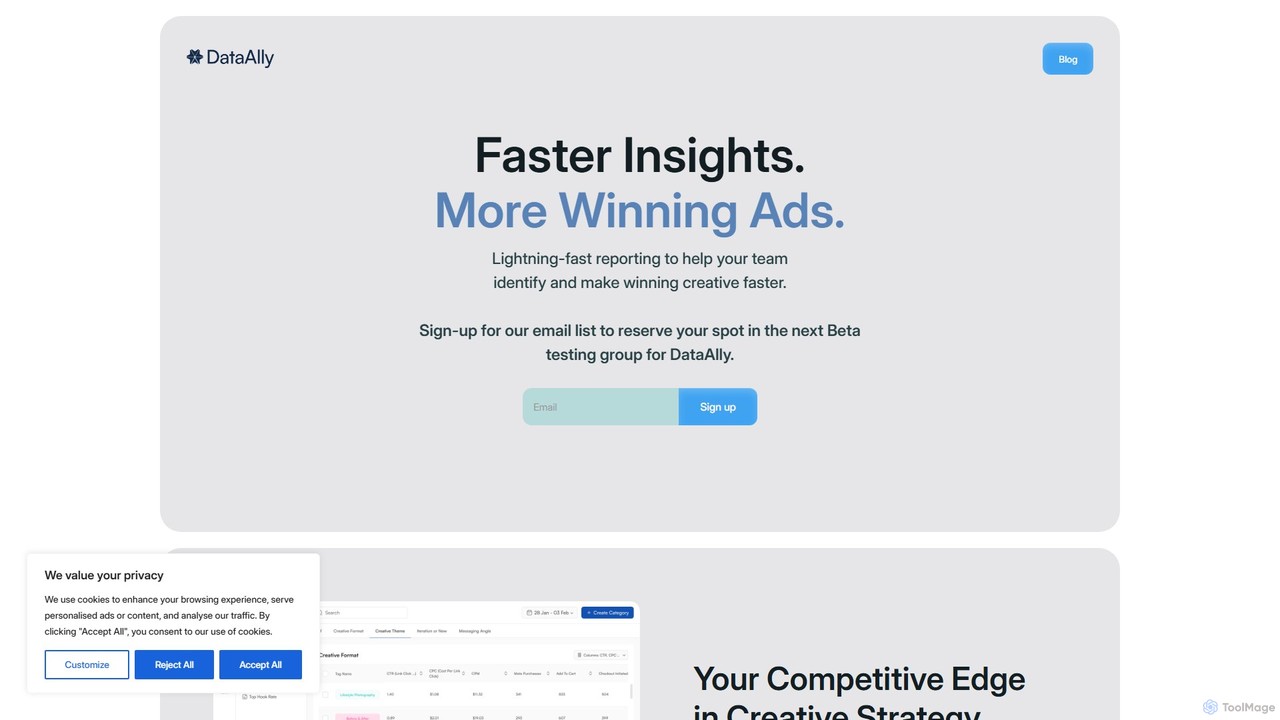
DataAlly is an AI-powered advertising analytics tool designed for marketing agencies and teams. It specializes in Facebook Ads, simplifying data analysis and providing actionable insights to optimize campaign performance. The platform helps users identify winning creative trends, combat ad fatigue, and make data-driven decisions to improve ROI.

Ad Analytics
Visits 17.2KFavorites 128Likes 120

About Ad Analytics

Ad Analytics are AI-powered tools specifically designed to track, measure, and optimize the performance of advertising campaigns across various platforms. These tools leverage advanced machine learning algorithms to process vast amounts of ad data, identify patterns, and provide actionable insights. By automating data collection and analysis, Ad Analytics platforms enable marketers to understand campaign effectiveness, optimize spending, and improve return on investment (ROI) in real-time.

Core Features

  • Performance Tracking: Monitor key metrics like impressions, clicks, conversions, and cost per acquisition (CPA) across multiple ad channels.
  • Audience Segmentation: Analyze audience demographics and behavior to identify high-value segments and tailor ad targeting strategies.
  • Budget Optimization: Utilize AI to recommend optimal budget allocation across campaigns and channels for maximum efficiency.
  • Creative Analysis: Evaluate the performance of different ad creatives (images, videos, copy) to determine which elements resonate best with target audiences.
  • Predictive Modeling: Forecast future campaign performance and identify potential trends or risks based on historical data.

Applicable Scenarios

Marketing teams use Ad Analytics to gain a comprehensive view of their campaign performance, identify underperforming ads, and reallocate budgets for better results. Digital marketing agencies leverage these tools to provide transparent, data-driven reports to clients and demonstrate campaign value. E-commerce businesses apply Ad Analytics to optimize product promotions, understand customer acquisition costs, and maximize sales conversions.

How to Choose

When selecting an Ad Analytics tool, consider its integration capabilities with your existing ad platforms (e.g., Google Ads, Facebook Ads). Evaluate the depth of its reporting and visualization features, ensuring it provides clear, customizable dashboards. Assess the sophistication of its AI models for predictive analytics and optimization recommendations. Finally, compare pricing structures and ensure the tool scales with your campaign volume and team size.

Ad Analytics use cases

1

Real-time Campaign Budget Optimization

A digital marketing manager overseeing multiple campaigns uses an Ad Analytics tool to continuously monitor performance metrics like CPA and ROAS. The AI identifies underperforming campaigns or channels and suggests real-time budget reallocations to maximize overall campaign efficiency and ensure spending is directed towards the most profitable areas, preventing budget waste.

2

Identifying High-Performing Ad Creatives

A content creator for an e-commerce brand needs to understand which ad visuals and copy resonate most with their target audience. The Ad Analytics platform analyzes engagement rates, click-through rates, and conversion data for various ad creatives, providing insights into design elements, messaging, and calls-to-action that drive the best results, informing future creative development.

3

Personalizing Ad Targeting for Specific Segments

A brand marketer aims to reach distinct customer segments with tailored messages. Using Ad Analytics, they analyze demographic, behavioral, and purchase history data to identify granular audience segments. The tool then helps in creating highly personalized ad campaigns for each segment, improving relevance and increasing conversion rates by showing the right ad to the right person.

4

Automating Performance Reporting for Clients

A marketing agency needs to provide weekly or monthly performance reports to numerous clients. An Ad Analytics solution automates the aggregation of data from all client ad accounts, generates customizable dashboards and reports, and highlights key trends and insights. This saves significant manual reporting time and ensures consistent, data-driven communication with clients.

5

Predicting Future Ad Performance and Trends

A media buyer wants to anticipate the effectiveness of upcoming seasonal campaigns. An Ad Analytics tool uses historical data and machine learning to forecast potential impressions, clicks, and conversions for different budget scenarios. This predictive capability allows the buyer to proactively adjust strategies, allocate resources effectively, and mitigate risks before launching new campaigns.

6

Benchmarking Ad Performance Against Competitors

A business development team seeks to understand their market position and identify competitive advantages. An Ad Analytics platform, often integrating market intelligence, allows them to benchmark their ad performance (e.g., impression share, click-through rates) against industry averages or specific competitors. This insight helps in identifying areas for improvement and strategic differentiation in their advertising efforts.

Ad Analytics FAQ

What are AI Ad Analytics tools?

AI Ad Analytics tools are software solutions that leverage artificial intelligence and machine learning to collect, process, and interpret data from advertising campaigns. They go beyond basic reporting by identifying complex patterns, predicting future outcomes, and offering actionable recommendations to optimize ad spend, audience targeting, and creative performance, ultimately enhancing campaign ROI.

How do AI Ad Analytics differ from traditional ad reporting?

Traditional ad reporting primarily focuses on presenting historical data and basic metrics. AI Ad Analytics, however, uses advanced algorithms to not only report but also analyze, predict, and optimize. They can uncover hidden insights, automate budget adjustments, identify optimal audience segments, and forecast performance, providing proactive rather than reactive campaign management.

What key metrics can Ad Analytics tools track and optimize?

Ad Analytics tools track a wide range of metrics, including impressions, clicks, click-through rate (CTR), conversions, cost per click (CPC), cost per acquisition (CPA), return on ad spend (ROAS), and customer lifetime value (CLTV). They optimize these metrics by suggesting adjustments to bidding strategies, audience targeting, ad creatives, and budget allocation based on real-time performance data.

Who benefits most from using Ad Analytics platforms?

Digital marketing agencies, in-house marketing teams, e-commerce businesses, and performance marketers benefit significantly. Agencies can provide better client results and reports. In-house teams can optimize their campaigns more effectively. E-commerce businesses can reduce customer acquisition costs and increase sales. Essentially, anyone managing paid advertising campaigns seeking data-driven optimization will find these tools invaluable.

What should I consider when choosing an AI Ad Analytics solution?

Key considerations include the breadth of ad platforms it integrates with (e.g., Google, Facebook, TikTok), the depth of its AI capabilities (e.g., predictive modeling, automated optimization), the clarity and customizability of its reporting dashboards, its scalability to handle your data volume, and its pricing model. Also, assess the level of support and ease of use for your team.