Analytics Best in category 1 results Audience Intelligence AI Tool

Popular AI tools in the Audience Intelligence field of Analytics include CoHost, etc., helping you quickly improve efficiency.

CoHost

CoHost

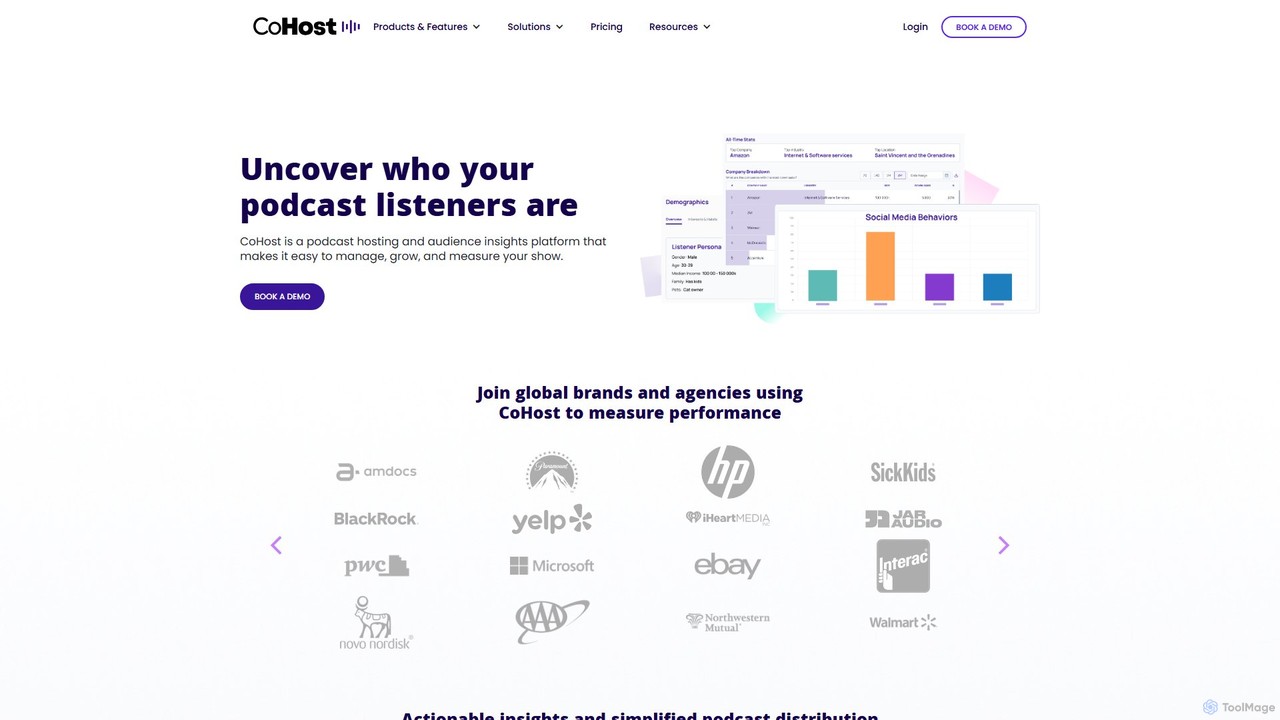
CoHost is an all-in-one podcast hosting and analytics platform designed for brands, agencies, and professional podcasters. It provides …

37.3K

About Audience Intelligence

Audience Intelligence tools are a specialized category of analytics platforms that use AI to build deep, qualitative profiles of target groups. By analyzing vast datasets from social media, forums, and web behavior, these tools uncover demographics, interests, psychographics, and purchase intent. This enables marketers and product teams to move beyond simple metrics to understand the 'why' behind user actions, leading to more effective strategies. They provide a human-centric view within the broader field of data analytics.

Core Features

  • Psychographic Analysis: Identifies audience values, attitudes, interests, and personality traits beyond basic demographics.
  • Content Affinity Mapping: Reveals the specific topics, media sources, influencers, and brands an audience engages with.
  • Advanced Audience Segmentation: Creates distinct persona groups based on shared behaviors, interests, and online habits for precise targeting.
  • Competitive Audience Overlap: Analyzes and compares your audience with competitors' to identify unique and shared segments.
  • Trend Identification: Detects emerging topics and shifts in conversation within specific audience segments in real-time.

Applicable Scenarios

These tools are essential for brand strategists, market researchers, content creators, and advertising specialists. They are used to validate product-market fit, discover untapped market niches, inform resonant content strategies, and build highly targeted advertising campaigns that speak directly to consumer motivations.

Selection Criteria

When choosing an Audience Intelligence tool, evaluate the breadth and quality of its data sources (social, web, survey data). Assess the depth of its segmentation and filtering capabilities. Consider its integration potential with your existing marketing stack (e.g., CRM, ad platforms) and the clarity of its data visualizations and reports.

Audience IntelligenceUse Cases

1

Develop Buyer Personas for a Product Launch

A tech startup planning to launch a new SaaS product uses an audience intelligence tool to analyze online conversations within their target industry. The tool processes data from tech forums, LinkedIn, and Twitter, identifying three distinct user segments: the 'Efficiency-Focused Manager,' the 'Data-Driven Analyst,' and the 'Innovative Developer.' For each persona, it reveals key pain points, preferred communication channels, and trusted influencers. This deep understanding allows the startup to tailor its messaging, feature prioritization, and launch campaign for maximum impact, directly addressing the specific needs of each group.

2

Optimize Content Strategy for a Media Company

A digital publisher analyzes their readership's online behavior beyond their own website. The intelligence tool reveals a significant overlap between their audience and communities interested in sustainable living and personal finance, topics the publisher currently under-serves. It also identifies the formats (podcasts, long-form articles) and platforms (Instagram, Reddit) where these topics are most discussed. Armed with this data, the editorial team launches two new content verticals targeting these interests, resulting in a 30% increase in audience engagement and attracting new, high-value advertisers.

3

Refine Ad Campaign Targeting

A digital marketing agency managing a campaign for a luxury travel brand moves beyond basic demographic targeting. Using an audience intelligence tool, they identify a niche segment of 'Affluent Eco-conscious Travelers.' The tool shows this group values experiences over possessions, follows specific conservation-focused influencers, and responds poorly to overt sales messaging. The agency redesigns its ad creative and copy to highlight sustainable practices and unique cultural experiences. This psychographic-driven approach leads to a 45% higher click-through rate and a 20% lower cost-per-acquisition compared to a control group with only demographic targeting.

4

Identify Strategic Partnership Opportunities

A direct-to-consumer (DTC) wellness brand wants to expand its reach. They use an audience intelligence platform to analyze their customer base's brand affinities. The analysis reveals that a large percentage of their customers also follow a specific sustainable activewear brand and use a popular meditation app. This data provides a clear, evidence-based rationale for pursuing co-marketing campaigns or strategic partnerships with these two non-competing companies. The resulting collaboration leads to cross-promotional success and significant new customer acquisition for all three brands.

5

Conduct Competitive Audience Analysis

An e-commerce company wants to understand its position in a crowded market. It uses an audience intelligence tool to compare its customer profile against its top three competitors. The tool visualizes the audience overlap, revealing that while they share 40% of their audience with Competitor A, there is only a 5% overlap with Competitor C. More importantly, it highlights that Competitor C's unique audience is highly engaged in DIY communities. This insight prompts the company to launch a new marketing initiative focused on DIY-related content to attract this untapped, high-value segment.

6

Inform Product Development with Audience Insights

A software company is planning its product roadmap for the next year. Instead of relying solely on existing customer feedback, the product manager uses an audience intelligence tool to monitor broader industry conversations. The tool identifies a rising trend of discussions around 'AI-powered data integration' among their target developer audience. This unprompted, organic trend data provides strong validation to prioritize the development of a new integration feature. When launched, the feature is met with high adoption rates as it directly addresses a pre-existing, unmet need in the market.

Audience IntelligenceFrequently Asked Questions