GetSentimate
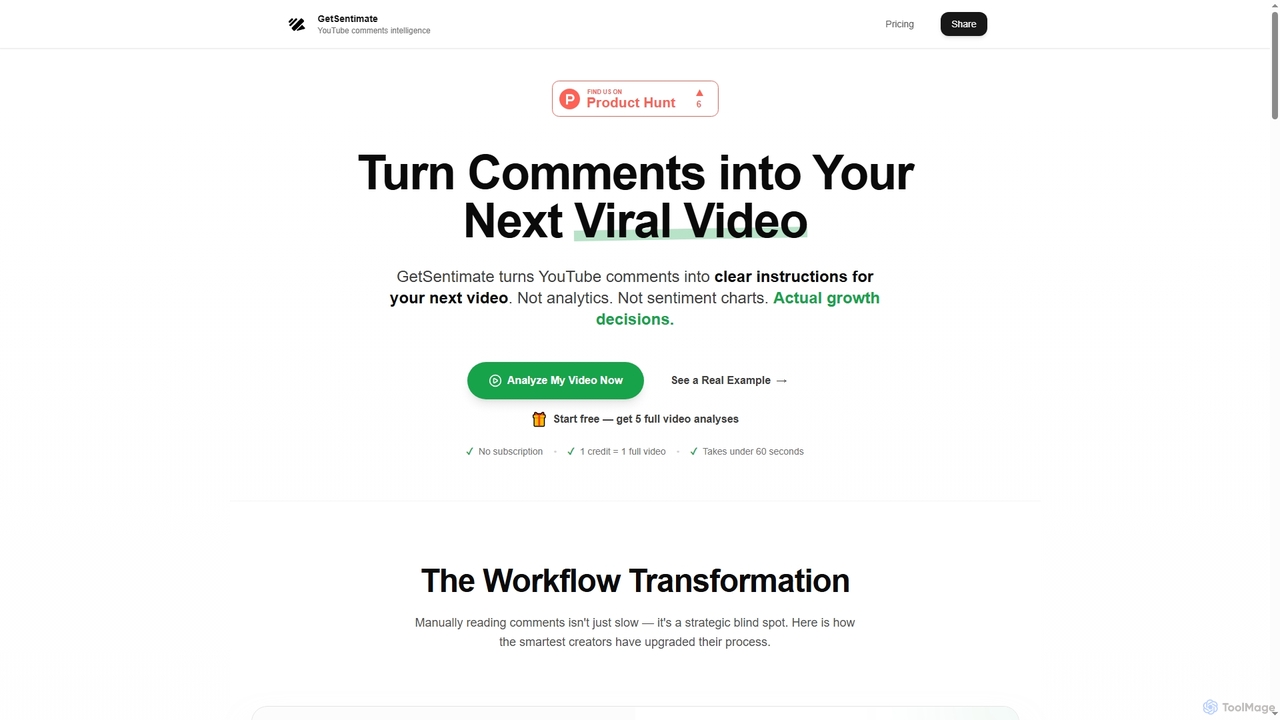
GetSentimate transforms YouTube comments into clear, actionable growth instructions for your next video, moving beyond traditional analytics to provide data-backed decisions for content creators.
Audience AnalyticsPopular Audience Analytics AI tools in Analytics include Music Tomorrow, Base for Music, Calton Datx, and GetSentimate, helping you work more efficiently.

GetSentimate transforms YouTube comments into clear, actionable growth instructions for your next video, moving beyond traditional analytics to provide data-backed decisions for content creators.
Audience Analytics
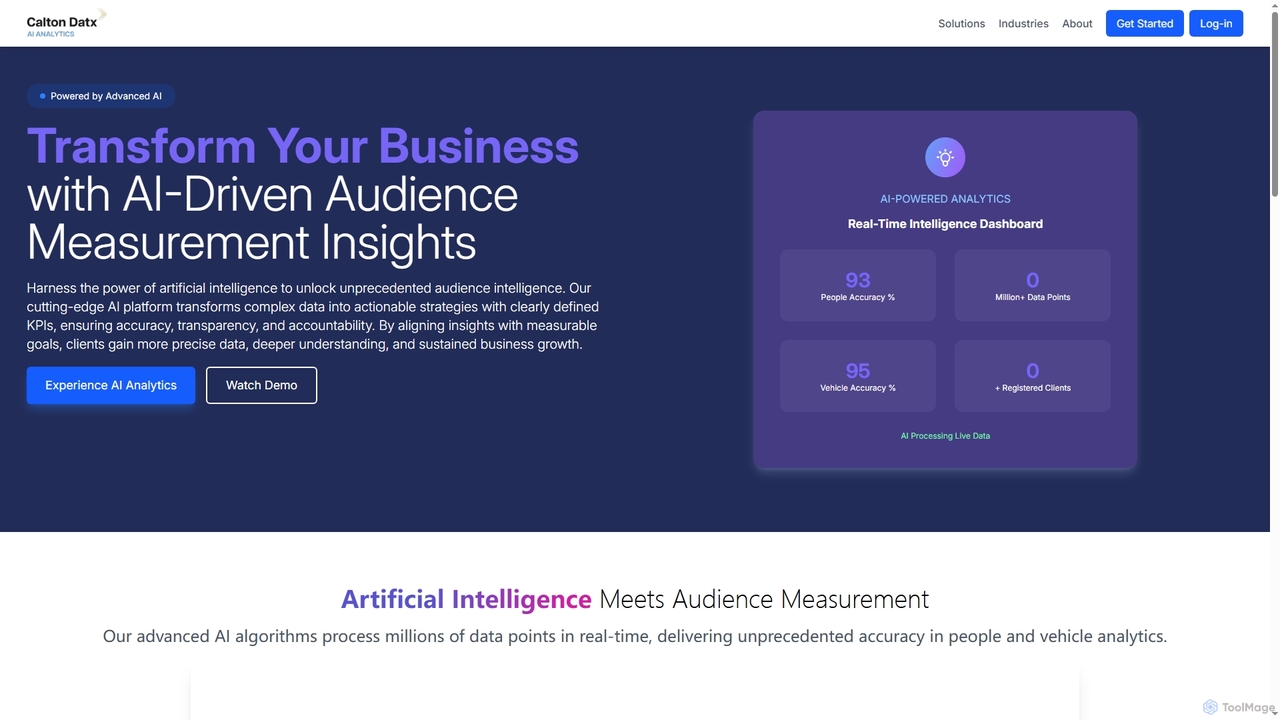
Calton Datx is an AI-powered audience measurement and analytics platform that provides real-time insights into people and vehicle movements for Out-of-Home (OOH) advertising and retail environments. It leverages advanced computer vision and machine learning to transform complex data into actionable strategies, optimizing campaign performance and ROI.
Out Of Home Advertising
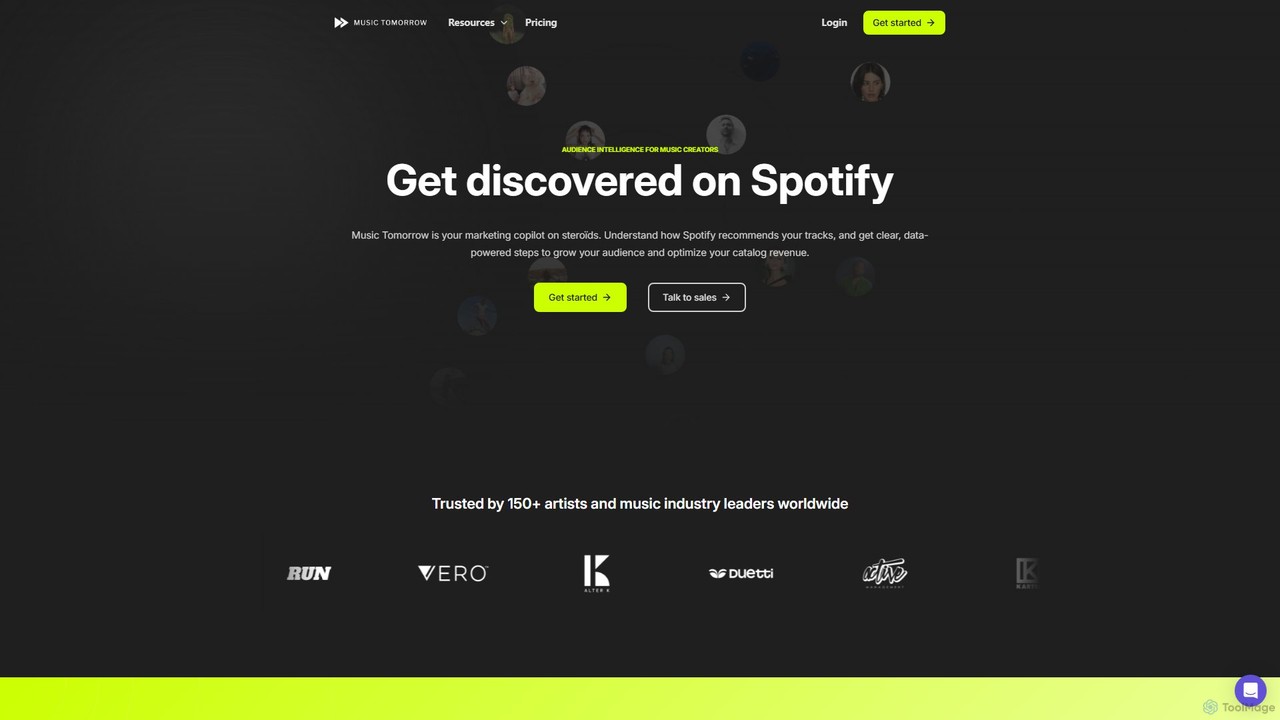
Music Tomorrow is a data analytics platform designed for artists and labels to master streaming platform algorithms. It reverse-engineers Spotify's recommendation engine, providing actionable insights to analyze audience behavior, optimize metadata, and grow a dedicated fanbase. Move from guesswork to a data-driven strategy and ensure your music reaches the right listeners.
Audience Analytics
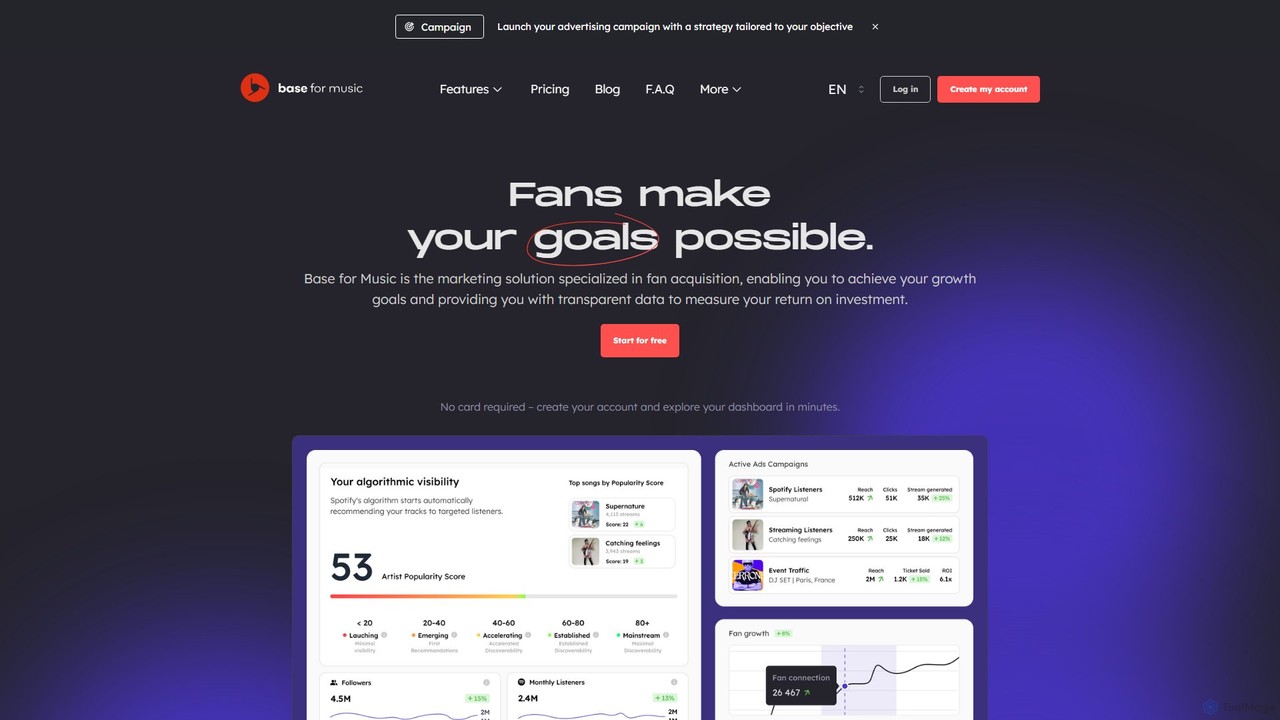
Base for Music is a specialized marketing platform for artists and labels, designed to acquire new fans and grow your audience. It simplifies creating and managing targeted ad campaigns on platforms like Spotify, YouTube, Instagram, and TikTok, providing transparent data and ROI analysis to boost your music's reach.
Audience AnalyticsAudience Analytics tools are AI-powered platforms designed to collect, process, and interpret vast amounts of data about user behavior, demographics, and preferences. Leveraging advanced machine learning algorithms, these tools uncover deep, actionable insights into who your audience is, what motivates them, and how they interact with your content, products, or services. This enables businesses to refine marketing strategies, personalize user experiences, and optimize engagement across various digital channels, moving beyond basic traffic metrics to understand the 'why' behind user actions within the broader field of digital analytics.
Audience Analytics tools are crucial for marketing teams optimizing campaign performance by identifying high-value segments, product managers seeking to enhance user experience through data-driven feature prioritization, and content strategists aiming to create more engaging and relevant material. They also empower customer service departments to personalize interactions and improve satisfaction.
When selecting an Audience Analytics tool, consider its data integration capabilities with your existing platforms (CRM, CMS), the sophistication and explainability of its AI models, the depth of its segmentation and predictive features, and the clarity of its reporting dashboards. Scalability, customization options, and compliance with data privacy regulations are also critical factors for long-term success.

Marketing teams utilize Audience Analytics to identify their most responsive customer segments, understand their preferences, and tailor ad creatives and targeting strategies. By analyzing past campaign performance and audience reactions, they can optimize budget allocation and messaging for maximum return on investment (ROI), ensuring ads reach the right people at the right time.
E-commerce platforms leverage these tools to analyze individual browsing history, purchase patterns, and product interactions. This data allows them to recommend highly relevant products, personalize website layouts, and offer targeted promotions, significantly enhancing the shopping experience and increasing conversion rates for each unique visitor.
Content creators and publishers employ Audience Analytics to understand which topics, formats, and distribution channels resonate most with different audience segments. By tracking engagement metrics like time on page, shares, and comments, they can refine their content calendar, optimize headlines, and produce more compelling material that drives audience loyalty and growth.
Product managers use insights from Audience Analytics to identify user pain points, understand feature usage patterns, and gather feedback. This data-driven approach helps them prioritize new features, refine existing functionalities, and design products that truly meet user needs, leading to higher user satisfaction and adoption rates.
Businesses map out the entire customer journey, from initial awareness to post-purchase support, using Audience Analytics to track interactions across all touchpoints. This helps pinpoint areas where customers experience friction or drop-off, allowing companies to optimize the journey, streamline processes, and improve overall customer satisfaction and retention.
Data scientists and strategic planners employ advanced predictive modeling within Audience Analytics tools to forecast emerging audience behaviors, market demands, and potential shifts in consumer preferences. This foresight enables businesses to proactively adapt their strategies, innovate new offerings, and maintain a competitive edge in a rapidly evolving market.
Audience Analytics tools are AI-powered software solutions that gather, process, and interpret data related to user demographics, behaviors, interests, and preferences. Their primary function is to provide deep insights into who your audience is, how they interact with your digital assets, and what drives their decisions, enabling data-driven strategic planning.
AI-powered Audience Analytics go beyond traditional metrics by using machine learning to uncover complex patterns, predict future behaviors, and automate segmentation. While traditional analytics provide 'what happened' data, AI tools offer 'why it happened' and 'what will happen next' insights, enabling more proactive and personalized strategies.
These tools track a wide range of metrics, including demographic data (age, gender, location), behavioral data (page views, click-through rates, time on site, conversion paths), psychographic data (interests, values, opinions), and sentiment data from social media. They also monitor engagement rates, customer lifetime value, and churn risk indicators.
Audience Analytics are highly beneficial for marketing professionals, product managers, content strategists, customer experience teams, and business strategists. Anyone needing to understand their target audience better to optimize campaigns, personalize experiences, develop products, or make informed business decisions will find these tools invaluable.
Key considerations include the types of data sources it can integrate with (e.g., website, app, social media, CRM), the sophistication of its AI for segmentation and prediction, the clarity and customizability of its reporting dashboards, and its compliance with data privacy regulations like GDPR or CCPA. Ease of use and scalability are also important.