Analytics Best in category 1 results Advertising Performance AI Tool

Popular AI tools in the Advertising Performance field of Analytics include AdKraft, etc., helping you quickly improve efficiency.

AdKraft

AdKraft

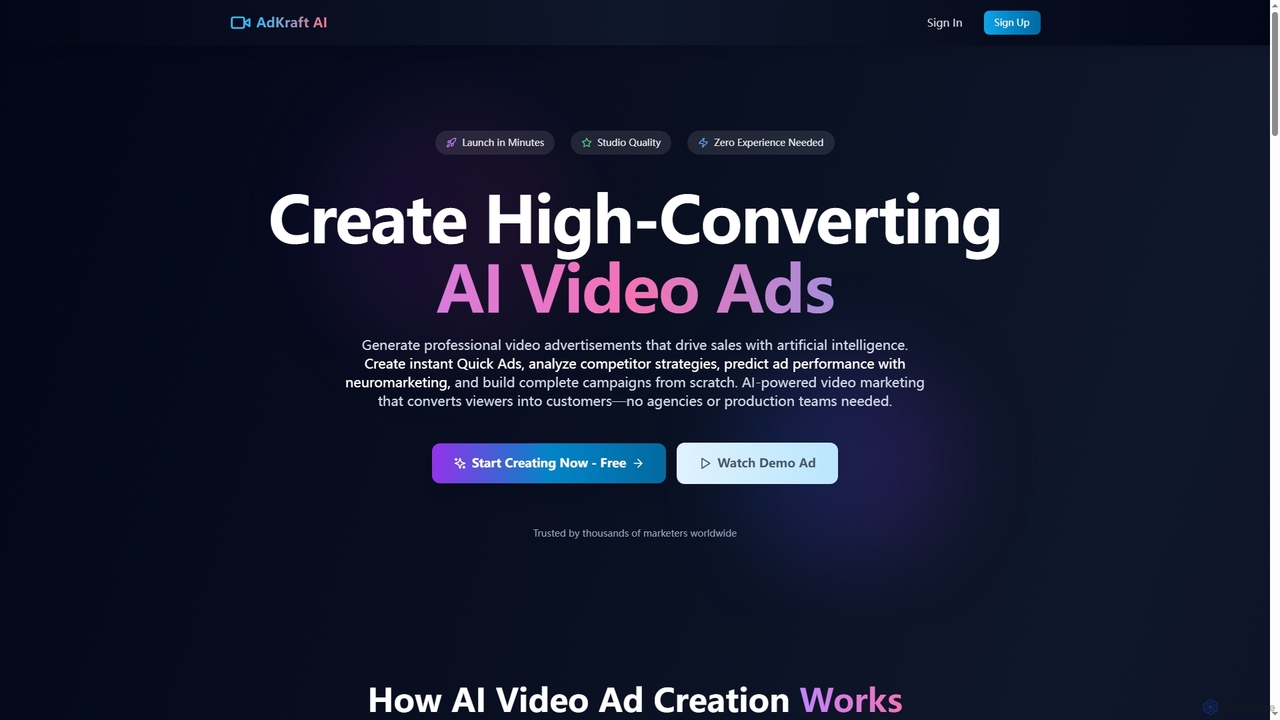
AdKraft is an AI-powered video marketing platform that enables businesses and marketers to create high-converting video advertisements in …

3.8K

About Advertising Performance

Advertising Performance AI tools are specialized solutions that leverage artificial intelligence to analyze, optimize, and predict the outcomes of advertising campaigns. These tools process vast amounts of data from various channels to identify trends, pinpoint inefficiencies, and recommend data-driven strategies for maximizing return on ad spend (ROAS). They empower marketers to make smarter decisions, automate routine tasks, and achieve superior campaign results by moving beyond traditional analytics to proactive optimization.

Core Features

  • Real-time Data Analysis: Continuously monitors campaign metrics across platforms to provide up-to-the-minute performance insights.
  • Predictive Analytics: Forecasts future campaign performance, audience behavior, and potential ROI based on historical data and market trends.
  • Automated Optimization: Automatically adjusts bids, budgets, ad creatives, and targeting parameters to improve campaign effectiveness.
  • Audience Segmentation: Uses AI to identify and segment high-value audiences for more precise targeting and personalized messaging.
  • Attribution Modeling: Determines the true impact of different touchpoints in the customer journey on conversions.

Applicable Scenarios

Digital marketing agencies use these tools to manage multiple client campaigns, ensuring optimal budget allocation and performance across diverse platforms. E-commerce businesses apply them to refine product promotions, identify best-performing ad variations, and reduce customer acquisition costs. Large enterprises leverage them for comprehensive cross-channel campaign analysis and strategic planning, enhancing overall marketing efficiency.

How to Choose

When selecting an Advertising Performance AI tool, consider its integration capabilities with your existing ad platforms and CRM, the depth of its analytical features (e.g., predictive modeling, attribution), and the level of automation offered. Evaluate its scalability to handle your data volume, the clarity of its reporting, and the ease of interpreting AI-driven recommendations to ensure it meets your specific business needs.

Advertising PerformanceUse Cases

1

Automating Google Ads Bid Optimization

A digital marketing specialist uses an AI tool to automatically adjust bids for thousands of keywords in Google Ads campaigns. The AI continuously monitors real-time performance data, conversion likelihood, and competitor activity, ensuring optimal ad positioning and cost-efficiency. This automation significantly reduces manual effort, allowing the specialist to focus on strategic planning while improving the overall ROAS by 15-20%.

2

Predicting Campaign ROI for Budget Allocation

A marketing director utilizes AI to forecast the potential return on investment for different advertising channels and campaigns before allocating budgets. The tool analyzes historical data, market trends, and competitor activity to provide data-backed recommendations for maximizing overall marketing spend effectiveness. This enables the director to make informed decisions, optimizing budget allocation across channels and potentially increasing overall campaign ROI by up to 25%.

3

Personalizing Ad Creatives at Scale

An e-commerce brand employs an AI platform to generate and test hundreds of personalized ad creative variations for different audience segments. The AI identifies which visual elements, headlines, and calls-to-action resonate best with specific demographics and psychographics, leading to higher click-through rates and conversions. This approach allows the brand to deliver highly relevant ads, boosting engagement and reducing customer acquisition costs by up to 30%.

4

Identifying Underperforming Ad Sets Automatically

A social media advertiser uses an AI tool to continuously monitor Facebook and Instagram ad sets. The AI automatically flags those with declining performance, inefficient spend, or high cost-per-acquisition (CPA), providing specific recommendations for pausing, adjusting targeting, or refreshing creatives. This proactive identification prevents budget waste, allowing the advertiser to reallocate funds to better-performing campaigns and improve overall ROAS by 10-15%.

5

Cross-Channel Attribution Analysis

A large enterprise marketing team uses an AI tool to understand the true impact of each touchpoint (e.g., display ads, search ads, social media, email) on customer conversions across various platforms. The AI analyzes complex customer journeys, assigning appropriate credit to each interaction. This helps the team reallocate budgets to the most effective channels and optimize the customer journey, leading to a more efficient marketing mix and a 20% increase in conversion rates.

6

Automating A/B Testing and Iteration

A content marketer leverages an AI tool to run continuous A/B tests on ad copy, landing page headlines, and call-to-action buttons. The AI automatically identifies winning variations, deploys them, and continues testing new iterations, ensuring constant improvement in campaign effectiveness without manual oversight. This automation accelerates the optimization cycle, leading to a 10-20% improvement in engagement metrics and conversion rates over time.

Advertising PerformanceFrequently Asked Questions