Automation Best in category 2 results Ai Agents AI Tool

Popular AI tools in the Ai Agents field of Automation include Shinkai、iAgent, etc., helping you quickly improve efficiency.

iAgent

iAgent

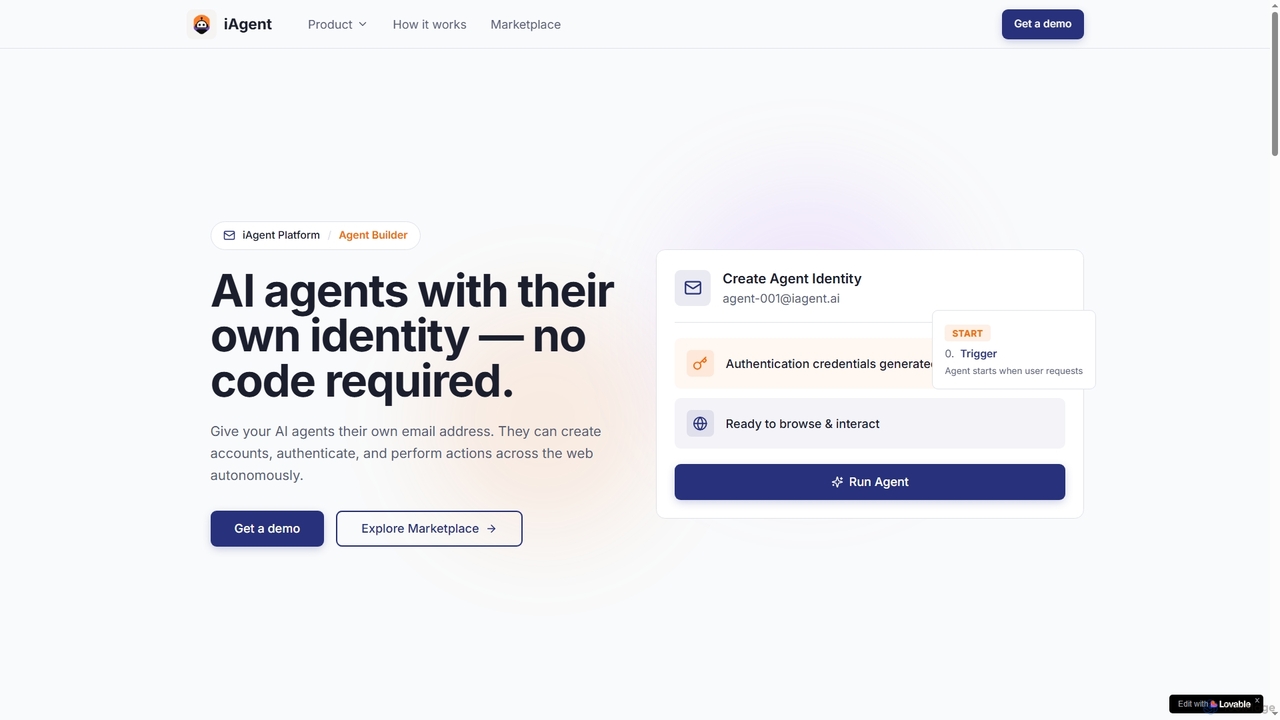
iAgent is a no-code platform that empowers users to create autonomous AI agents with unique digital identities. These …

2.9K
Free
Shinkai

Shinkai

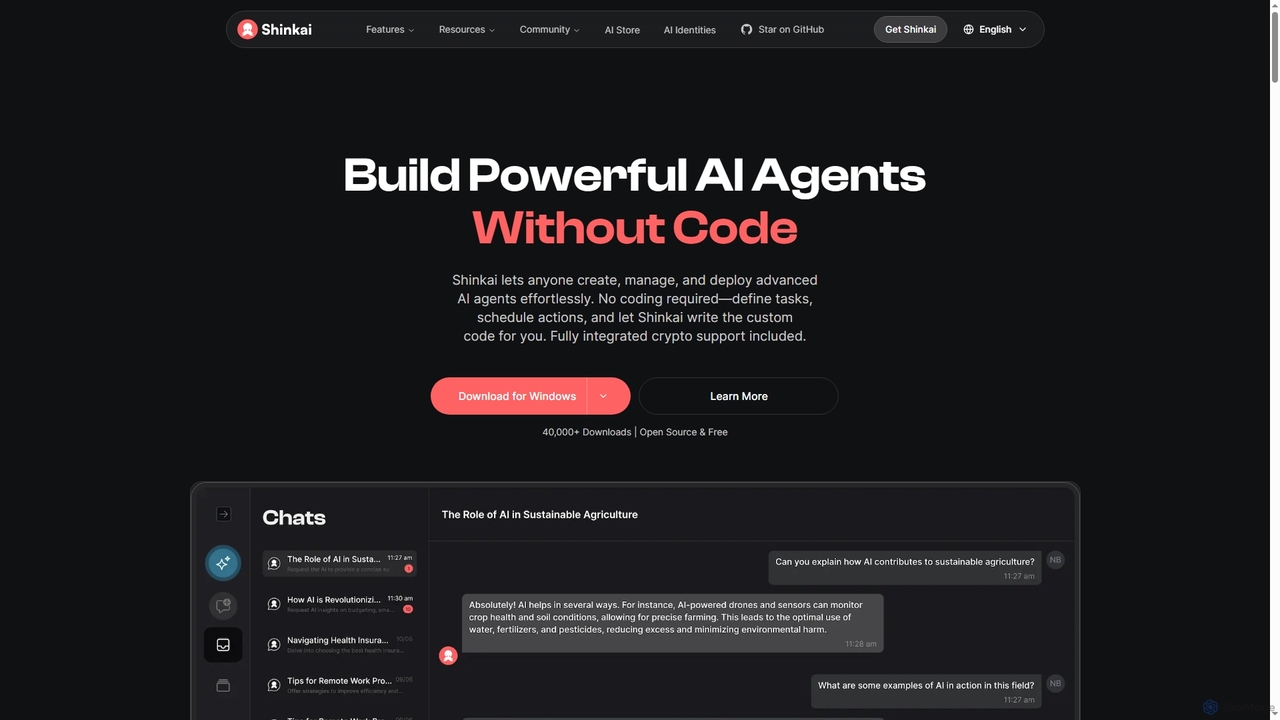
Shinkai is an open-source, no-code platform that empowers users to create, manage, and deploy powerful AI agents locally. …

9.4K

About Ai Agents

AI Agents are a sophisticated class of AI-powered tools designed to autonomously perform complex tasks and achieve specific goals, often without continuous human intervention. Building upon the broader field of automation, these agents leverage advanced reasoning, planning, and execution capabilities to interact with various systems and data sources. They aim to streamline workflows, enhance decision-making, and unlock new levels of operational efficiency across diverse domains.

Core Features

  • Autonomous Task Execution: Independently plans, executes, and monitors multi-step tasks to reach a defined objective.
  • Reasoning and Planning: Utilizes logical inference and strategic planning to break down complex goals into manageable sub-tasks.
  • Environmental Interaction: Can interact with digital environments, APIs, and other software tools to gather information and perform actions.
  • Learning and Adaptation: Continuously learns from interactions and feedback, improving performance and decision-making over time.
  • Goal-Oriented Behavior: Focused on achieving specific, predefined objectives, adjusting strategies as needed.

Use Cases

AI Agents are employed in scenarios requiring intelligent, self-directed action. They are particularly valuable in areas like automated research, personalized customer service, complex data analysis, and proactive system monitoring. Businesses leverage them to automate intricate business processes, while individuals can use them for personal productivity and information synthesis.

How to Choose

When selecting an AI Agent, consider its task complexity handling, integration capabilities with existing systems, and the level of autonomy required. Evaluate its reasoning engine's sophistication, data security protocols, and the clarity of its goal-setting and feedback mechanisms. Scalability and the availability of pre-built modules for specific industries are also crucial factors.

Ai AgentsUse Cases

1

Automated Market Research & Analysis

Marketing teams can deploy AI Agents to autonomously browse the web, gather data on competitor strategies, market trends, and consumer sentiment. The agent can then analyze this data, generate comprehensive reports, and even suggest actionable insights for campaign optimization, saving hundreds of hours of manual research and providing real-time market intelligence.

2

Automated Market Research & Trend Analysis

Marketing strategists and business analysts can deploy AI Agents to autonomously scour the internet, analyze market reports, social media trends, and competitor activities. The agent collects relevant data, identifies emerging patterns, and generates comprehensive reports, providing actionable insights for strategic decision-making, saving hundreds of hours of manual data aggregation and analysis.

3

Automating Market Research Analysis

Marketing analysts can deploy AI Agents to autonomously browse the web, gather data from competitor websites, social media, and industry reports, then synthesize findings into comprehensive market trend analyses. This eliminates manual data collection and initial report drafting, providing actionable insights faster.

4

Personalized Customer Support & Engagement

Customer service departments can utilize AI Agents to provide proactive and personalized support. Agents can monitor customer interactions across channels, identify common issues, access knowledge bases, and autonomously resolve queries or escalate complex cases to human agents, improving response times, reducing workload, and enhancing overall customer satisfaction.

5

Personalized Learning Path & Content Curation

Educational platforms and corporate trainers can utilize AI Agents to create highly personalized learning experiences. An agent assesses a learner's current knowledge, progress, and learning style, then dynamically curates relevant courses, articles, and exercises. It adapts the path in real-time based on performance, ensuring optimal engagement and knowledge retention for each individual.

6

Personalized Customer Support Resolution

Customer service teams utilize AI Agents to handle complex customer inquiries by accessing knowledge bases, CRM data, and even external resources to provide tailored solutions. The agent can escalate to human support only when truly necessary, significantly reducing response times and improving customer satisfaction.

7

Intelligent Software Development & Debugging

Developers can leverage AI Agents to assist in coding, testing, and debugging. An agent can understand a high-level feature request, break it down into coding tasks, write code snippets, run tests, identify bugs, and even suggest fixes, significantly accelerating the development lifecycle, improving code quality, and reducing human error in complex projects.

8

Proactive Customer Service & Issue Resolution

Customer support teams can leverage AI Agents to move beyond reactive responses. An agent monitors customer interactions across channels, identifies potential pain points or emerging issues, and proactively initiates solutions, such as providing relevant FAQs, suggesting troubleshooting steps, or even scheduling a callback with a human agent, significantly improving customer satisfaction and reducing support load.

9

Proactive IT System Monitoring & Remediation

IT operations managers can deploy AI Agents to continuously monitor system logs, network traffic, and application performance for anomalies. Upon detecting an issue, the agent can autonomously diagnose the problem, initiate troubleshooting steps, and even apply fixes or alert human operators with detailed context, preventing downtime.

10

Dynamic Supply Chain Optimization

Logistics and supply chain managers can deploy AI Agents to monitor inventory levels, track shipments, predict demand fluctuations, and autonomously adjust orders or reroute logistics in real-time. This proactive management minimizes delays, reduces operational costs, and ensures optimal stock levels, adapting swiftly to unforeseen disruptions and market changes.

11

Complex Software Development Task Automation

Software engineers and developers can use AI Agents to automate intricate coding tasks. Given a high-level requirement, an agent can generate code snippets, perform unit tests, identify and suggest fixes for bugs, and even refactor existing code. This accelerates development cycles, reduces manual errors, and allows developers to focus on more complex architectural challenges.

12

Content Creation Workflow Automation

Content creators and marketers use AI Agents to automate various stages of content production, such as researching topics, generating initial drafts based on specific prompts, optimizing for SEO, and even scheduling publication. This accelerates content pipelines and allows creators to focus on refinement and strategy.

13

Automated Content Creation & Curation

Content creators and marketers can use AI Agents to generate various forms of content, from blog post outlines and social media updates to email newsletters. Agents can research topics, draft initial content, optimize for SEO, and even curate relevant external articles, streamlining content pipelines, maintaining brand voice consistency, and significantly boosting content output.

14

Dynamic Content Strategy & Multi-Platform Generation

Content creators and digital marketers can deploy AI Agents to manage their entire content lifecycle. An agent researches trending topics, analyzes audience engagement data, drafts articles, social media posts, and video scripts, and then optimizes them for various platforms. It can even schedule posts and iterate on content based on performance metrics, ensuring a consistent and effective content pipeline.

15

Financial Portfolio Optimization

Financial advisors or individual investors can employ AI Agents to monitor market conditions, analyze vast amounts of financial data, and execute trades based on predefined strategies and risk tolerance. The agent continuously adapts to market changes, aiming to optimize portfolio performance and manage risk autonomously.

16

Financial Portfolio Management & Trading

Financial analysts and individual investors can employ AI Agents to monitor market data, analyze economic indicators, and execute trades based on predefined strategies or real-time market shifts. Agents can identify investment opportunities, manage risk, and rebalance portfolios autonomously, aiming to optimize returns and adapt to volatile market conditions with precision.

17

Supply Chain Optimization & Anomaly Detection

Logistics and operations managers can utilize AI Agents to monitor complex supply chain networks. The agent collects real-time data on inventory levels, shipping routes, weather conditions, and supplier performance. It identifies potential bottlenecks, predicts disruptions, and suggests optimal re-routing or inventory adjustments, minimizing delays and operational costs while enhancing resilience.

18

Supply Chain Anomaly Detection & Response

Supply chain managers leverage AI Agents to track inventory levels, logistics, and supplier performance across global networks. The agent can identify potential disruptions (e.g., shipping delays, stockouts), predict their impact, and autonomously suggest or even execute alternative plans, ensuring operational continuity.

Ai AgentsFrequently Asked Questions