ToolMage
Sign in

Best 1 Software Listing AI tools for Resource Platform

Popular Software Listing AI tools in Resource Platform include Top AI Tools, helping you work more efficiently.

Top AI Tools
Free

Top AI Tools

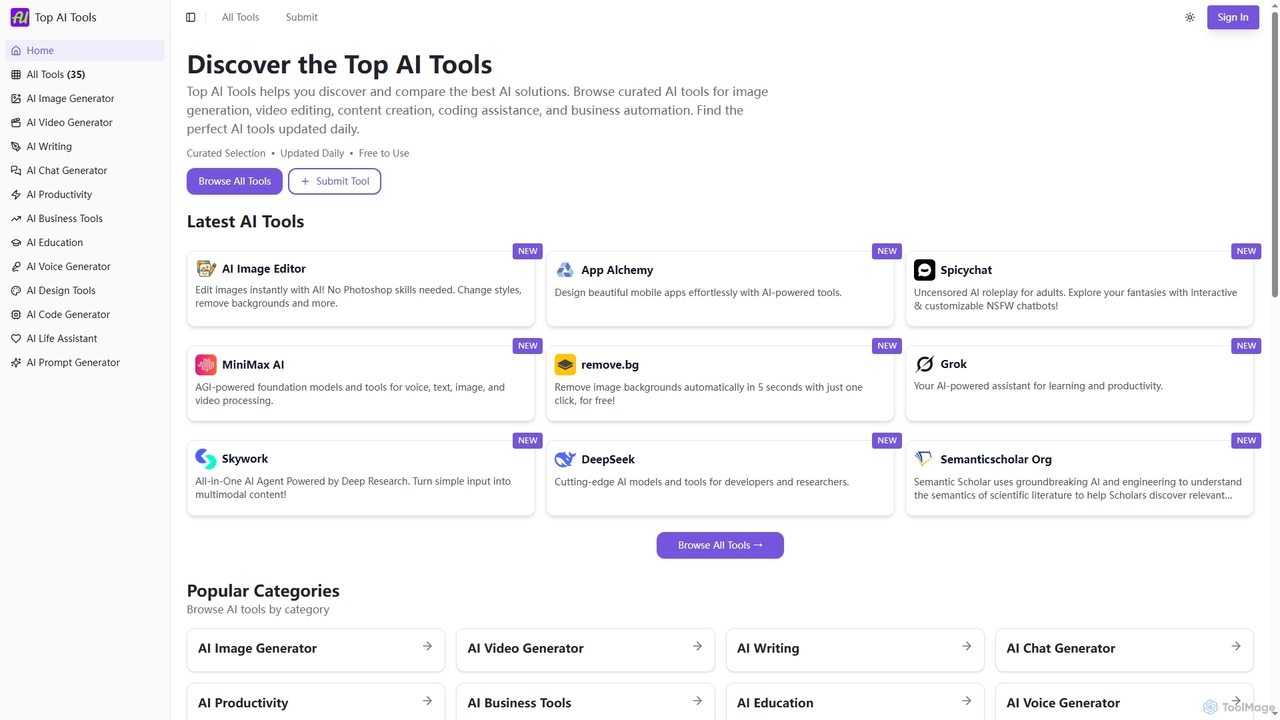
Top AI Tools is a comprehensive, free-to-use directory that helps users discover, compare, and explore the best AI-powered software solutions across various categories. It provides curated listings, detailed information on features and pricing, and daily updates to simplify the search for the perfect AI tool for any need.

Discovery
Visits 11.4KFavorites 122Likes 120

About Software Listing

Software Listing platforms are specialized online directories designed to help users discover, compare, and select software tools. As a type of resource platform, they aggregate vast amounts of information into a structured, searchable database. These platforms streamline the decision-making process by providing detailed profiles, user reviews, and comparison functionalities. Their primary value lies in organizing the complex software market, making it easier for individuals and businesses to find the right solutions for their specific needs.

Core Features

  • Advanced Search & Filtering: Sift through tools based on category, features, pricing, platform compatibility, and integration options.
  • User Reviews and Ratings: Access authentic feedback and ratings from real users to gauge software performance and reliability.
  • Side-by-Side Comparison: Directly compare the features, pricing, and specifications of multiple software options in a structured view.
  • Curated Collections & Stacks: Discover expert-curated lists of tools for specific purposes, such as 'Top AI Tools for Marketing' or 'Essential Startup Tech Stack'.
  • Detailed Product Profiles: View comprehensive information for each tool, including feature descriptions, screenshots, video tutorials, and pricing breakdowns.

Use Cases

These platforms are invaluable for IT managers, product managers, marketers, and business owners. They are commonly used when building a new technology stack for a startup, finding a replacement for an outdated system, conducting competitor analysis, or simply exploring the latest AI-powered software innovations in a specific industry.

How to Choose

When selecting a Software Listing platform, consider its scope and specialization—does it cover a broad market or a specific niche like AI? Evaluate the quality and authenticity of its user reviews. Check how frequently the platform updates its data, especially pricing and feature lists. Finally, assess the usability of its search and comparison tools to ensure they meet your research needs.

Featured tool rankings

Software Listing use cases

1

Building a Startup's Initial Tech Stack

An entrepreneur launching a new e-commerce business uses a software listing platform to assemble their core technology stack. They filter for tools in categories like 'CRM', 'Email Marketing', and 'Project Management' that offer free tiers or startup-friendly pricing. By reading user reviews and using the side-by-side comparison feature, they select a CRM that integrates with their chosen email marketing tool and a project management app praised for its simplicity. This process saves dozens of research hours and helps them build an integrated, cost-effective stack from day one.

2

Selecting a New Project Management Tool for a Team

A marketing manager needs to replace their team's outdated project management software. They use a software listing site to identify top-rated tools. They filter by 'team size: 10-50', 'integrates with Slack', and 'Gantt chart feature'. This narrows the options from hundreds to a manageable dozen. The manager then invites team members to review the top three candidates' profiles and user reviews on the platform. Based on collective feedback on usability and features, they confidently choose a new tool that meets everyone's needs, ensuring a smooth adoption process.

3

Conducting Competitive Market Analysis

A product manager is tasked with analyzing the competitive landscape for a new AI-powered analytics tool. They use a comprehensive software listing platform to create a list of direct and indirect competitors. By examining the detailed product profiles, they can quickly map out key features, pricing models, and target audiences for each competitor. The user reviews section provides invaluable qualitative insights into what customers love and hate about rival products. This data allows the product manager to identify market gaps and define a unique value proposition for their new tool.

4

Finding Niche API Solutions for Development

A software developer is building an application that requires a specialized natural language processing (NLP) API for sentiment analysis. Instead of generic web searches, she turns to a software listing platform that features developer tools and APIs. She filters specifically for 'NLP APIs', 'Pay-as-you-go pricing', and 'Python SDK'. The platform provides direct links to documentation, endpoint details, and reviews from other developers regarding API performance and ease of integration. This targeted approach helps her find and evaluate three suitable APIs in under an hour, a task that could have taken a full day otherwise.

5

Validating a Purchase Decision with User Reviews

A small business owner is about to invest in a new accounting software but is hesitant about the final choice. Before committing, they consult a trusted software listing platform to read in-depth user reviews. They specifically look for feedback from businesses of a similar size and industry. The reviews highlight a key feature that is poorly implemented in their top choice but works flawlessly in an alternative option. This crucial, real-world insight, not found in marketing materials, prompts them to switch their decision, ultimately saving them from future frustration and a costly mistake.

6

Discovering Trending Tools for Content Creation

A tech blogger and content creator constantly needs fresh topics to write about. They regularly browse the 'Newly Added' and 'Trending' sections of a popular AI software listing platform. This allows them to discover emerging tools before they become mainstream. They identify a new AI-powered video editing tool with a unique feature set. After exploring its profile and positive early reviews on the platform, they decide to write a detailed review article and create a tutorial video. This strategy helps them produce timely, high-value content that attracts a tech-savvy audience.

Software Listing FAQ

What is a Software Listing platform?

A Software Listing platform is an online directory that collects, organizes, and presents information about various software applications. Unlike a general search engine, it provides a structured environment with specialized tools like advanced filters, side-by-side comparison charts, and verified user reviews. These platforms act as a centralized marketplace of information, designed to simplify the complex process of software discovery and evaluation for both individuals and businesses.

How do Software Listing platforms differ from a general search engine?

The primary difference lies in structure and intent. A search engine provides a list of links based on keywords, while a Software Listing platform offers a curated database with structured data. Key distinctions include:

  • Structured Data: Platforms use specific fields like pricing, features, and integrations, allowing for precise filtering.
  • Comparison Tools: They often feature built-in tools to compare multiple products side-by-side.
  • Verified Reviews: Many platforms have processes to verify user reviews, providing more reliable social proof.
  • Niche Focus: They are dedicated solely to software, offering deeper and more relevant information than a broad search engine.
How should I choose a Software Listing platform to use?

Choosing the right platform depends on your specific needs. Consider the following factors:

  • Scope and Niche: Do you need a broad overview of all software, or are you looking for tools in a specific category like AI or marketing automation? Some platforms specialize.
  • Review Quality: Look for platforms that verify reviewers and encourage detailed, balanced feedback rather than just star ratings.
  • Data Freshness: Check how often the platform updates information like pricing and feature sets, as this can change frequently.
  • Usability: The platform should have intuitive search, filtering, and comparison tools that make your research process efficient.
Are the reviews on Software Listing platforms trustworthy?

Trustworthiness varies by platform. Reputable platforms invest heavily in maintaining the integrity of their reviews. They often use methods like verifying reviewers through LinkedIn profiles or business email addresses to confirm they are real users. They may also employ algorithms and human moderators to flag and remove fake or biased reviews. It's a good practice to look for platforms that are transparent about their review verification process and to read a range of both positive and negative reviews to get a balanced perspective.

Who benefits most from using Software Listing platforms?

A wide range of users benefit, but they are particularly valuable for:

  • Business Decision-Makers: Managers and executives who need to compare solutions and justify software investments.
  • IT Professionals: System administrators and IT managers who research software for compatibility, security, and integration.
  • Small Business Owners: Entrepreneurs who need to find cost-effective tools to build and grow their business.
  • Individual Users & Freelancers: Individuals looking for specific tools to enhance productivity or for project-based work.
  • Product Managers & Marketers: Professionals conducting market research and competitive analysis.