Restaurant Management Best in category 1 results Digital Menus AI Tool

Popular AI tools in the Digital Menus field of Restaurant Management include Menyo AI, etc., helping you quickly improve efficiency.

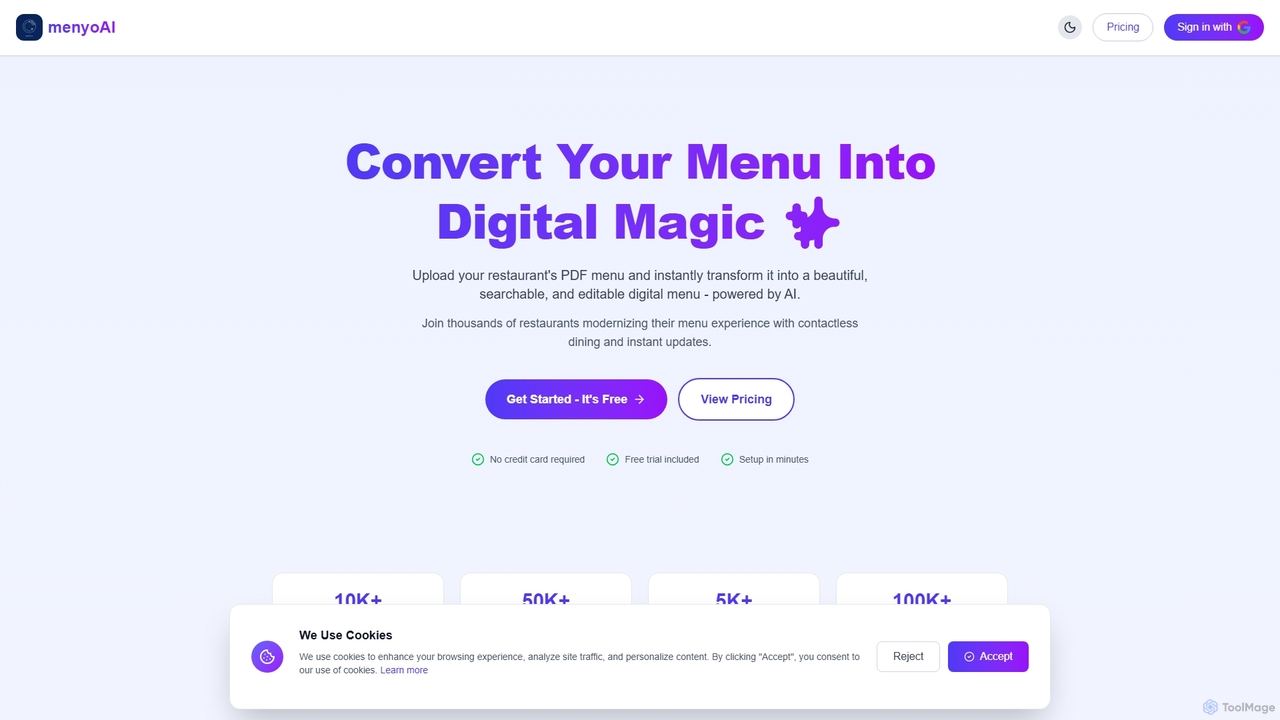
Menyo AI

Menyo AI

Menyo AI is an AI-powered platform that transforms traditional PDF restaurant menus into interactive, digital experiences. It enables …

3.3K

About Digital Menus

Digital Menus are AI-enhanced tools designed to modernize and streamline the dining experience by replacing traditional paper menus with interactive, dynamic digital displays. These platforms leverage technology to offer real-time updates, rich multimedia content, and personalized recommendations, significantly improving operational efficiency and customer engagement within restaurant management. They provide a flexible and engaging way for establishments to showcase their offerings, adapt to changing inventory, and promote specials instantly.

Core Features

  • Real-time Updates: Instantly modify menu items, prices, availability, and descriptions across all digital displays.
  • Multimedia Integration: Incorporate high-quality images, videos, and animations for a visually appealing presentation of dishes and drinks.
  • Interactive Elements: Allow customers to filter, search, view nutritional information, and even place orders directly from the menu.
  • Personalized Recommendations: Utilize AI to suggest dishes based on customer preferences, past orders, or popular items.
  • Multi-language Support: Offer menus in various languages to cater to a diverse customer base.

Applicable Scenarios

Digital menus are ideal for a wide range of food service establishments, from bustling cafes and fine-dining restaurants to fast-casual eateries and hotel dining. They are particularly beneficial for businesses that frequently update their offerings, manage complex inventories, or aim to enhance customer interaction through modern technology. This includes establishments looking to reduce printing costs, improve order accuracy, and provide a premium, tech-forward dining experience.

How to Choose

When selecting a digital menu system, consider its ease of use for both staff and customers, the range of customization options for branding, and its integration capabilities with existing POS (Point of Sale) systems. Evaluate the platform's ability to handle real-time updates, support multimedia, and offer analytics on customer interactions. Additionally, assess the pricing structure, customer support, and scalability to ensure it meets your restaurant's specific operational needs and future growth.

Digital MenusUse Cases

1

Enhancing Customer Experience in Fine Dining

For high-end restaurants, digital menus allow for sophisticated presentation of dishes with professional photography and detailed descriptions, including ingredient sourcing and chef's notes. Guests can browse wine pairings, view allergen information, and even call a waiter discreetly, elevating the dining experience beyond traditional paper menus and reflecting the restaurant's modern aesthetic.

2

Streamlining Operations for Fast-Casual Restaurants

Fast-casual eateries benefit from digital menus by enabling quick updates to daily specials, out-of-stock items, and promotional offers without reprinting. Customers can often self-order directly from the digital interface, reducing wait times and order errors, which significantly boosts throughput during peak hours and frees up staff for other tasks.

3

Managing Dynamic Menus in Cafes and Bars

Cafes and bars with frequently changing seasonal drinks, daily baked goods, or happy hour specials find digital menus invaluable. Staff can update availability and pricing in real-time from a central system, ensuring customers always see the most current offerings. This flexibility helps manage inventory and promotes timely sales of perishable items.

4

Improving Accessibility and Multi-language Support

For restaurants in tourist areas or diverse communities, digital menus offer instant translation into multiple languages, catering to a broader clientele. They can also include accessibility features like larger fonts or high-contrast modes, ensuring all guests can comfortably read and understand the menu, enhancing inclusivity and customer satisfaction.

5

Promoting Upselling and Cross-selling with AI

Digital menus can leverage AI to analyze customer browsing patterns and suggest complementary dishes, drinks, or desserts. For example, after selecting a main course, the system might recommend a suitable wine pairing or a popular appetizer, effectively increasing average order value and enhancing the overall dining experience through personalized suggestions.

6

Reducing Costs and Environmental Impact

By eliminating the need for printing and reprinting paper menus, restaurants significantly reduce operational costs associated with design, paper, and ink. This also contributes to environmental sustainability by minimizing paper waste. Digital menus offer a one-time setup investment with long-term savings and a greener business practice.

Digital MenusFrequently Asked Questions