Menyo AI
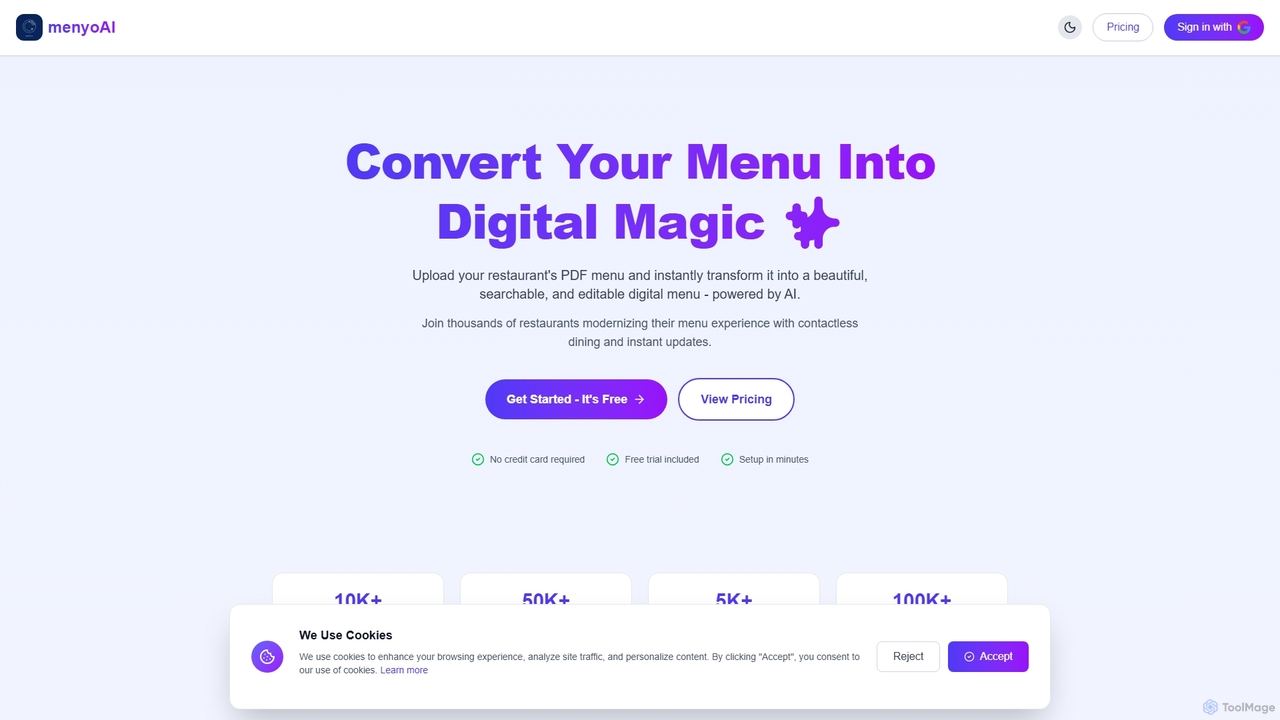
Menyo AI is an AI-powered platform that transforms traditional PDF restaurant menus into interactive, digital experiences. It enables …
Menyo AI is an AI-powered platform that transforms traditional PDF restaurant menus into interactive, digital experiences. It enables restaurants to effortlessly create, manage, and update beautiful, searchable, and multi-language digital menus, complete with custom QR codes and real-time analytics, enhancing customer engagement and operational efficiency.
About Restaurant Insights
Restaurant Insights are AI-powered tools designed to help food service businesses analyze complex operational and customer data. These platforms leverage machine learning to process sales figures, inventory levels, customer feedback, and market trends, transforming raw data into actionable intelligence. They enable restaurants to optimize menus, manage inventory efficiently, personalize customer experiences, and forecast demand, ultimately driving profitability and operational excellence within the broader field of analytics.
Core Features
- Sales Performance Analysis: Tracks and analyzes sales data by dish, time, server, and location to identify best-sellers and peak hours.
- Customer Behavior Prediction: Uses historical data to forecast customer preferences, visit frequency, and spending patterns for personalized marketing.
- Inventory and Waste Optimization: Analyzes ingredient usage and sales forecasts to minimize waste and ensure optimal stock levels.
- Menu Engineering Insights: Provides data-driven recommendations for menu pricing, item placement, and new dish development based on profitability and popularity.
- Operational Efficiency Monitoring: Identifies bottlenecks in service, kitchen operations, or staff scheduling through performance metrics.
Use Cases
Restaurant Insights tools are invaluable for restaurant owners, managers, and marketing teams. They are used to understand customer preferences, optimize menu offerings, and streamline daily operations. For instance, a restaurant manager might use these tools to analyze sales data from the past quarter, identifying underperforming dishes to remove or re-engineer, and pinpointing peak hours to adjust staffing levels for maximum efficiency.
How to Choose
When selecting a Restaurant Insights tool, consider its data integration capabilities with existing POS and inventory systems, the depth of its analytical features (e.g., predictive analytics, sentiment analysis), and the clarity of its reporting dashboards. Scalability for multi-location operations, ease of use for non-technical staff, and robust customer support are also crucial factors.

Restaurant InsightsUse Cases
Optimize Menu Profitability with Data
A restaurant owner uses AI-powered Restaurant Insights to analyze the profitability and popularity of each menu item. By identifying high-margin, low-popularity dishes and low-margin, high-popularity dishes, they can make data-driven decisions to adjust pricing, ingredients, or even remove items, leading to a 15% increase in overall menu profitability within a quarter.
Forecast Demand and Manage Inventory
A restaurant manager leverages Restaurant Insights to predict daily and weekly customer demand based on historical sales, seasonal trends, and local events. This predictive capability allows for precise ingredient ordering, reducing food waste by 20% and ensuring that popular items are always in stock, preventing lost sales due to unavailability.
Enhance Customer Experience and Personalization
A marketing team uses Restaurant Insights to analyze customer feedback, loyalty program data, and online reviews. By understanding sentiment and preferences, they can tailor marketing campaigns, offer personalized promotions, and improve service quality, leading to a 25% increase in repeat customer visits and higher customer satisfaction scores.
Optimize Staff Scheduling and Operations
A multi-location restaurant chain manager utilizes Restaurant Insights to analyze peak hours, staff performance, and customer flow across all branches. This allows for optimized staff scheduling, reducing labor costs by 10% while ensuring adequate coverage during busy periods, improving service speed, and minimizing customer wait times.
Identify Market Trends for New Offerings
A restaurant group's R&D team uses Restaurant Insights to monitor emerging food trends, dietary preferences, and competitor offerings in the market. By analyzing external data alongside internal sales, they can quickly identify opportunities for new menu items or concepts, launching successful dishes that align with current consumer demand and market gaps.
Benchmark Performance Across Locations
A regional director for a restaurant franchise uses Restaurant Insights to compare key performance indicators (KPIs) like average check size, table turnover, and customer satisfaction across multiple locations. This allows them to identify best practices from top-performing stores and implement them in underperforming ones, standardizing operational excellence and driving consistent growth across the franchise.