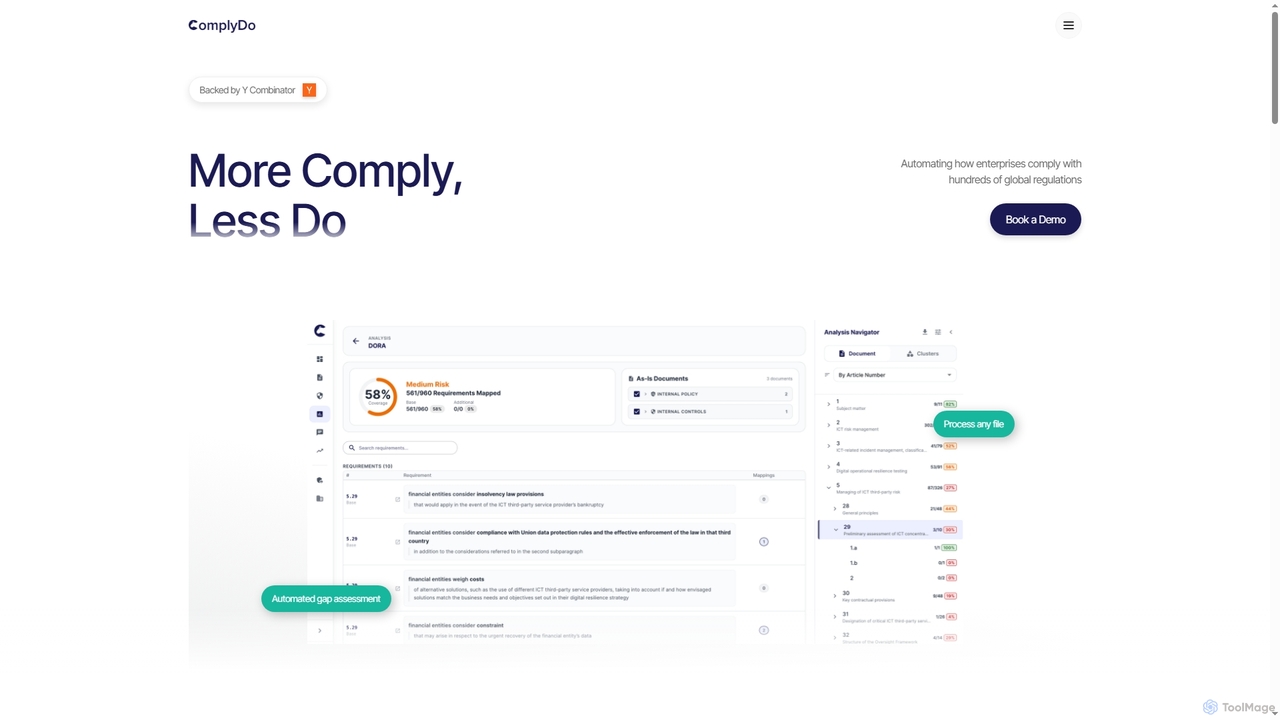
Third Party Risk AI tools are specialized solutions that leverage artificial intelligence to identify, assess, monitor, and mitigate risks associated with external vendors, partners, and suppliers. These tools utilize advanced algorithms, machine learning, and natural language processing to analyze vast amounts of data, providing comprehensive insights into potential vulnerabilities and compliance issues. They enable organizations to proactively manage complex third-party ecosystems, enhancing security, ensuring regulatory adherence, and protecting reputation.
Core Features
- Automated Vendor Assessment: Streamlines due diligence by automatically collecting, analyzing, and scoring vendor information against predefined risk criteria.
- Continuous Monitoring: Provides real-time alerts and insights into changes in third-party risk profiles, including financial health, cybersecurity posture, and regulatory compliance.
- Contractual Risk Analysis: Uses NLP to review contracts for hidden clauses, non-compliance risks, and critical obligations, ensuring adherence to terms.
- Supply Chain Vulnerability Detection: Identifies potential disruptions and risks within the extended supply chain by analyzing geopolitical, environmental, and operational factors.
- Regulatory Compliance Mapping: Maps third-party activities against relevant industry regulations and standards, highlighting gaps and ensuring adherence.
Applicable Scenarios
Organizations across various sectors, including finance, healthcare, manufacturing, and technology, utilize these tools. Roles such as procurement managers, compliance officers, IT security teams, and legal departments benefit from AI-powered third-party risk management to ensure their extended enterprise operates securely and compliantly. They are crucial for businesses with extensive vendor networks or those operating in highly regulated environments.
How to Choose
When selecting a Third Party Risk AI tool, consider its integration capabilities with existing systems (e.g., ERP, GRC platforms), the breadth and depth of its data sources for risk intelligence, and its ability to customize risk models. Evaluate the reporting and analytics features for actionable insights, the level of automation offered, and its support for specific regulatory frameworks relevant to your industry. User-friendliness and scalability are also critical factors.