Artwo
Artwo is a pioneering Robotics as a Service (RaaS) platform offering on-demand access to advanced humanoid robots. It …
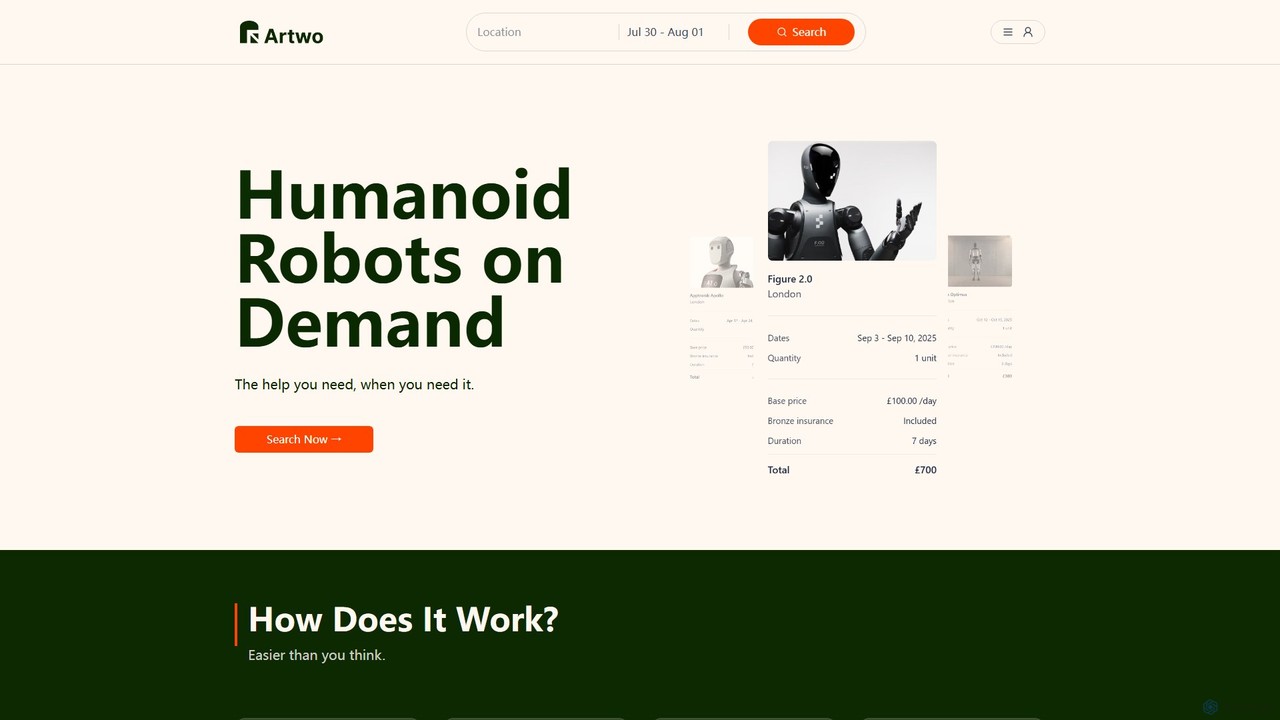
Artwo is a pioneering Robotics as a Service (RaaS) platform offering on-demand access to advanced humanoid robots. It enables businesses and individuals to lease cutting-edge robots through a flexible, pay-as-you-go model, eliminating high upfront costs. Artwo handles delivery, setup, and support, allowing users to deploy robots for various tasks using simple natural language commands.
About Robotics As A Service
Robotics As A Service (RaaS) is a subscription-based model that allows businesses to deploy and utilize robotic solutions without the significant upfront investment of purchasing and maintaining robots. This service typically includes the robots, software, maintenance, monitoring, and support, all managed by the RaaS provider. It enables companies to leverage advanced automation, enhance operational efficiency, and scale their robotic capabilities flexibly to meet evolving demands.
Core Features
- Flexible Robot Deployment: Rapid installation and configuration of various robot types (e.g., AGVs, collaborative robots) tailored to specific operational needs.
- Comprehensive Maintenance & Support: Proactive monitoring, routine servicing, repairs, and technical assistance to ensure continuous robot operation and minimize downtime.
- Software Updates & AI Integration: Regular software enhancements, firmware updates, and integration of advanced AI capabilities for improved performance and adaptability.
- Performance Monitoring & Data Analytics: Real-time tracking of robot performance, utilization rates, and operational data, providing insights for optimization.
Applicable Scenarios
RaaS is ideal for businesses seeking to automate tasks in logistics, manufacturing, healthcare, and retail without the capital expenditure. It suits companies needing scalable automation solutions, those with fluctuating demands, or those lacking in-house robotics expertise for deployment and maintenance.
How to Choose
When selecting a RaaS provider, consider the range and type of robots offered, the scope of services (maintenance, software, support), the flexibility of the subscription model, and the provider's expertise in your specific industry. Evaluate scalability options, integration capabilities with existing systems, and the transparency of pricing structures to ensure alignment with your operational goals and budget.
Robotics As A ServiceUse Cases
Automated Warehouse Logistics
E-commerce fulfillment centers utilize RaaS to deploy autonomous mobile robots (AMRs) for picking, sorting, and transporting goods. This reduces manual labor, speeds up order processing, and improves inventory accuracy, allowing for flexible scaling during peak seasons without large capital outlays.
Manufacturing Line Automation
Factories leverage RaaS for collaborative robots (cobots) to perform repetitive assembly tasks, quality inspections, or material handling. This enhances production consistency, reduces worker fatigue, and allows manufacturers to quickly adapt to new product lines or production volumes.
Healthcare Facility Support
Hospitals and clinics adopt RaaS for service robots that handle tasks like disinfection, medication delivery, or linen transport. This frees up human staff for patient care, improves hygiene standards, and ensures efficient movement of critical supplies within the facility.
Retail Inventory Management
Large retail chains deploy RaaS-enabled autonomous robots to conduct frequent inventory scans, identify misplaced items, and monitor shelf stock levels. This provides real-time data for replenishment, reduces out-of-stock situations, and optimizes store operations without requiring dedicated staff for robot management.
Hospitality Service Enhancement
Hotels and restaurants use RaaS for delivery robots to bring food, drinks, or amenities to guest rooms, or for cleaning robots to maintain public areas. This elevates guest experience, reduces operational costs, and addresses labor shortages in the service industry.
Agricultural Precision Farming
Farms utilize RaaS for robotic systems, such as autonomous tractors or drones, for tasks like precision planting, crop monitoring, or targeted spraying. This optimizes resource use, increases yield efficiency, and allows farmers to access advanced agricultural technology without significant upfront investment.