
Safety Management Best in category 1 results Driver Monitoring AI Tool

Popular AI tools in the Driver Monitoring field of Safety Management include Velona, etc., helping you quickly improve efficiency.

Velona

Velona

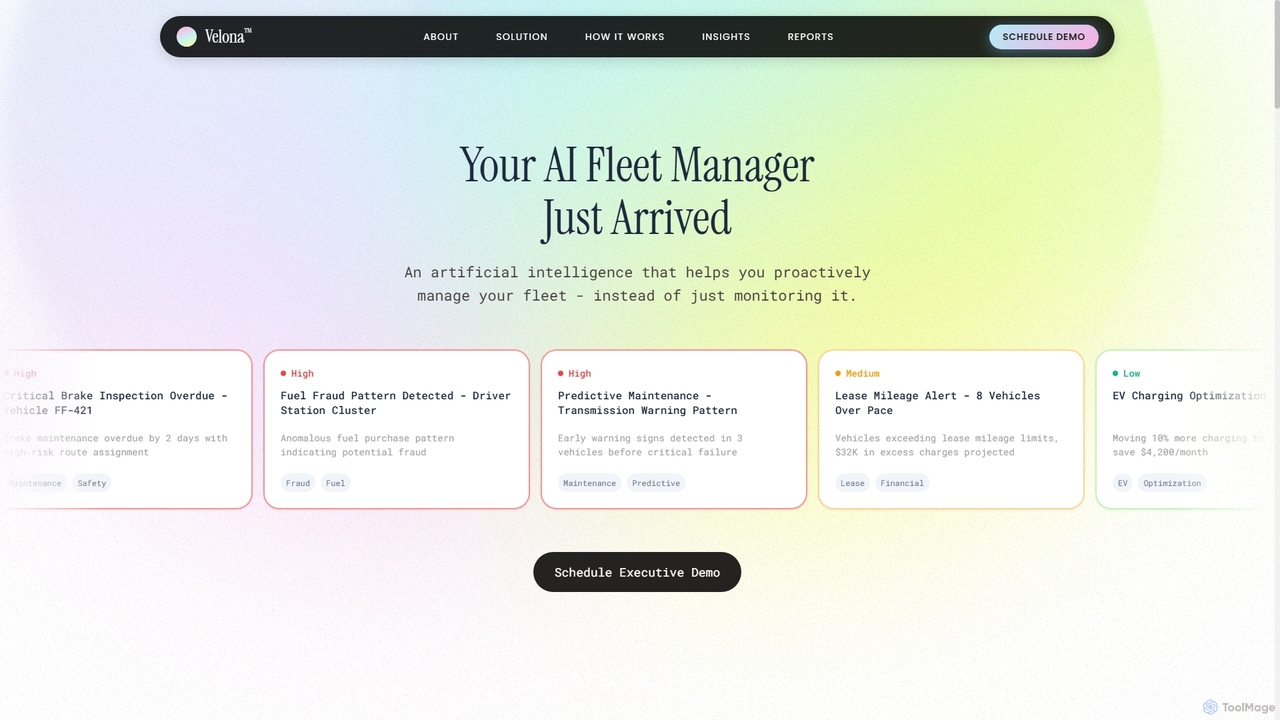
Velona is an AI-powered fleet management platform that transforms traditional monitoring into proactive, intelligent operations. It leverages specialized …

3.8K

About Driver Monitoring

Driver Monitoring systems are AI-powered tools that analyze a driver's behavior and physiological state in real-time to enhance road safety. Using inward-facing cameras and computer vision algorithms, these systems detect signs of drowsiness, distraction like phone use, and loss of attention. Their primary purpose is to prevent accidents by issuing timely alerts to the driver and fleet managers, creating a proactive safety environment. This technology provides data-driven insights into driver performance, moving beyond simple telematics to understand the human factors in vehicle operation.

Core Features

  • Drowsiness Detection: Analyzes eye closure (PERCLOS), yawning, and head posture to identify driver fatigue.
  • Distraction Monitoring: Identifies specific behaviors such as mobile phone use, smoking, or looking away from the road for extended periods.
  • Driver Identification: Utilizes facial recognition to verify the driver's identity, preventing unauthorized vehicle use.
  • Real-Time Alerts: Provides immediate in-cab audio or visual warnings to the driver and sends notifications to remote managers.
  • Behavioral Analytics: Generates reports and dashboards on driver performance, highlighting risky patterns and trends over time.

Use Cases

Driver Monitoring systems are crucial for industries with vehicle fleets, such as logistics, public transportation, and construction. Fleet safety managers use them to enforce safety policies, reduce accident rates, and lower insurance premiums. Automotive manufacturers also integrate this technology into Advanced Driver-Assistance Systems (ADAS) to ensure driver attentiveness during semi-autonomous operation.

How to Choose

When selecting a Driver Monitoring tool, consider its detection accuracy and the rate of false positives. Evaluate its hardware requirements and compatibility with your existing vehicles or telematics systems. Assess the effectiveness and customizability of its alerting system for both drivers and managers. Finally, ensure the system complies with data privacy regulations regarding the handling of sensitive driver footage and information.

Driver MonitoringUse Cases

1

Preventing Fatigue-Related Accidents in Long-Haul Trucking

A fleet safety manager for a logistics company is responsible for over 100 trucks on long-haul routes. The risk of driver fatigue is a major concern. By installing AI Driver Monitoring systems, they can proactively track signs of drowsiness. The system's camera analyzes eye-closure duration and head-nodding patterns. If fatigue is detected, an immediate in-cab alarm alerts the driver, while a short video clip of the event is sent to the manager's dashboard. This allows the manager to contact the driver and recommend a mandatory rest stop, directly intervening to prevent potential accidents.

2

Reducing Distracted Driving in a Local Delivery Fleet

An operations manager for a courier service notices an increase in minor incidents linked to distracted driving. Drivers frequently use phones for navigation and communication. To address this, the company implements a Driver Monitoring system that specifically detects phone use and prolonged glances away from the road. When a distraction event occurs, the driver receives instant audio feedback. The system also logs these events, allowing the manager to review weekly reports that highlight high-risk drivers. This data enables targeted coaching and reinforces the company's safety policies, leading to a measurable reduction in distraction-related events.

3

Enhancing Public Transport Safety and Accountability

A city bus authority needs to ensure the highest safety standards for its passengers. They equip their fleet with Driver Monitoring systems that not only detect fatigue and distraction but also smoking or eating while driving, which are against policy. The system provides real-time alerts for these behaviors. More importantly, the aggregated, anonymized data helps the authority identify systemic issues. For example, if fatigue alerts are common on a specific route, they can investigate the schedule or route conditions, leading to operational improvements that benefit all drivers and enhance overall public safety.

4

Verifying Driver Identity for High-Value Cargo Security

A company transporting high-value electronics needs to prevent unauthorized vehicle use and theft. They integrate a Driver Monitoring system with facial recognition capabilities. Before the vehicle can be started, the system must positively identify the driver against a database of authorized personnel. If an unauthorized person attempts to drive, the ignition is disabled, and an alert is sent to the security team. This provides a robust layer of security, ensuring only vetted drivers can operate the vehicles and creating an indisputable digital log of who was in control of the asset at all times.

5

Providing Data-Driven Driver Coaching and Training

A driver trainer aims to shift from reactive, post-incident reviews to a proactive safety culture. They use the analytics dashboard from a Driver Monitoring system, which aggregates data on harsh braking, speeding, and distraction events for each driver. During one-on-one sessions, the trainer can show drivers objective data and video snippets of their risky behaviors. This evidence-based approach removes subjectivity from coaching. It helps drivers understand their specific habits, such as frequent tailgating or glancing at their phone, and allows the trainer to provide personalized, effective feedback for improvement.

6

Ensuring Driver Attentiveness for ADAS Integration

An automotive engineer is developing a Level 2 autonomous driving system. A key regulatory and safety requirement is to ensure the driver remains attentive and ready to take control. They integrate a Driver Monitoring system as a core component of the Advanced Driver-Assistance System (ADAS). The system continuously monitors the driver's gaze and head position. If it detects that the driver is not watching the road while ADAS is active, it issues escalating warnings. If the driver remains unresponsive, the system can safely disengage the assistance features, ensuring a secure handover of control and meeting critical safety standards.

Driver MonitoringFrequently Asked Questions