
enalito
Enalito is an AI-powered, all-in-one marketing automation platform for e-commerce businesses. It enhances the customer experience through personalized …
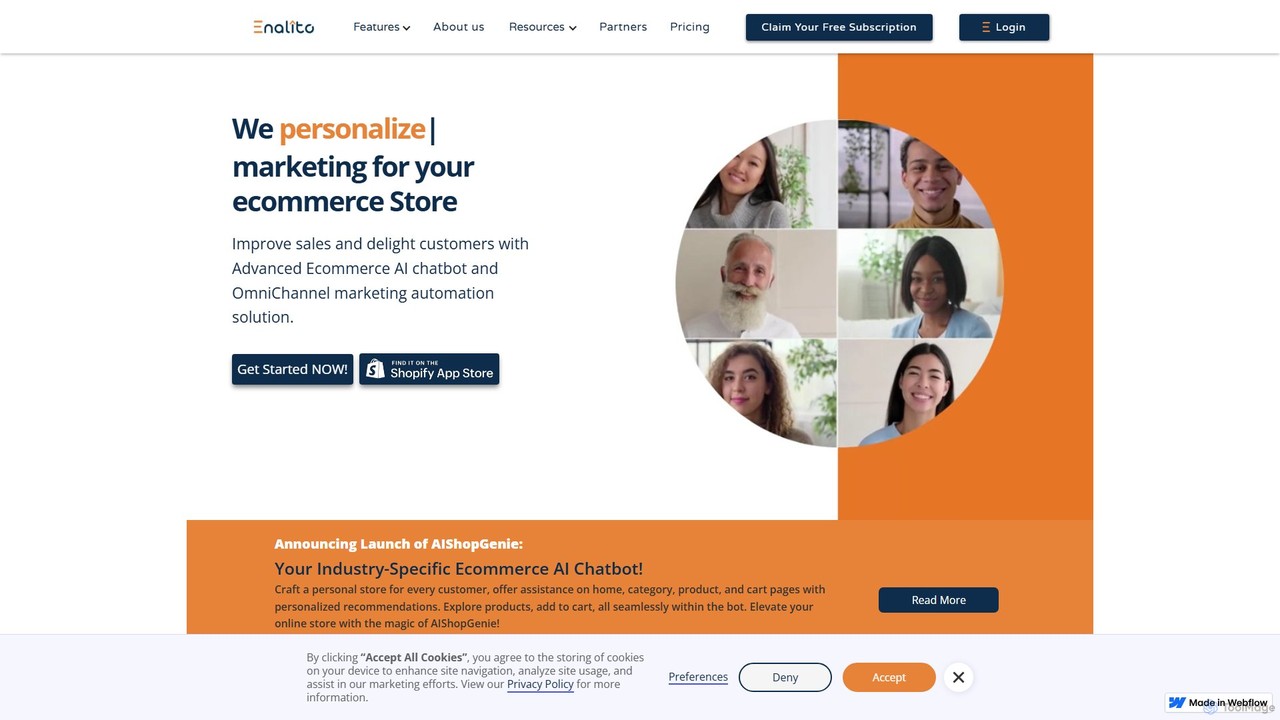
Enalito is an AI-powered, all-in-one marketing automation platform for e-commerce businesses. It enhances the customer experience through personalized recommendations, an advanced AI chatbot (AIShopGenie), omni-channel marketing, and smart customer segmentation. The platform aims to increase sales, boost conversion rates, and build customer loyalty by delivering tailored interactions at every stage of the customer journey.
About Marketing Automation
Marketing Automation refers to AI-powered software and platforms designed to automate repetitive marketing tasks and workflows. These tools streamline processes across various channels, from email campaigns and lead nurturing to social media management and customer segmentation. By leveraging artificial intelligence, they personalize customer interactions, optimize campaign performance, and improve lead conversion rates, allowing businesses to scale their marketing efforts efficiently while maintaining a consistent brand voice within the broader sales ecosystem.
Core Features
- Email Campaign Automation: Automate sending personalized emails based on user behavior and predefined triggers.
- Lead Nurturing & Scoring: Automatically qualify and engage leads through tailored content sequences and assign scores.
- Social Media Scheduling: Plan, schedule, and publish content across multiple social media platforms.
- Customer Segmentation: Group audiences based on demographics, behavior, and preferences for targeted messaging.
- Workflow Automation: Design and execute multi-step marketing workflows without manual intervention.
Applicable Scenarios
E-commerce businesses utilize these tools to automate abandoned cart recovery emails and personalized product recommendations. SaaS companies employ them for nurturing trial users with educational content and onboarding sequences. B2B marketers leverage them to automate lead qualification, score leads, and seamlessly hand them over to sales teams, ensuring efficient pipeline management.
How to Choose
When selecting a Marketing Automation platform, consider its integration capabilities with your existing CRM and analytics tools. Evaluate its scalability to handle growing contact lists and campaign volumes, and assess the depth of its AI personalization features. Finally, examine the ease of use, available support, and pricing model to ensure it aligns with your team's technical proficiency and budget.
Marketing AutomationUse Cases
Automate Personalized Email Drip Campaigns
For e-commerce managers or content marketers, setting up automated email sequences (e.g., welcome series, abandoned cart reminders, re-engagement campaigns) based on user actions. This ensures timely, relevant communication, boosting engagement and conversion rates without manual effort.
Streamline Lead Nurturing and Scoring
B2B sales and marketing teams use marketing automation to automatically qualify leads. Tools track interactions (website visits, content downloads), assign scores, and trigger personalized content delivery, ensuring sales teams receive warm, ready-to-convert leads.
Schedule and Publish Social Media Content
Social media managers can plan and schedule posts across various platforms (Facebook, Instagram, X, LinkedIn) in advance. This ensures consistent brand presence, optimizes posting times for maximum reach, and frees up time for real-time engagement and strategy.
Segment Customers for Targeted Advertising
Digital advertisers and product managers leverage marketing automation to segment their customer base based on purchase history, demographics, or behavior. This allows for highly targeted ad campaigns on platforms like Google or Meta, improving ad relevance and ROI.
Automate Event Promotion and Follow-up
Event organizers or webinar hosts use these tools to manage registrations, send reminder emails, and distribute post-event resources. This ensures high attendance rates and continued engagement, streamlining the entire event lifecycle from promotion to lead capture.
Deliver Personalized Website Content
Website administrators and content strategists can use marketing automation to dynamically display content (e.g., product recommendations, blog posts, calls-to-action) to visitors based on their browsing history, location, or previous interactions. This enhances user experience and drives conversions.