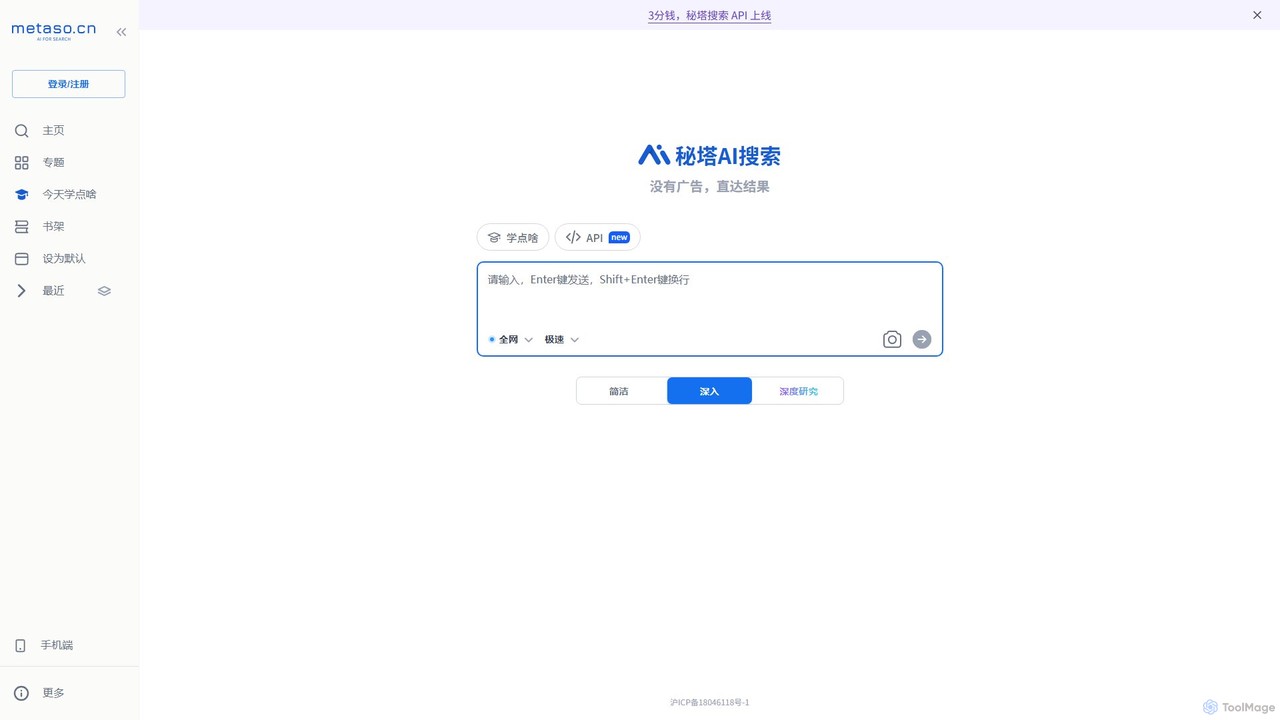
Answer Engines are AI-powered tools designed to provide direct, concise, and accurate answers to user queries, rather than just a list of search results. These engines leverage advanced natural language processing (NLP) and machine learning to understand the intent behind questions and synthesize information from various sources. Their primary value lies in delivering immediate, relevant solutions, significantly reducing the time users spend sifting through information. This capability makes them particularly effective for complex factual queries and research tasks.
Core Features
- Direct Answer Generation: Synthesizes information to provide a single, definitive answer to a question.
- Contextual Understanding: Interprets the nuances and intent of natural language queries, going beyond keyword matching.
- Multi-Source Information Synthesis: Gathers and cross-references data from diverse databases, web pages, and knowledge graphs.
- Citation and Source Attribution: Often provides links or references to the original sources of the information presented.
- Real-time Information Retrieval: Quickly processes queries and delivers answers, often in conversational formats.
Applicable Scenarios
Answer Engines are invaluable for professionals needing quick factual verification, students conducting research, and customer service agents seeking immediate solutions. They excel in environments where precise, on-demand information is critical, such as legal research, medical diagnostics support, or technical troubleshooting.
How to Choose
When selecting an Answer Engine, consider its accuracy and reliability in diverse domains, the breadth and depth of its knowledge base, and its ability to handle complex, multi-part questions. Evaluate its integration capabilities with existing workflows and platforms, the clarity of its source citations, and its overall response speed and user interface. Also, assess the privacy and data security policies, especially for sensitive information.