ToolMage
Sign in

Best 5 Conversational Search AI tools for Search

Popular Conversational Search AI tools in Search include Microsoft Copilot, KAYAK.ai, wanzhi01, asknews, and Hika AI, helping you work more efficiently.

Microsoft Copilot
Freemium

Microsoft Copilot

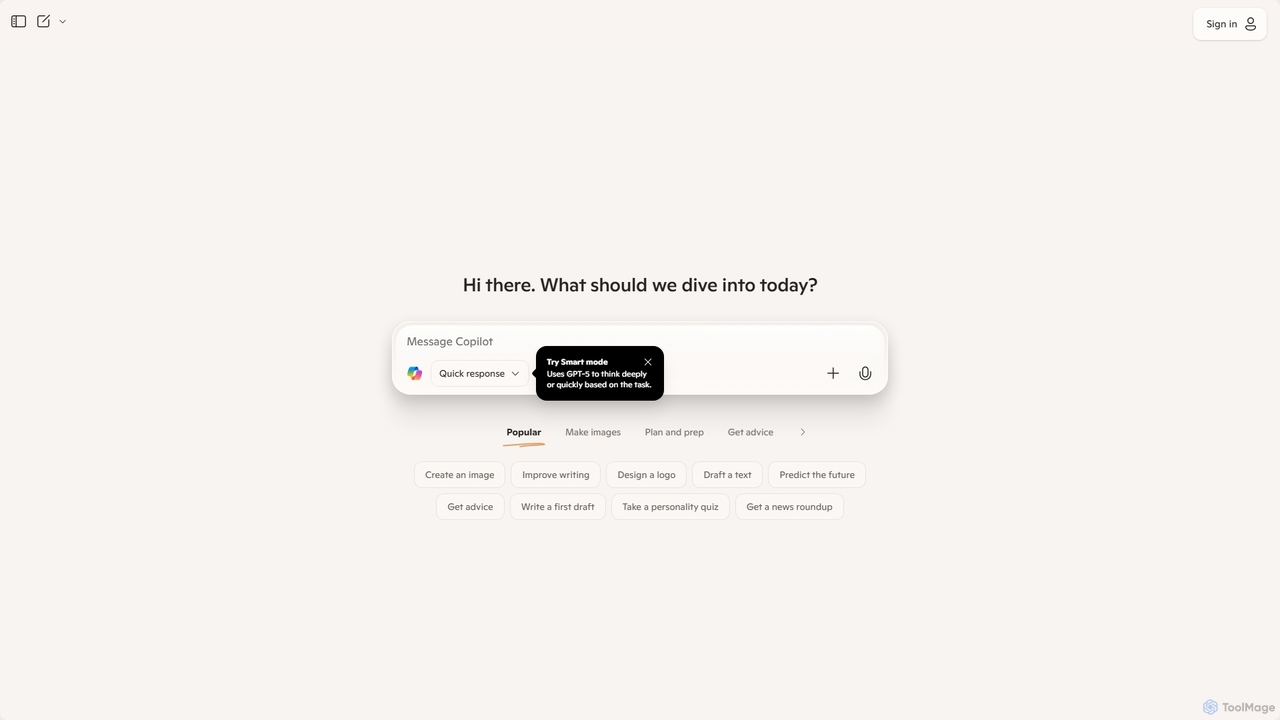
Microsoft Copilot is your everyday AI companion, enhancing productivity and creativity. It provides intelligent search, content generation, and image creation capabilities by leveraging the latest AI models like GPT-4 and DALL-E 3. Integrated across the Microsoft ecosystem, it assists with writing, coding, planning, and design tasks.

Image Generator
Visits 131.6MFavorites 159Likes 152
KAYAK.ai
Free

KAYAK.ai

KAYAK.ai is an AI-powered travel assistant that simplifies trip planning through a conversational interface. Ask in natural language to find the best deals on flights, hotels, and car rentals, and get personalized travel recommendations, making planning your next trip faster and more intuitive.

Personal Assistant
Visits 30.6KFavorites 132Likes 138
Hika AI
Freemium

Hika AI

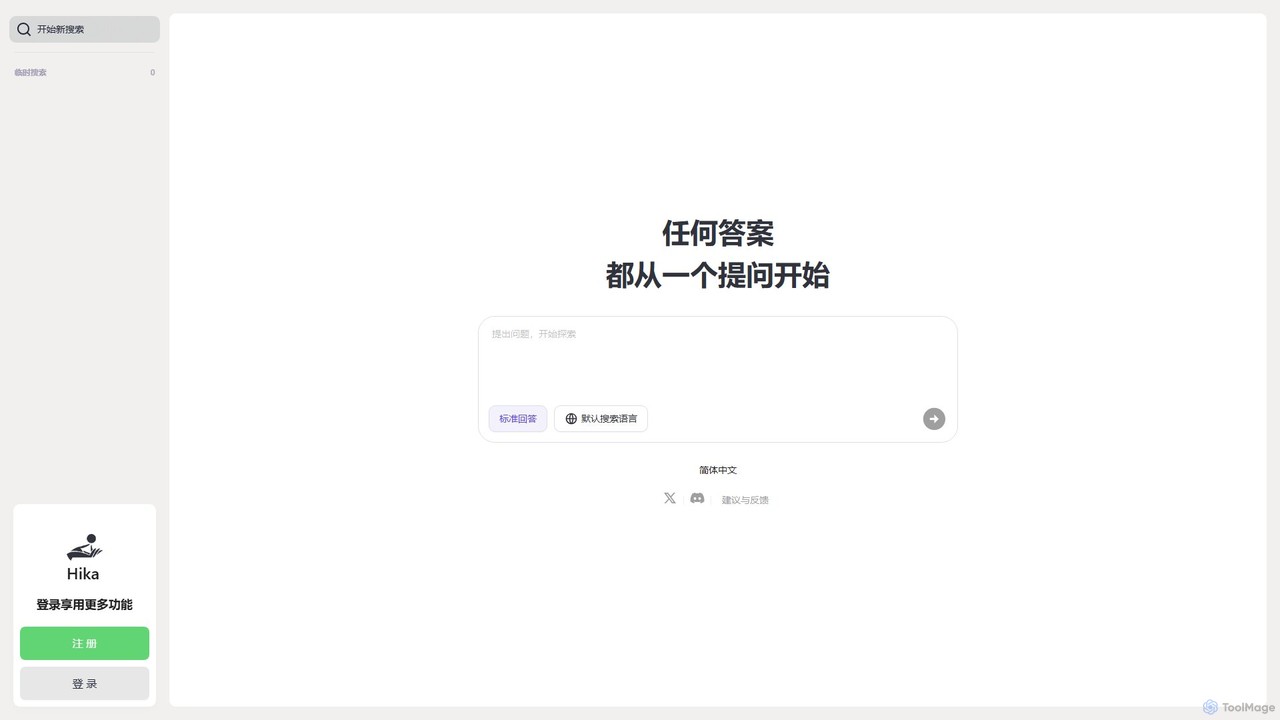
Hika AI is a free, advanced AI knowledge search engine, similar to Perplexity. It delivers multi-dimensional insights and facilitates interactive exploration of topics. It synthesizes information from various sources to provide comprehensive, easy-to-understand answers with citations, moving beyond traditional search results.

Learning Assistant
Visits 5.5KFavorites 91Likes 89
asknews
Free

asknews

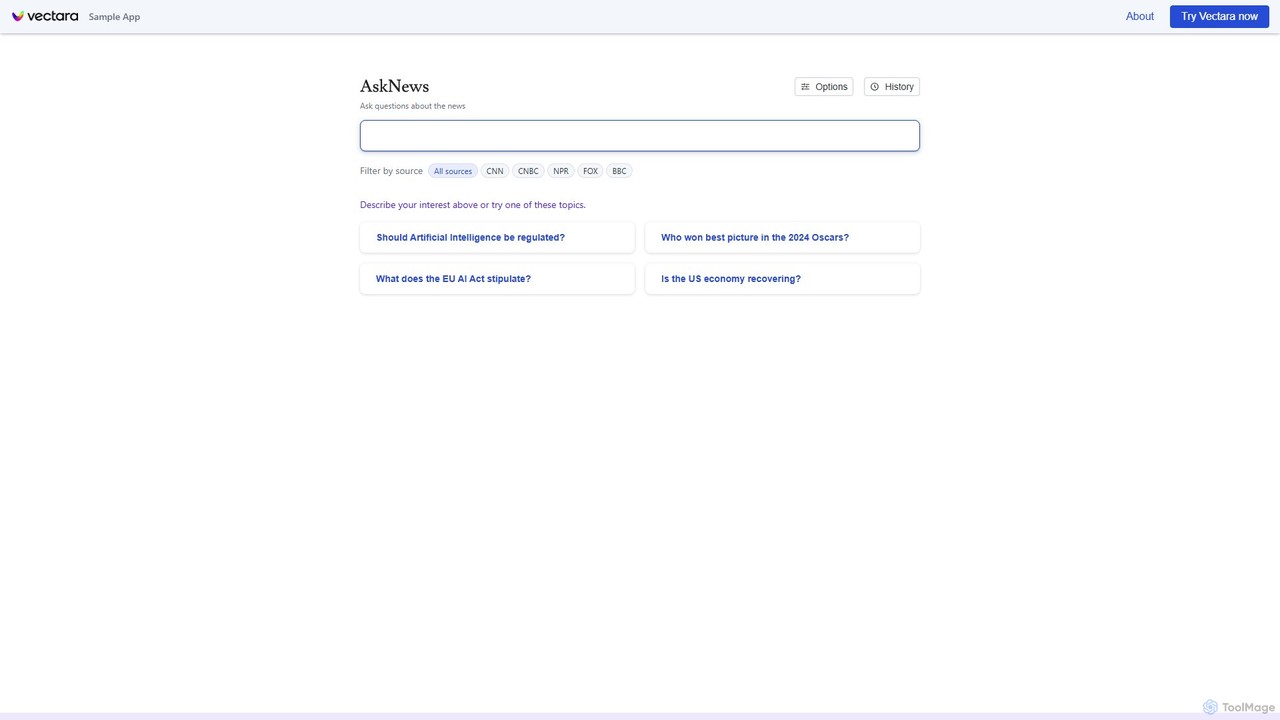
asknews is a conversational AI search engine powered by Vectara, designed for news. Ask complex questions in natural language and receive accurate, summarized answers with direct citations to source articles. It demonstrates the power of Retrieval-Augmented Generation (RAG) to provide trustworthy information from a vast corpus of news data, making it ideal for researchers, students, and anyone needing quick, reliable insights into current events.

Information Aggregator
Visits 5.5KFavorites 114Likes 108
wanzhi01
Freemium

wanzhi01

Wanzhi is an all-in-one AI assistant developed by 01.AI. It seamlessly integrates conversational Q&A, intelligent search with real-time web access, and powerful content generation. Ask complex questions, get summarized search results with sources, or generate various types of written content, all within a single, intuitive interface.

Assistant
Visits 18.8KFavorites 114Likes 110

About Conversational Search

Conversational Search tools represent a new generation of search engines that allow users to find information through natural language dialogue. Instead of just matching keywords to a list of links, these tools use large language models (LLMs) to understand user intent, context, and follow-up questions. They provide direct, synthesized answers, summaries, and explanations, transforming the search experience from simple retrieval to an interactive conversation. This approach is particularly effective for complex queries, research tasks, and discovering information without needing precise keywords.

Core Features

  • Natural Language Understanding (NLU): Accurately interprets complex, multi-part questions and the underlying user intent.
  • Contextual Memory: Remembers previous parts of the conversation to answer follow-up questions coherently.
  • Synthesized Answers: Generates direct, human-readable answers by combining information from multiple sources, rather than just listing links.
  • Source Citation: Provides links to the original sources used to generate the answer, ensuring transparency and allowing for verification.
  • Multi-turn Dialogue: Supports an extended back-and-forth conversation, enabling users to refine and deepen their search.

Use Cases

Conversational Search is ideal for academic researchers, market analysts, and students who need to explore complex topics deeply. Developers use these tools for code generation and debugging assistance, while content creators leverage them for brainstorming, fact-checking, and creating detailed outlines. It's also widely used for personal tasks like travel planning or getting step-by-step instructions for complex problems.

How to Choose

When selecting a Conversational Search tool, evaluate the accuracy of its answers and the quality of its source citations. Test its ability to handle multi-turn conversations and remember context effectively. Consider its speed and whether it offers specialized modes for specific tasks like coding or academic writing. Finally, review its data privacy policy to understand how your queries are handled, especially for sensitive information.

Conversational Search use cases

1

Complex Research and Topic Exploration

A graduate student researching 'the impact of quantum computing on modern cryptography' uses a conversational search tool to accelerate their work. Instead of manually searching and synthesizing dozens of academic papers, they start with a broad query. The tool provides a comprehensive summary with key concepts. The student then asks follow-up questions like, 'Explain elliptic curve cryptography in simpler terms' and 'Which current algorithms are most vulnerable?' This interactive dialogue allows for a deep, layered understanding of the topic, saving hours of research and helping to quickly identify core arguments for their thesis.

2

Code Generation and Debugging Assistance

A software developer is tasked with building a feature that requires interacting with a third-party API they've never used before. They use a conversational search tool specialized in coding. They ask, 'Show me an example of how to authenticate and make a GET request to the Stripe API in Python.' The tool provides a correct, ready-to-use code snippet. Later, when they encounter a cryptic error message, they paste the error and their code, asking, 'What does this error mean and how do I fix it?' The tool explains the error and suggests a specific correction, functioning like an experienced pair programmer.

3

Personalized Travel Itinerary Planning

A family is planning a 10-day trip to Italy and feels overwhelmed by the options. They use a conversational search tool to act as a virtual travel agent. They start with, 'Create a 10-day itinerary for a family with two teenagers visiting Rome, Florence, and Venice, focusing on history and food.' The tool generates a day-by-day plan. They then refine it with follow-ups: 'Can you suggest a cooking class in Florence that's good for teens?' and 'What's the most efficient way to travel from Florence to Venice?' The tool adjusts the itinerary, provides booking links (if capable), and answers specific questions, creating a custom travel plan in minutes.

4

Content Creation and Brainstorming

A content marketer needs to create a pillar page about 'The Future of Remote Work.' They use a conversational search tool to brainstorm and structure the content. They start by asking for 'a comprehensive outline for a blog post on the future of remote work.' The tool provides a structured outline with H2 and H3 headings. The marketer then dives deeper into each section, asking, 'What are the top 5 challenges of managing a remote team?' and 'Summarize recent studies on remote work productivity.' This process transforms a daunting task into a manageable workflow, providing research and structure simultaneously.

5

Summarizing Long Documents and Reports

A business analyst needs to quickly get up to speed on a new industry. They are given a 100-page market research report. Instead of spending a full day reading it, they upload the document to a conversational search tool. They ask, 'Summarize the executive summary of this report.' Then, they query specific sections: 'What are the key growth drivers identified in chapter 3?' and 'List the main competitors and their market share mentioned in the report.' This allows the analyst to extract the most critical information in under an hour, enabling them to prepare for a meeting efficiently.

6

Everyday Problem Solving and DIY Guidance

A homeowner notices their dishwasher is leaving spots on glasses. Instead of searching with keywords like 'dishwasher spots glasses,' they ask a conversational search tool: 'My dishwasher is leaving white spots on all my glasses. What could be the cause and how do I fix it?' The tool might ask a clarifying question, 'Is your water hard or soft?' Based on the answer, it provides a step-by-step guide, suggesting solutions like using a rinse aid, checking the water temperature, or cleaning the machine's filter. This transforms a frustrating problem into a guided, actionable solution.

Conversational Search FAQ

What is Conversational Search?

Conversational Search is a method of finding information by interacting with an AI in a natural, dialogue-based way. Unlike traditional search engines that require keywords and return a list of links, conversational search tools understand full sentences, context, and follow-up questions. They provide direct, synthesized answers by pulling information from various sources. Key characteristics include natural language understanding, contextual memory, and the ability to generate human-like, comprehensive responses, making it ideal for complex research and problem-solving.

How does Conversational Search differ from traditional search engines?

The primary difference lies in the interaction model and the output. Traditional search engines are for information retrieval, while conversational search is for information synthesis.

  • Interaction: Traditional search uses discrete keyword queries. Conversational search uses multi-turn dialogues, remembering context from previous questions.
  • Output: Traditional search provides a ranked list of links (SERP) for you to explore. Conversational search provides a direct, synthesized answer compiled from multiple sources.
  • User Effort: With traditional search, the user does the work of synthesizing information from various links. With conversational search, the AI performs the initial synthesis.
How to choose the best Conversational Search tool?

Selecting the right tool depends on your primary use case. Consider these factors:

  • Accuracy and Sourcing: Does the tool provide factually correct answers and cite its sources? For research, this is critical.
  • Contextual Capability: Test its ability to handle long, multi-turn conversations without losing track of the topic.
  • Specialization: Some tools are general-purpose, while others excel at specific tasks like coding, scientific research, or creative writing. Choose one that aligns with your needs.
  • Data Privacy: Review the tool's privacy policy. Understand if your conversations are used for training and what data is stored, especially if you handle sensitive information.
  • User Interface: A clean, intuitive interface that makes it easy to ask questions and review answers enhances the overall experience.
What are the main limitations of Conversational Search?

While powerful, conversational search tools have limitations that users should be aware of. The most significant is the potential for 'hallucinations,' where the AI generates confident but incorrect or fabricated information. The answers can also reflect biases present in the vast datasets they were trained on. Additionally, their knowledge may not be completely up-to-date unless they are connected to a live web index. For critical applications, it is always recommended to verify the information provided by cross-referencing the cited sources or other trusted materials.

Who can benefit from using Conversational Search tools?

A wide range of users can benefit from conversational search. Here are a few examples:

  • Students and Researchers: To quickly understand complex topics, gather source material, and generate outlines for papers.
  • Developers and Programmers: For generating code snippets, debugging errors, and learning new programming languages or frameworks.
  • Content Creators and Marketers: To brainstorm ideas, conduct research for articles, and create structured content outlines.
  • Business Professionals: For summarizing long reports, preparing for meetings, and analyzing market trends.
  • General Users: For planning travel, getting DIY instructions, learning new skills, and answering everyday questions in a more interactive way.