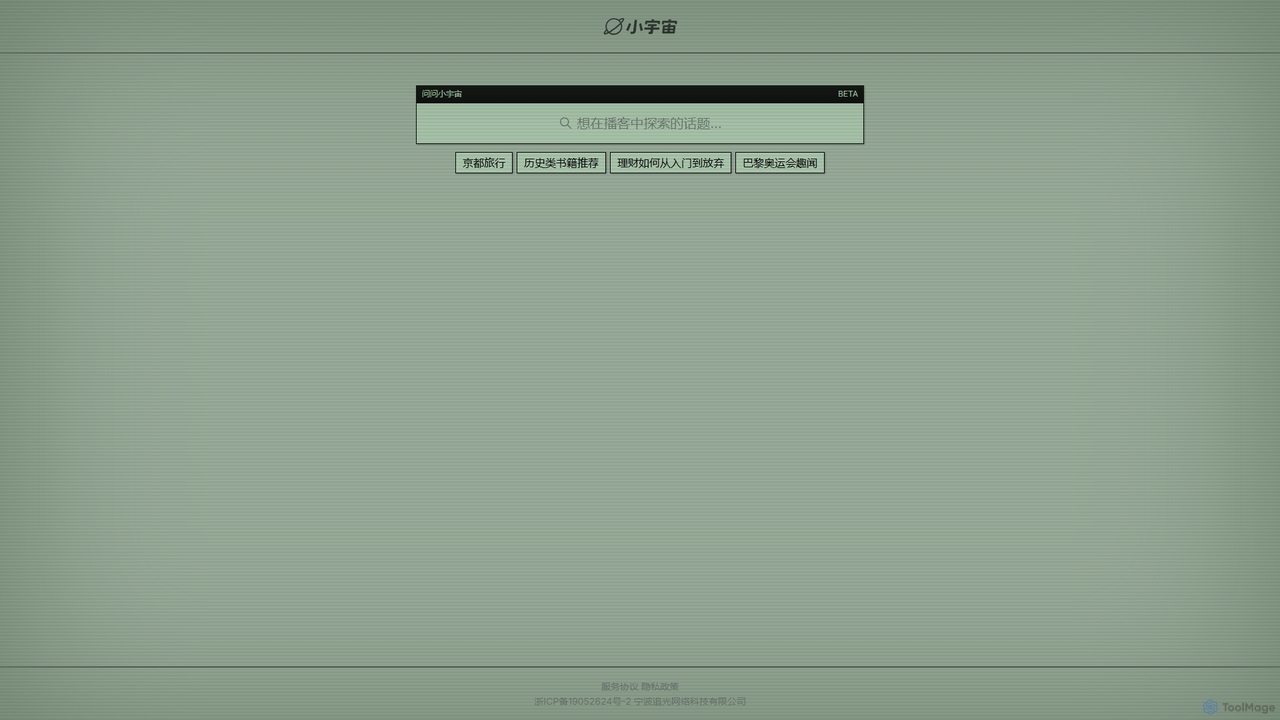
Ask Xiaoyuzhou
Ask Xiaoyuzhou is an AI-powered semantic search engine designed for the Xiaoyuzhou podcast platform. It allows users to …
Ask Xiaoyuzhou is an AI-powered semantic search engine designed for the Xiaoyuzhou podcast platform. It allows users to explore topics and find specific information within a vast library of podcast episodes. Instead of simple keyword matching, it understands user intent to deliver relevant audio segments, transforming passive listening into an active knowledge discovery experience.
About Podcast Search
Podcast Search tools are a specialized category of search engines that use AI to find specific words, phrases, and topics within the audio content of podcast episodes. Leveraging Automatic Speech Recognition (ASR) technology, these tools transcribe spoken words into searchable text, complete with timestamps. This allows users to pinpoint exact moments in conversations, moving far beyond simple searches of titles and descriptions. For researchers, journalists, and content creators, this provides an invaluable way to quickly locate relevant information across thousands of hours of audio content.
Core Features
- Spoken Word Search: Pinpoint the exact moment a specific keyword or phrase is mentioned within an audio file.
- Timestamped Results: Provide direct links to the specific time in an episode where the search term appears.
- Full Transcription: Automatically generate a complete, searchable text transcript of the entire podcast episode.
- Semantic Search: Find discussions related to a concept or topic, even if the exact keywords are not used.
- Speaker Identification: Differentiate and search for content spoken by specific hosts or guests in a conversation.
Use Cases
These tools are essential for professionals who work with audio content. Journalists and fact-checkers use them to quickly verify quotes and find source material. Market researchers track brand mentions and competitor analysis across industry podcasts. Content creators efficiently locate clips and soundbites to repurpose for social media, while academic researchers analyze discourse on specific subjects across a vast library of expert discussions.
How to Choose
When selecting a Podcast Search tool, consider the accuracy of its transcription and its language support. Evaluate the size and scope of its indexed podcast database—does it cover the niches you need? Assess the granularity of its search filters, such as the ability to search by speaker, date, or podcast category. Finally, consider its data export options and whether it offers API access for integration into your existing workflows.
Podcast SearchUse Cases
Fact-Checking Quotes for Journalists
A political journalist is writing an article and needs to verify a specific quote attributed to a senator from an interview conducted months ago. Instead of manually listening to hours of potential podcast appearances, the journalist uses a Podcast Search tool. They enter the exact phrase into the search bar. The tool scans its database and returns a result in seconds, pointing to a specific podcast episode and providing a timestamped link to the exact moment the senator said the phrase. This allows for accurate, verifiable reporting and saves the journalist hours of manual research.
Monitoring Brand Mentions for Marketers
A marketing manager for a SaaS company wants to track how their brand, products, and key competitors are being discussed in tech and business podcasts. They set up alerts in a Podcast Search tool for their brand name and competitor names. Every week, the tool automatically sends a report with links to new podcast episodes where these terms were mentioned. The manager can quickly listen to the relevant 30-second clips to gauge sentiment, understand market positioning, and identify new marketing opportunities without having to subscribe to and monitor dozens of podcasts manually.
Repurposing Content for Social Media
A content creator produces a weekly one-hour interview podcast. To maximize reach, they want to create short video clips and quote graphics for Instagram, TikTok, and Twitter. Using a Podcast Search tool, they search their own episode for keywords related to the most interesting topics discussed. The tool provides a full transcript and timestamps. They can quickly identify 5-7 powerful soundbites, export the corresponding audio segments, and send them to a video editor. This process reduces the time to find compelling clips from hours to just a few minutes, streamlining their content repurposing workflow.
Academic Research on Specific Topics
A university researcher is studying the evolution of public discourse on climate change. They need to analyze how experts have discussed the topic in long-form interviews over the past five years. Using a Podcast Search tool, they search for terms like 'carbon tax,' 'sea-level rise,' and 'renewable energy' across a curated list of science and policy podcasts. The tool allows them to gather hundreds of relevant audio clips and their transcripts. This provides a rich dataset for qualitative analysis, enabling research that would be nearly impossible to conduct through manual listening and transcription.
Identifying Guest Opportunities for PR Professionals
A public relations specialist represents a CEO who is an expert in artificial intelligence. The specialist's goal is to get the CEO featured on relevant podcasts. They use a Podcast Search tool to find shows that have recently discussed 'AI ethics,' 'machine learning trends,' or featured competitors. This identifies a highly targeted list of podcasts that are actively covering their client's area of expertise. They can then listen to the specific segments to understand the show's format and host's style, allowing them to craft a highly personalized and effective guest pitch.
Legal Discovery and Compliance Audits
A corporate legal team is conducting an internal investigation related to compliance. They need to review months of recorded audio from earnings calls and internal all-hands meetings. Manually listening is impractical. By uploading the audio files to a private Podcast Search tool, they can create a searchable archive. The legal team can then search for specific keywords, project names, or policy numbers mentioned in these recordings. The tool provides timestamped results and transcripts, creating a clear, auditable trail and drastically accelerating the discovery process from weeks to a matter of hours.