Security Best in category 1 results Vendor Risk Management AI Tool

Popular AI tools in the Vendor Risk Management field of Security include DSALTA, etc., helping you quickly improve efficiency.

DSALTA

DSALTA

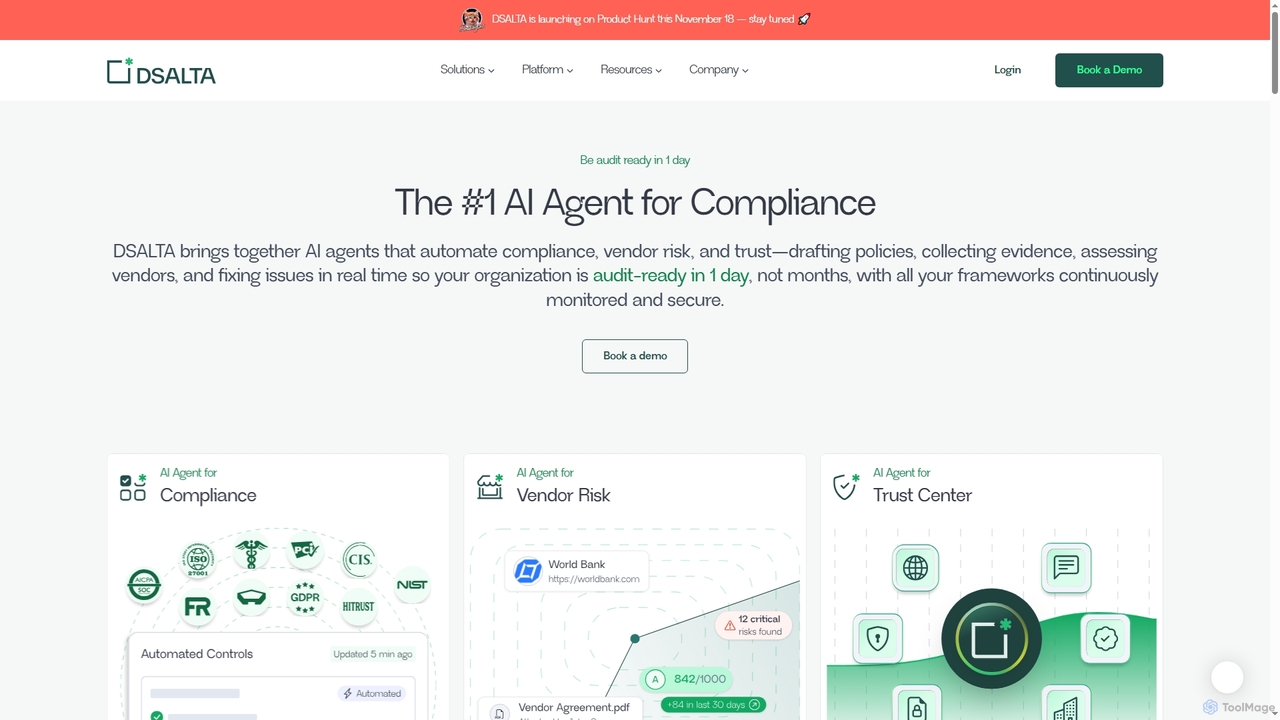
DSALTA is an AI-powered all-in-one platform that automates vendor risk, compliance, and trust management. It helps organizations achieve …

6.8K

About Vendor Risk Management

Vendor Risk Management (VRM) tools are AI-powered solutions designed to identify, assess, monitor, and mitigate risks associated with third-party vendors and suppliers. Leveraging advanced machine learning and data analytics, these platforms automate the complex process of evaluating vendor security, compliance, and performance. They enable organizations to proactively manage potential threats, ensure regulatory adherence, and maintain business continuity across their extended ecosystem, forming a critical component of overall security strategy.

Core Features

  • Automated Risk Assessment: Automatically collects and analyzes vendor data to generate comprehensive risk scores and profiles.
  • Continuous Compliance Monitoring: Monitors vendor adherence to regulatory standards (e.g., GDPR, SOC 2) and internal policies in real-time.
  • Due Diligence Automation: Streamlines the collection and review of vendor documentation, questionnaires, and certifications during onboarding.
  • Performance and Relationship Tracking: Evaluates vendor performance against SLAs and contractual obligations, identifying potential issues.
  • Incident Management Integration: Connects vendor-related incidents with broader security incident response workflows for rapid resolution.

Applicable Scenarios

Financial institutions use VRM tools to ensure third-party service providers comply with stringent financial regulations and data security standards. Supply chain managers deploy them to assess the geopolitical, operational, and cybersecurity risks of their global suppliers, preventing disruptions. IT departments leverage VRM to evaluate the security posture and data handling practices of software and cloud service vendors.

How to Choose

When selecting a VRM tool, consider its scope of risk coverage (cyber, operational, financial, compliance), integration capabilities with existing GRC and procurement systems, and the depth of its AI-driven analytics. Evaluate the customizability of risk scoring models, reporting features for audit readiness, and the platform's scalability to accommodate your vendor ecosystem's growth. User-friendliness and support for various regulatory frameworks are also crucial.

Vendor Risk ManagementUse Cases

1

Automated Vendor Onboarding & Vetting

Procurement teams use AI-powered VRM tools to rapidly conduct due diligence on potential new suppliers. The system automatically analyzes submitted documents, security questionnaires, and public records, flagging potential risks like compliance gaps or past security incidents, significantly accelerating the onboarding process while maintaining high security standards.

2

Automating Third-Party Security Assessments

For IT security teams, manually assessing hundreds of vendor security postures is time-consuming and prone to human error. AI VRM tools automate the collection and analysis of security questionnaires, vulnerability scans, and dark web intelligence, providing a consolidated risk score. This allows teams to quickly identify high-risk vendors, prioritize remediation efforts, and ensure that all third parties meet stringent security standards, significantly reducing assessment time from weeks to days.

3

Continuous Third-Party Security Monitoring

IT security and risk management teams deploy VRM platforms to continuously track the security posture of all active vendors. The tools integrate with threat intelligence feeds and security rating services, providing real-time alerts on vulnerabilities, data breaches, or changes in a vendor's security profile, enabling proactive mitigation.

4

Monitoring Supplier Compliance with Regulations

Compliance officers in regulated industries (e.g., finance, healthcare) face the challenge of ensuring all third-party suppliers adhere to complex and evolving regulations like GDPR, HIPAA, or PCI DSS. AI VRM tools continuously monitor vendor activities, scan for public data breaches, and track regulatory changes. They automatically flag non-compliance issues, generate audit-ready reports, and provide alerts, helping organizations avoid hefty fines and reputational damage by maintaining a robust compliance posture across their vendor ecosystem.

5

Ensuring Regulatory & Industry Compliance

Compliance officers leverage VRM solutions to ensure all third-party vendors adhere to relevant industry regulations such as GDPR, HIPAA, or SOC 2. The tools automate the collection of compliance evidence, track audit trails, and generate reports, simplifying the process of demonstrating regulatory adherence and avoiding costly penalties.

6

Streamlining Due Diligence for New Vendors

Procurement and legal teams often spend significant time on due diligence for new vendor onboarding, involving extensive document review and questionnaire processing. AI VRM tools automate this by intelligently extracting key information from contracts, financial statements, and security certifications. They can identify red flags, compare vendor responses against benchmarks, and generate summarized risk profiles, drastically accelerating the onboarding process while ensuring thorough vetting and reducing manual workload.

7

Proactive Supply Chain Disruption Management

Risk managers utilize VRM to identify and assess potential disruptions within the supply chain. By analyzing vendor financial health, geographic locations, and operational dependencies, the tools can predict and model the impact of events like natural disasters or economic instability, allowing organizations to develop contingency plans.

8

Identifying Potential Supply Chain Disruptions

Supply chain managers need to anticipate and mitigate disruptions caused by geopolitical events, natural disasters, or financial instability of key suppliers. AI VRM tools leverage external data sources like news feeds, social media, and financial reports, combined with internal vendor performance data. They use predictive analytics to identify emerging risks, assess their potential impact on the supply chain, and provide early warnings, enabling proactive contingency planning and minimizing operational downtime.

9

Financial Health Assessment of Key Suppliers

Finance and procurement departments use VRM to evaluate the financial stability and solvency of critical suppliers. AI algorithms analyze financial statements, credit ratings, and market news to provide a comprehensive risk score, helping prevent business interruptions due to vendor bankruptcy or financial distress.

10

Managing Vendor Contract Risks and Renewals

Legal and procurement departments often struggle with managing a multitude of vendor contracts, tracking renewal dates, and identifying embedded risks. AI VRM tools use natural language processing (NLP) to analyze contract clauses, identify key terms, and flag non-standard language or unfavorable conditions. They automate renewal reminders, highlight contractual obligations, and assess the risk profile associated with each contract, ensuring better contract governance and reducing legal exposure.

11

Tracking Contractual Obligations & SLAs

Legal and procurement teams employ VRM to monitor vendor adherence to contractual terms and Service Level Agreements (SLAs). The tools use natural language processing to extract key clauses, track performance metrics, and send automated alerts for upcoming renewals or potential breaches, ensuring vendors meet their commitments.

12

Evaluating Vendor Performance and Reliability

Beyond security and compliance, organizations need to assess the operational performance and reliability of their vendors. AI VRM tools collect and analyze data from various sources, including service level agreements (SLAs), support tickets, and user feedback. They provide insights into vendor responsiveness, quality of service, and adherence to delivery schedules, helping businesses make informed decisions about vendor retention, optimization, or replacement to ensure consistent operational excellence.

Vendor Risk ManagementFrequently Asked Questions