icetana
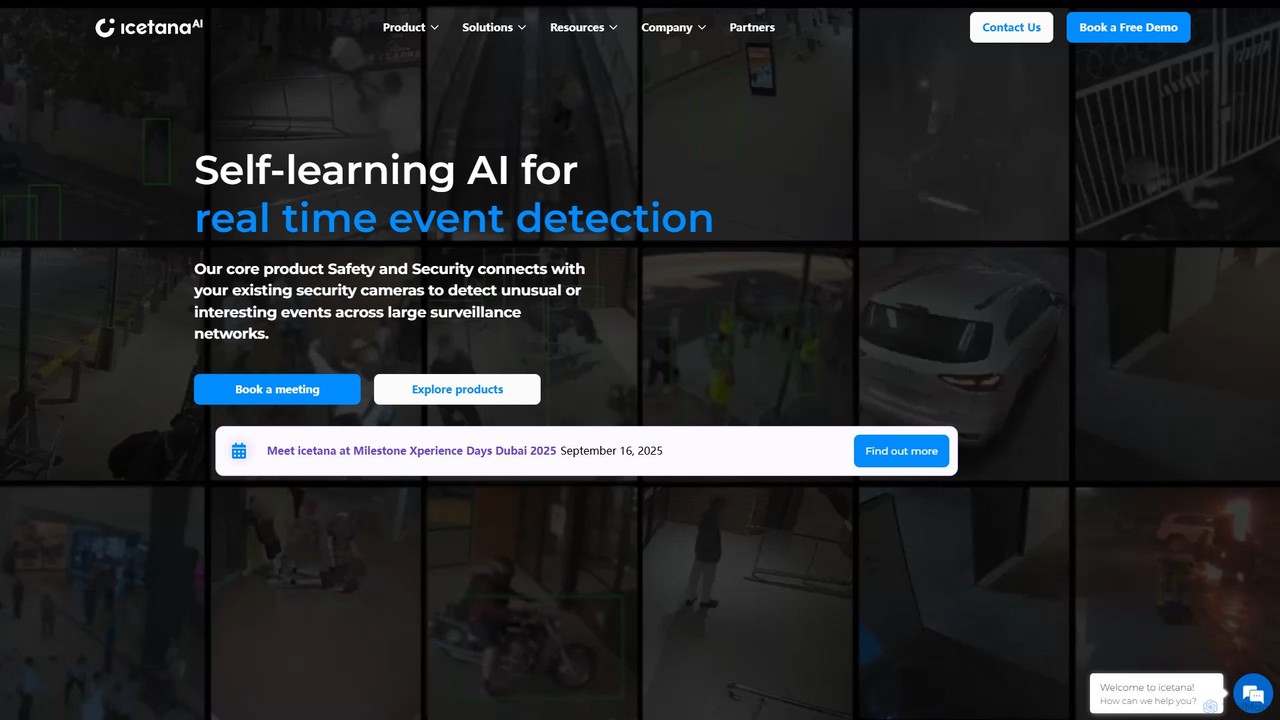
icetana is an AI-powered video analytics platform that enhances existing CCTV systems by automatically detecting anomalies and unusual …
icetana is an AI-powered video analytics platform that enhances existing CCTV systems by automatically detecting anomalies and unusual events. It uses self-learning AI to identify threats in real-time, helping security teams monitor large-scale camera networks proactively and efficiently, reducing operator workload and improving response times.
About Smart Cities
Smart Cities AI tools are a class of technologies that leverage artificial intelligence, IoT, and data analytics to improve urban infrastructure, public services, and quality of life. These platforms process vast amounts of real-time data from sensors, cameras, and public systems to identify patterns, predict outcomes, and automate operations. This enables cities to manage traffic more efficiently, optimize energy consumption, enhance public safety, and deliver more responsive citizen services. Ultimately, these tools help transform reactive urban management into a proactive, data-driven model for sustainable development.
Core Features
- Urban Data Analytics: Analyzes large-scale datasets from traffic, utilities, and public services to uncover insights for planning and policy-making.
- Predictive Maintenance: Uses AI to forecast infrastructure failures in systems like water pipes or power grids before they occur, enabling proactive repairs.
- Intelligent Traffic Management: Optimizes traffic light timing, routes emergency vehicles, and manages public transport schedules in real-time based on live data.
- Public Safety & Surveillance: Employs AI-powered video analysis for crowd monitoring, anomaly detection, and accelerating emergency response.
- Resource Optimization: Manages energy grids, water distribution, and waste collection based on real-time demand and predictive models to reduce waste.
Use Cases
These tools are primarily used by municipal governments, city planners, public safety departments, utility providers, and transportation authorities. They are applied in command and control centers for real-time city monitoring, in planning departments for long-term urban development simulations, and by public works for optimizing daily operations like waste collection and infrastructure maintenance.
How to Choose
When selecting a Smart Cities AI tool, consider its scalability to handle city-wide data and its ability to integrate with existing legacy systems (e.g., SCADA, GIS). Evaluate the data security and privacy protocols to ensure compliance with regulations. Also, assess the platform's modularity, allowing you to select specific functions (e.g., traffic, energy) as needed, and its real-time processing capabilities for mission-critical applications like emergency response.
Smart CitiesUse Cases
Optimizing Urban Traffic Flow in Real-Time
A traffic management center operator uses an AI platform to mitigate rush hour congestion. The system analyzes live video feeds from intersections and data from road sensors to predict traffic jams before they form. It automatically adjusts traffic light timings to improve flow, displays suggested alternate routes on digital signs, and alerts traffic officers to potential bottlenecks. This proactive management reduces average commute times by up to 20% and lowers vehicle emissions in congested areas.
Predictive Maintenance for Public Utilities
A water utility engineer for a city government aims to prevent costly water main breaks. They use an AI system that analyzes sensor data on water pressure, flow rates, and acoustic signals from within the pipes. The AI identifies patterns that precede pipe failures and flags specific sections for proactive inspection and repair. This approach helps the city decrease emergency repair costs by 30% and minimizes service disruptions for residents by fixing problems before they become critical.
Enhancing Public Safety with Smart Surveillance
An emergency response coordinator monitors a large public festival using an AI-powered surveillance platform. The system scans hundreds of camera feeds simultaneously, using computer vision to detect anomalies like unattended baggage, unusual crowd formations, or vehicle accidents. When a potential threat is identified, the system sends an instant alert with video evidence to the command center. This allows for faster response times and more effective allocation of security personnel, improving overall event safety.
Intelligent Waste Management and Collection
A sanitation department manager needs to optimize garbage truck routes to save fuel and time. The city deploys smart bins equipped with sensors that report their fill levels in real-time. An AI platform processes this data, along with traffic predictions, to generate the most efficient daily collection routes for each truck. The system directs drivers to skip empty or near-empty bins, reducing fuel consumption by up to 25%, lowering operational costs, and minimizing traffic disruption from collection vehicles.
Optimizing City-Wide Energy Consumption
An urban energy grid manager uses an AI platform to balance energy supply and demand. The system's AI models forecast energy demand based on weather patterns, public events, and historical data. It then optimizes the energy grid by integrating renewable sources like solar and wind more effectively, and automatically adjusts smart street lighting based on real-time conditions. This improves grid stability, reduces energy waste by 10-15%, and promotes the city's transition to sustainable energy sources.
Streamlining Citizen Services with AI Chatbots
A municipal government administrator implements an AI-powered chatbot on the city's official website to provide 24/7 support. Residents can ask common questions about paying taxes, reporting potholes, or checking public transport schedules. The chatbot uses natural language processing to understand inquiries, provide instant answers, and guide users through service request forms. This frees up human staff to handle more complex cases and improves citizen satisfaction by offering immediate, accessible information and services around the clock.