Resistbot
Resistbot is a chatbot that empowers users to contact their elected officials in the U.S. via text, web, …
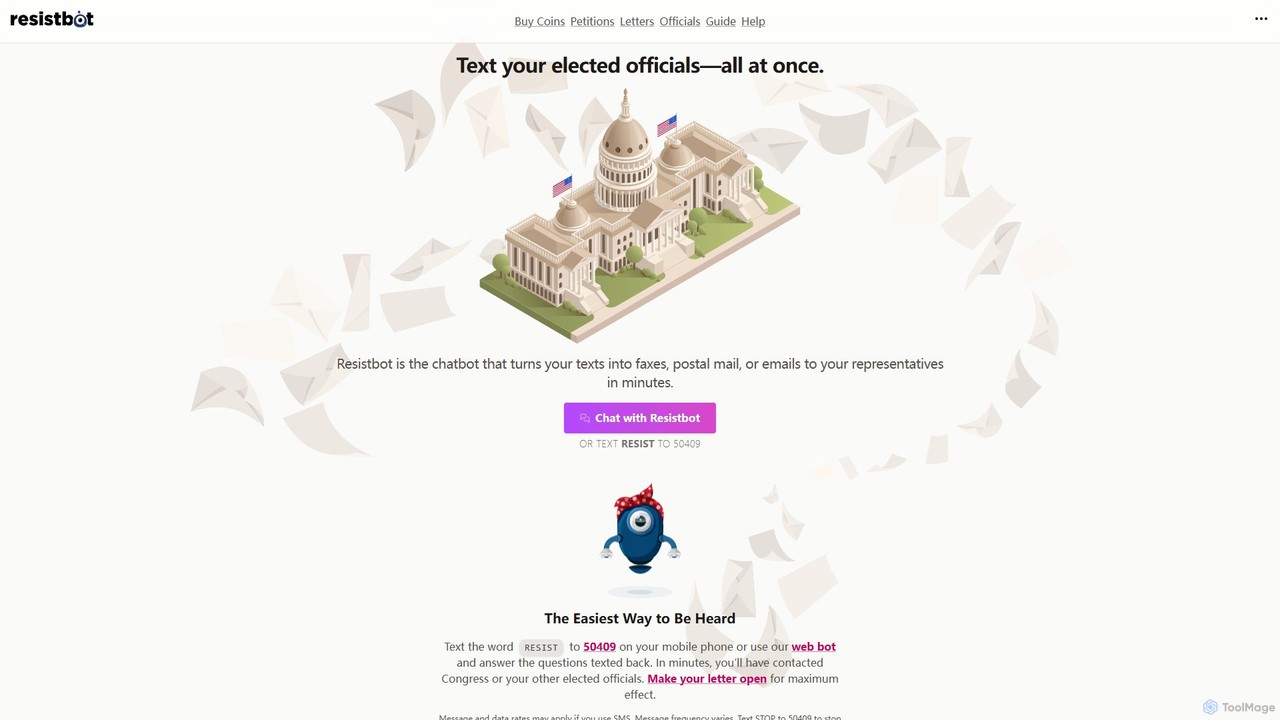
Resistbot is a chatbot that empowers users to contact their elected officials in the U.S. via text, web, or app. It turns your messages into official emails, faxes, or postal mail. With AI-powered letter writing, campaign creation, and voter services, it simplifies civic engagement and makes your voice heard by representatives in minutes.
About Advocacy
Advocacy tools are AI-powered platforms designed to mobilize an organization's community—such as employees, customers, or partners—to act as brand ambassadors. These tools streamline the process of sharing curated content, tracking engagement, and gamifying participation across personal social networks. By empowering trusted individuals to share authentic messages, businesses can significantly amplify their reach, enhance brand credibility, and drive organic engagement. This approach transforms a passive community into an active and influential promotional force.
Core Features
- Content Curation & Distribution: Provides a central hub of pre-approved articles, images, and posts for advocates to easily share.
- Gamification & Rewards: Motivates participation through points, badges, leaderboards, and tangible incentives.
- Performance Analytics: Tracks key metrics like reach, clicks, engagement, and top-performing advocates to measure campaign ROI.
- Advocate Segmentation: Allows administrators to group advocates and deliver targeted content relevant to their roles or interests.
- Automated Scheduling: Enables advocates to schedule posts in advance, ensuring a consistent flow of content.
Use Cases
Advocacy tools are valuable across various departments, including marketing, sales, and human resources. B2B companies use them to empower employees to share industry insights and company news, generating warm leads. Consumer brands leverage these platforms to run customer advocacy programs that encourage user-generated content and build social proof. Non-profits also utilize them to mobilize supporters for awareness campaigns and fundraising efforts.
How to Choose
When selecting an Advocacy tool, first evaluate its integration capabilities with your existing social media channels and CRM systems. Assess the user interface for both administrators and advocates; it must be intuitive to encourage adoption. Consider the depth of the analytics suite to ensure it aligns with your key performance indicators. Finally, review the pricing model and scalability to ensure it fits your budget and future growth plans.
AdvocacyUse Cases
Launch an Employee Advocacy Program
A marketing manager at a B2B technology firm aims to increase brand visibility and generate leads. Using an advocacy tool, they create a campaign inviting all employees to participate. The platform provides a library of pre-approved content, including blog posts, whitepapers, and job openings. Employees can easily connect their LinkedIn and Twitter accounts, browse the content, and share it with a single click or schedule it for later. The built-in gamification with a leaderboard encourages friendly competition, and the manager can track which content and which employees are driving the most engagement and clicks, directly attributing new leads to the program.
Mobilize Customers for a UGC Campaign
An e-commerce fashion brand wants to collect authentic user-generated content (UGC). They use an advocacy platform to invite their most loyal customers to an exclusive ambassador program. The brand creates a campaign asking customers to post photos on Instagram wearing their latest collection with a specific hashtag. The platform makes it easy for the brand to communicate the campaign rules and for customers to submit their posts. The tool then automatically tracks all posts with the hashtag, measures engagement, and displays the best content on a dashboard. The brand can then easily request rights to reuse the top-performing UGC in their official marketing materials.
Amplify Non-Profit Awareness Campaigns
A non-profit organization focused on environmental conservation needs to raise awareness for an upcoming global initiative. The communications director uses an advocacy tool to mobilize their network of volunteers and supporters. They create a digital toolkit within the platform, including shareable infographics, videos, and links to a petition. Supporters are prompted via email to log in, access the toolkit, and share the content on their social media profiles. The platform's analytics help the director identify which messages are resonating most with the public and which supporters are the most influential, allowing them to refine their strategy in real-time for maximum impact.
Powering a Partner Channel Marketing Program
A SaaS company sells its product through a network of channel partners and resellers. To help partners market the product effectively, the channel manager implements an advocacy platform. The platform serves as a central marketing hub where partners can access co-branded marketing assets, product updates, and social media post templates. The company can push new campaigns directly to partners, who can then easily customize and share the content with their own networks. This ensures brand consistency across the channel and empowers partners with ready-to-use materials, increasing their sales effectiveness and reducing the marketing burden on them.
Enhance Internal Communications and Culture
A large enterprise with a distributed workforce struggles with keeping employees informed and engaged. The HR department adopts an advocacy tool for internal communications. They use it to share important company news, cultural initiatives, and employee success stories. The platform acts as a single source of truth, ensuring all employees receive consistent information. By encouraging employees to not only read but also share and comment on posts, it fosters a sense of community and connection. The gamification features can be used to promote wellness challenges or training completion, making internal initiatives more engaging and measurable.
Streamline Event Promotion Through Attendees
An event organizer for a major industry conference wants to maximize social media buzz before and during the event. They provide all registered attendees with access to an advocacy platform. In the weeks leading up to the conference, the platform shares speaker announcements, session previews, and networking tips for attendees to post. During the event, it prompts attendees to share live photos, key takeaways from sessions, and their overall experience using the official event hashtag. A live social wall, powered by the platform, is displayed at the venue, showcasing the posts in real-time and encouraging more participation. This turns every attendee into a potential promoter, vastly extending the event's reach.