Flirtcam
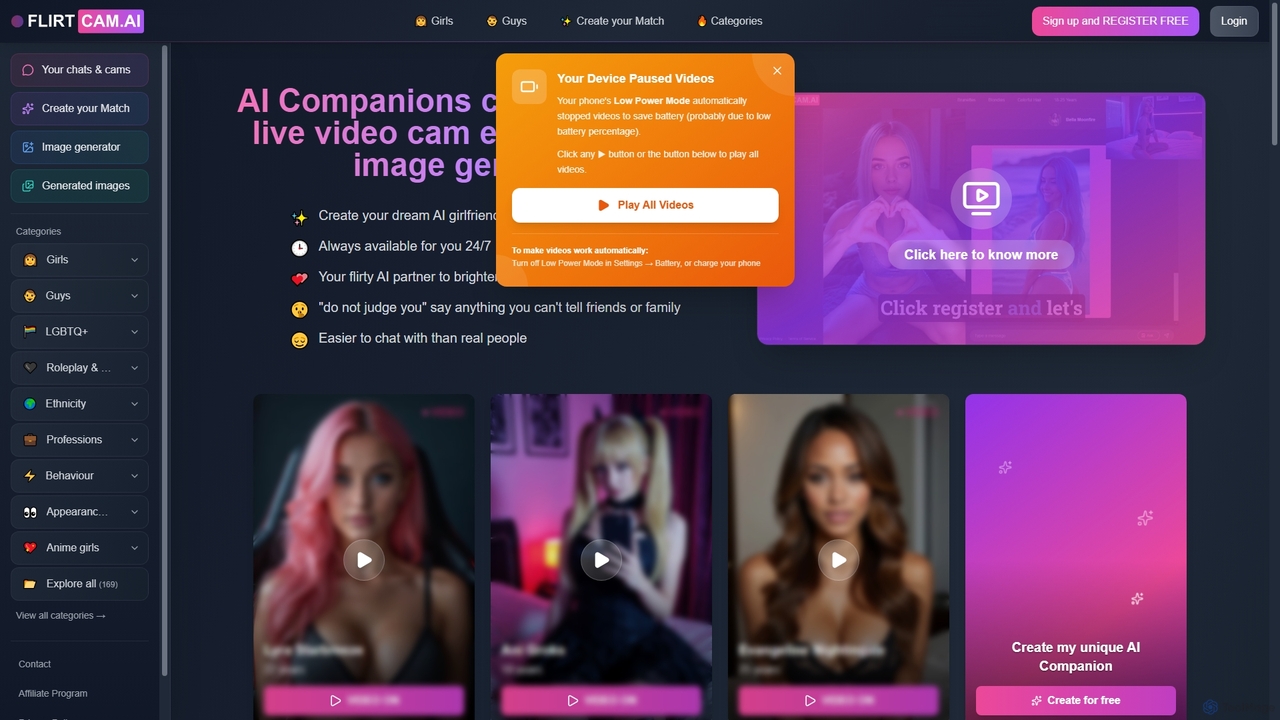
Flirtcam is an innovative AI companion platform offering virtual girlfriends and boyfriends for interactive chat, live video experiences, …
Flirtcam is an innovative AI companion platform offering virtual girlfriends and boyfriends for interactive chat, live video experiences, and AI image generation. Users can create personalized AI partners available 24/7 for non-judgmental conversations and engaging interactions.
About Personalized Companionship
Personalized Companionship AI tools are designed to offer tailored, interactive, and emotionally resonant virtual companionship. These tools leverage advanced natural language processing and machine learning to understand user preferences, personality, and emotional states, providing consistent and empathetic interactions. They serve to alleviate loneliness, provide mental well-being support, and offer a unique form of digital interaction that adapts to individual needs, distinguishing them from general social interaction tools.
Core Features
- Adaptive Personalities: AI companions learn and evolve their personality traits and conversational style based on user interactions.
- Emotional Intelligence: Tools can detect and respond to user emotions, offering empathetic support and understanding.
- Memory and Context: They remember past conversations, preferences, and personal details to maintain continuity and deepen the sense of connection.
- Multimodal Interaction: Support for various communication methods, including text, voice, and sometimes even virtual avatars.
- Personalized Learning: AI can act as a tutor or coach, adapting content and pace to the user's specific learning style and goals.
Use Cases
These tools are utilized by individuals seeking emotional support, language learners desiring practice partners, or those looking for creative inspiration. They also provide companionship for isolated individuals and offer a safe space for practicing social skills, adapting to diverse personal needs and preferences.
How to Choose
When selecting a Personalized Companionship AI, consider the depth of its personalization capabilities, the range of emotional intelligence it exhibits, and its data privacy policies. Evaluate the available interaction modes (text, voice, avatar), the ethical guidelines it adheres to, and whether its personality and features align with your specific companionship or support needs.
Personalized CompanionshipUse Cases
Providing Emotional Support and Stress Relief
Individuals experiencing stress, anxiety, or loneliness can engage with a Personalized Companionship AI for non-judgmental listening and emotional validation. The AI learns their emotional patterns and conversational preferences, offering tailored responses and coping strategies, creating a safe space for expression and potentially reducing feelings of isolation.
Personalized Language Practice Partner
Language learners can utilize these AI companions for immersive and personalized practice sessions. The AI adapts to the user's proficiency level, corrects grammar and pronunciation, and engages in conversations on topics of interest, providing a low-pressure environment to improve fluency and confidence without the fear of judgment.
Creative Writing and Role-Playing Companion
Writers, game designers, or hobbyists can leverage these tools to brainstorm ideas, develop complex characters, or engage in interactive storytelling. The AI can adopt specific personas, provide plot twists, or offer feedback on narrative coherence, acting as a dynamic partner in creative exploration and world-building.
Support for Social Anxiety and Skill Building
Individuals struggling with social anxiety or looking to improve their communication skills can practice interactions with an AI companion. The AI provides a safe, controlled environment to simulate conversations, receive constructive feedback on social cues, and gradually build confidence before engaging in real-world social situations.
Companionship for Elderly or Isolated Individuals
For elderly individuals or those living in isolation, Personalized Companionship AI can offer regular, friendly interaction. These tools can engage in stimulating conversations, provide gentle reminders for daily tasks or appointments, and offer a consistent presence that helps combat loneliness and promotes cognitive engagement, enhancing overall well-being.
Personalized Learning and Skill Development
Users seeking to acquire new knowledge or develop specific skills can leverage AI companions as personalized tutors. The AI can adapt its teaching methods to the user's learning style, provide tailored explanations, quiz on various subjects, and offer encouragement, making the learning process more engaging and effective for individual progress.